
Analysis
1 day ago
How AI Tokens Are Re-Engineering Wall Street Economics
Just as the emergence of cloud computing more than two decades ago shattered traditional software licensing in favor of subscription models, frontier AI models are fundamentally rewriting how enterprise buyers compute economic utility
A seismic shift in technology economics is forcing Wall Street investors to quickly master a new financial vocabulary.
OpenAI and Anthropic recently submitted confidential draft prospectuses to the US Securities and Exchange Commission, following a historic wave of mega-listings that includes SpaceX’s imminent public offering. When these artificial intelligence pioneers inevitably transition to public S-1 filings, investors will confront a term that remains unfamiliar to traditional markets: the token.
A token for your thoughts
Tokens serve as the fundamental currency of the artificial intelligence era. Just as the emergence of cloud computing more than two decades ago shattered traditional software licensing in favor of subscription models, frontier AI models are fundamentally rewriting how enterprise buyers compute economic utility.
Every time a user tasks ChatGPT, Claude, or an alternative large language model with building a financial spreadsheet, generating marketing imagery, or executing code, the underlying infrastructure consumes a precise allotment of tokens. In computational terms, one token equates to roughly three-quarters of an English word.
[User Input Query] –> Consumed as “Input Tokens” –> (Lower Cost)
[AI Model Response] –> Produced as “Output Tokens” –> (Higher Cost)
For institutional investors, translating these computational metrics into predictable dollar revenue requires a steep learning curve. Model developers currently deploy a hybrid monetization strategy. They sell premium retail subscriptions—often scaling to $200 a month per user for advanced tools like Anthropic’s Claude Code or OpenAI’s Codex ecosystem—while simultaneously billing enterprise clients via raw Application Programming Interface (API) usage. When corporate clients exhaust their baseline token quotas, developers bill them strictly by additional token consumption.
The commercial rate cards listed on developer websites expose the sharp underlying economics of the sector. For its frontier GPT-5.5 architecture, OpenAI charges enterprise buyers $5 per million “input” tokens (the user’s initial query) and a steeper $30 per million “output” tokens (the model’s generated response). Anthropic maintains a competitive pricing structure for its Claude Opus 4.8 model, charging $25 per million output tokens.
As public market underwriters prepare these historic multi-hundred-billion-dollar listings, evaluating the margin durability of these businesses will depend entirely on how efficiently Wall Street can model the unit economics of the token.
Most Popular

3 days ago
Capital as Diplomacy: TSMC and Reliance Buy Geopolitical Insurance
Corporations are no longer just beneficiaries of diplomacy—they are its instruments

22 hours ago
FSSAI issues notices to KFC, Nestle, Flipkart
The regulator said food businesses must adhere to prescribed food safety standards and ensure…
2 days ago
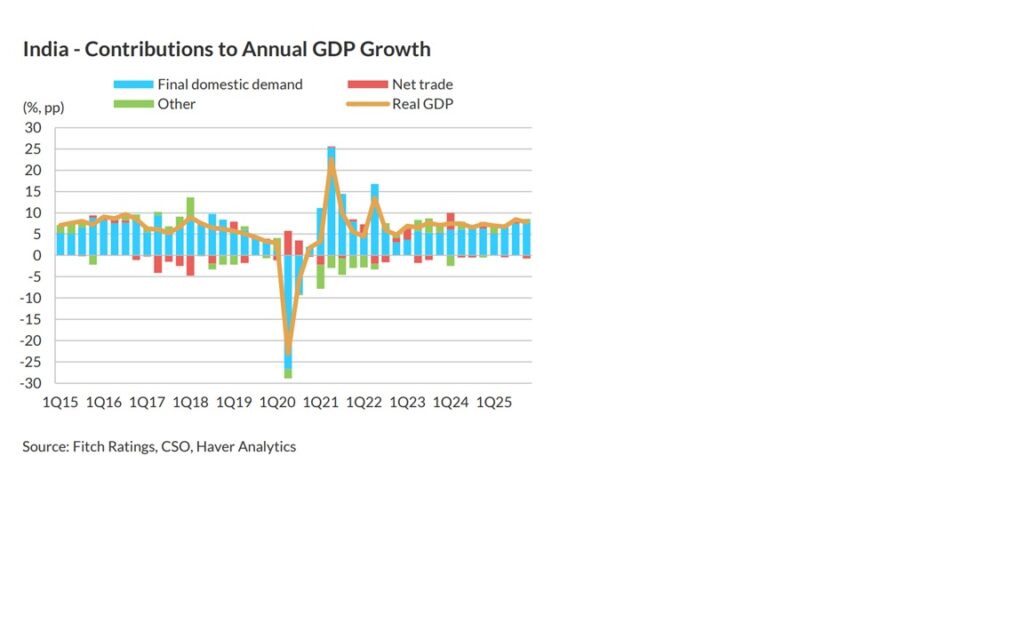
Rising energy prices, WA war to drag India FY26 GDP growth to 7.4%: Fitch
The rating agency expects overall GDP growth to ease to 6.4% in FY27, a…

2 hours ago
Iran-US Deal to Lift Blockade, Open Hormuz and Dismantle Nuclear Site
If the memorandum is signed, it will launch a two-month phase of technical negotiations…
