
Analysis
10 - 06 - 2026
Capital as Diplomacy: TSMC and Reliance Buy Geopolitical Insurance
Corporations are no longer just beneficiaries of diplomacy—they are its instruments
As the guns of 1945 began to fade, Franklin Roosevelt and Saudi Arabia’s King Abdulaziz convened on a US warship drifting in the Suez Canal and sealed a deal that would reshape the world: American protection for Saudi oil.
The wellspring of that pact was Aramco, an American-owned company that didn’t just pump crude—it became the living artery binding two nations, a private oil firm turned geopolitical bridge between Washington and Riyadh. Almost eighty one years later, a similar issue is playing out. In August 2025, the Trump administration doubled US tariffs on India to 50 per cent, targeting nearly $87 billion of Indian exports—almost a fifth of India’s total goods trade.
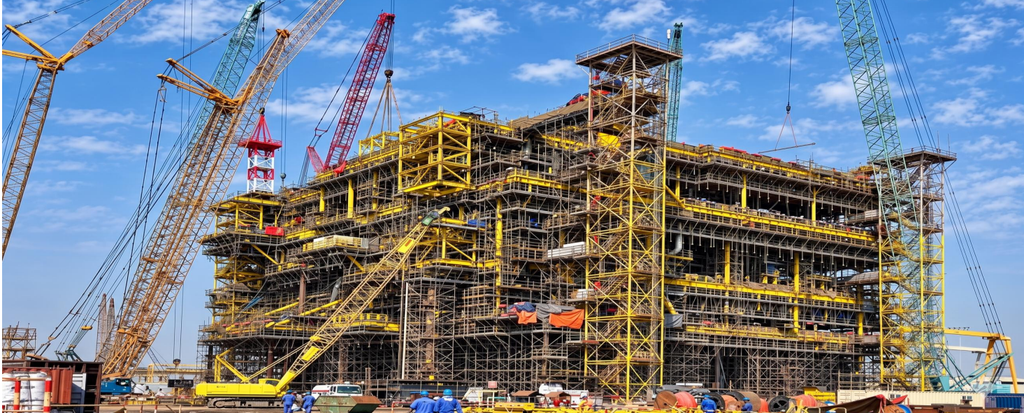
Reliance Industries, India’s largest oil buyer, responded by committing capital to a Texas refinery project. Within months: tariffs vanished, a trade deal was signed, sanctions waivers cleared, and Reliance resumed Russian oil imports. Bloomberg’s headline captured the shift: “Reliance Goes From Trump Foe to Friend With Refinery Pledge.”
TSMC took the same route. The world’s dominant chipmaker pledged $165 billion for Arizona fabrication plants, bringing its total US investment from $65 billion to $165 billion.
The Numbers
| Metric | Reliance | TSMC |
|---|---|---|
| Investment | $300 billion Texas refinery | $100 billion additional Arizona (total $165bn) |
| Stake Exchanged | Energy sector access | Semiconductor manufacturing |
| Threat Neutralised | 50% U.S. tariffs | Potential chip tariffs |
| Jobs Created | N/A | 40,000 construction + tens of thousands high-tech |
| Timeline | Months | 2024–2027 (3rd fab mass production) |
Trade Volume Impact
India’s exports to the US dipped 37 per cent between May and September 2025, dropping from $8.8 billion to $5.5 billion. Zero-tariff products fell 47 per cent, while textiles and gems dropped 33 per cent.
After Reliance’s Texas pledge:
- Tariff penalties were removed
- A trade deal was signed
- Sanctions waivers came through
- Reliance resumed Russian oil imports to Jamnagar
For TSMC, the US-Taiwan trade agreement followed the investment announcement, with tariffs cut to 15 per cent. The expansion includes three new fabrication plants, two advanced packaging facilities, and a major R&D center.
Why Capital Works
The mechanism is straightforward: when a company invests inside an adversary’s territory, the adversary gains a financial stake in the company’s success.
“$165B isn’t a fab decision. It’s a geopolitical one. TSMC’s Arizona expansion isn’t about chasing US demand. It’s about buying long-term policy protection.”
For TSMC, the 5 per cent tariff cut alone “reshapes margins more than yields.” For Reliance, the tariff removal saved $87 billion in exports.
Both investments function as “tariff insurance, not capacity planning.
The Stakes
TSMC produces approximately 90 per cent of the most advanced semiconductors globally. A Chinese invasion or blockade of Taiwan could hold semiconductors hostage from the U.S., seriously damaging the American economy and defence capabilities.
India’s exports represent almost a fifth of the country’s total goods trade. Officials warned that if India walked away from Russian barrels, crude could spike toward $200 per barrel.
Bottomline
What we’re witnessing is statecraft by other means. Corporations are no longer just beneficiaries of diplomacy—they are its instruments.
“This is tariff insurance, not capacity planning.” In an era of escalating trade wars, the oldest game in the world may be the most rational: invest in the adversary, and the adversary becomes a partner.
Venkatesh G

Most Popular

3 days ago
Tech Mahindra partners with SpaceXSI to bring Grok AI coding tools into enterprise workflows
The collaboration will target legacy application modernisation, software development and developer productivity, with a…
50 minutes ago
L&T Q2 cons net profit rises 33% to at ₹5,202 crore
The group’s consolidated revenue rose 16% to ₹78,750 crore, driven by progress in its…

4 days ago
CG Power’s consolidated Q2 net profit rises 44% to ₹409 crore
A sharp rise in Power Systems margins, swelling order book underpin the engineering conglomerate's…
3 days ago
Kotak Mahindra Bank’s profits soar, but margins refuse to join the party
Management expects the full-quarter impact of FCNR(B) deposits to weigh on margins in the…
