
Analysis
17 - 06 - 2026
Energy shock threatens to slow India’s GDP growth
Rising crude oil, gas prices are pushing up production input costs, hitting manufacturing and construction sectors: Crisil
Higher energy and input costs are expected to weigh on India’s growth, with the gross domestic product (GDP) growth to slow to 6.6% this fiscal, compared with 7.7% last fiscal.
The impact was sharp in the first two months of FY27 when Brent crude prices were over $40 per barrel, higher than the average in FY26 and liquefied natural gas prices were $4/ mmbtu higher, according to a Crisil report titled ‘How a sustained energy shock can ripple through the industry’.
Although Brent prices eased post the announcement of a memorandum of understanding between the US and Iran on June 15, they remain above $70 per barrel average of FY26.
Crude oil is the dominant transmission channel.
A crude shock poses a broader economy-wide risk than natural gas, given the larger proportion of crude and petroleum products in input costs for domestic production at 8.4 per cent versus 1 per cent for gas. Core input sectors such as land transport, mining, chemicals, rubber and plastic products are most exposed to a direct and immediate impact of an energy shock.
Manufacturing, mining and construction—critically dependent on these core input sectors—have 40 per cent of their costs linked to energy and linked inputs, are therefore among the most vulnerable output sectors.
As essential inputs into industry, agriculture and services, a higher price for oil and gas has pushed up the cost pressure for producers. In some sectors, these pressures could be passed on to retail prices, while others could face crimping of producer margins. Both these are expected to slow GDP growth this fiscal.
Producers not only face direct and immediate cost pressures from crude, petroleum and gas, but also indirect second-order pressures from rising prices in these core inputs. The impact of energy shock is not confined to energy-intensive sectors. Costlier core inputs such as transport and chemicals are expected to spill over to a broader set of sectors, it added.
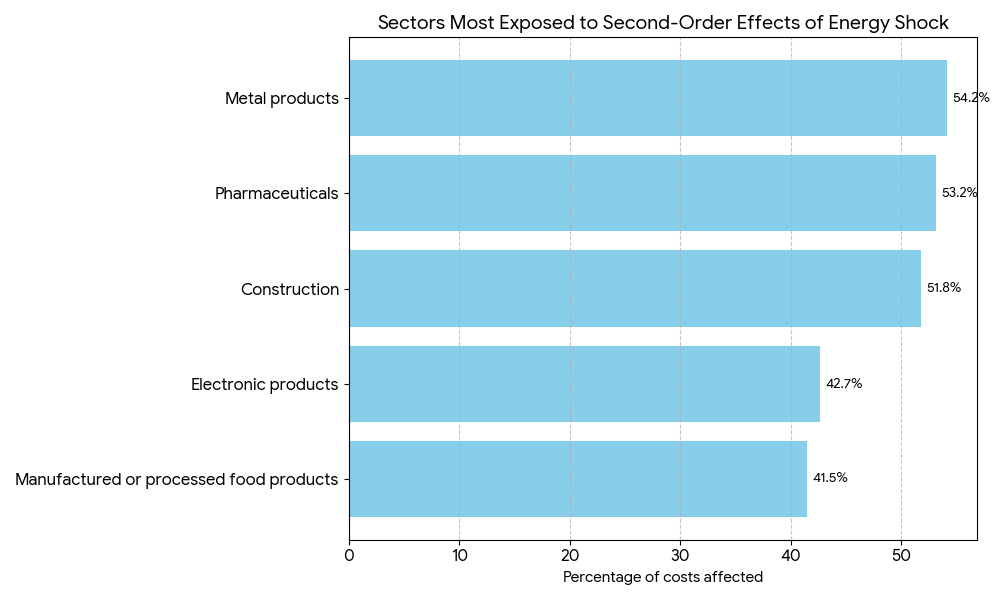
Sectors most exposed to second-order effects include: Metals (driven mainly by iron), Pharmaceuticals (linked to chemical and agricultural inputs), Electronic products (linked to electrical equipment, chemicals and packaging), and Processed food products (affected by agricultural and transportation costs). The construction sector is exposed through multiple input channels, including cement, ceramics, iron and steel, and paints.
Producers are likely to face squeezing net profit as it will be difficult to fully pass on such a sharp rise in cost pressures. Overall, sectors facing high impact of cost pressures contribute about 17% of gross value added. They are likely to attempt passing on cost increases to retail prices wherever consumer demand conditions permit, otherwise a hit to margins is expected.

Most Popular
3 days ago
Kotak Mahindra Bank’s profits soar, but margins refuse to join the party
Management expects the full-quarter impact of FCNR(B) deposits to weigh on margins in the…

4 days ago
DCGI Approves Toripalimab Combination Therapy for Advanced Oesophageal Cancer in India
Dr Reddy’s Laboratories’ Zytorvi, combined with cisplatin and paclitaxel, gains a first-line indication for…

4 days ago
CG Power’s consolidated Q2 net profit rises 44% to ₹409 crore
A sharp rise in Power Systems margins, swelling order book underpin the engineering conglomerate's…

4 days ago
Infosys Q2 net profit rises 6% to ₹7,823 crore
India's second-largest IT services company trims FY27 revenue guidance
