
News
07 - 09 - 2026
Pranos Fusion Unveils PRAGYA, India’s First Privately Developed Compact Tokamak
Experimental machine has produced plasma and will serve as a testbed for plasma control, superconducting magnets and future fusion technologies
Bengaluru-based deep-tech startup Pranos Fusion has unveiled PRAGYA, which the company describes as India’s first privately developed compact tokamak, marking a new phase in the country’s emerging private-sector nuclear fusion ecosystem. Recent reports confirm that the experimental machine has successfully produced plasma.
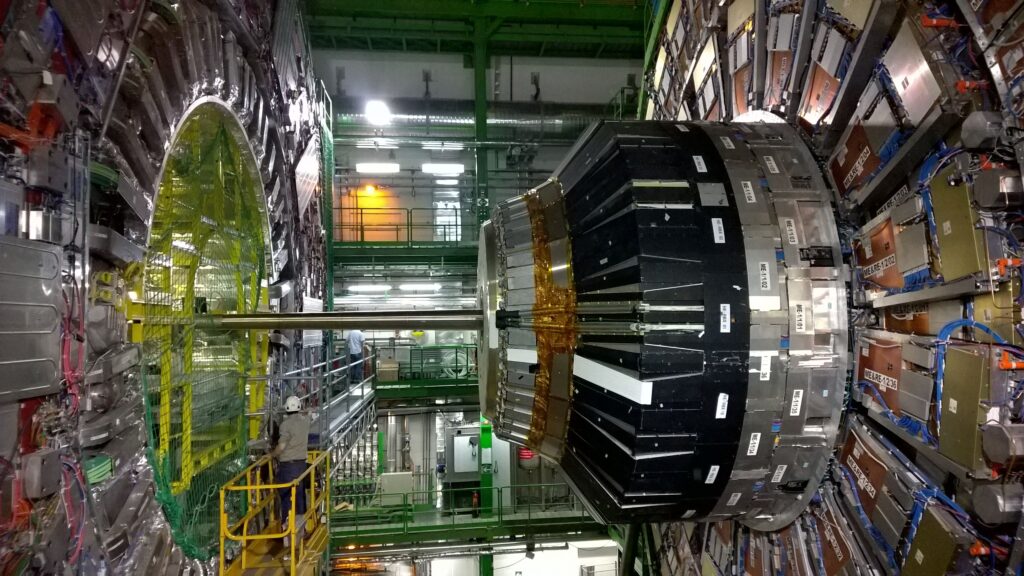
PRAGYA is a compact, low-aspect-ratio tokamak designed primarily as an experimental platform rather than a commercial fusion power reactor. Its purpose is to generate, study and control plasma and to provide an engineering testbed for technologies that could eventually be incorporated into larger fusion machines.
A tokamak uses powerful magnetic fields to confine extremely hot, electrically charged plasma inside a toroidal vacuum chamber. The broader objective of magnetic-confinement fusion is to create conditions under which light atomic nuclei can fuse and release energy, following the fundamental process that powers the Sun.
From Design to Plasma Operations
Pranos began developing PRAGYA as a testbed in 2025 after working on computational tools to optimise tokamak design. The machine was built in approximately eight months, according to reports on the project.
An engineering paper published by the PRAGYA team describes the device as a low-aspect-ratio tokamak with a plasma major radius of approximately 0.4 metres, a plasma current capability of up to 25 kA and a toroidal magnetic field of about 0.1 tesla.
The successful production of plasma represents an important milestone, moving the project from hardware development into experimental plasma operations.
However, PRAGYA is not a commercial fusion reactor and is not currently designed to generate electricity or demonstrate net-positive fusion power. Instead, its role is to generate experimental data and validate technologies required for future fusion systems.
Testbed for Future Fusion Technologies
Pranos plans to use PRAGYA to investigate plasma behaviour, plasma-control systems, diagnostics, tokamak engineering and high-temperature superconducting magnets.
The company has outlined a long-term operating programme involving approximately 10–12 experimental shots per day, potentially generating around 3,000 experiments annually. The resulting data is expected to help researchers understand plasma behaviour and refine machine and control-system designs.
PRAGYA forms part of Pranos Fusion’s broader technology roadmap, alongside JENGA, its machine-design and plasma-control software platform, and MAGGA, its programme focused on fusion-grade high-temperature superconducting magnets.
The startup views PRAGYA as an early step toward developing larger fusion systems. Pranos has indicated an ambition to develop high-temperature superconducting magnet technology and eventually build a larger net-gain fusion reactor, referred to as PraniQ, later in the decade. Those future milestones remain development targets rather than demonstrated capabilities.
The emergence of PRAGYA also adds a new private-sector dimension to India’s fusion research ecosystem, which has historically been driven largely by government and publicly supported institutions. India has decades of experience in fusion research through organisations such as the Institute for Plasma Research, while Indian researchers are also involved in the international ITER programme.
For Pranos Fusion, PRAGYA is therefore less about producing fusion electricity today and more about building the experimental data, engineering expertise and plasma-control capabilities needed to attempt increasingly ambitious fusion machines in the future.
By Subramanya Joshi
Most Popular

4 days ago
CG Power’s consolidated Q2 net profit rises 44% to ₹409 crore
A sharp rise in Power Systems margins, swelling order book underpin the engineering conglomerate's…
4 days ago
DCGI Approves Toripalimab Combination Therapy for Advanced Oesophageal Cancer in India
Dr Reddy’s Laboratories’ Zytorvi, combined with cisplatin and paclitaxel, gains a first-line indication for…

1 day ago
India’s Mumbai records 3,145 luxury property transactions in H1 FY27
The city registered 3,145 luxury residential property transactions worth ₹32,623 crore between April and…

3 days ago
Kotak Mahindra Bank’s profits soar, but margins refuse to join the party
Management expects the full-quarter impact of FCNR(B) deposits to weigh on margins in the…
