
Analysis
18 - 06 - 2026
WA crisis, El Nino to pose demand risks for India Inc
Operating profit margins may slip by 100-150 basis points in Q1 of this fiscal due to elevated crude oil prices, rise in the overall cost of imports due to INR depreciation: ICRA
India Inc is expected to witness a moderation in its revenue growth to mid-to-high single digit during the first quarter of FY27, compared with a 13.2 per cent year-on-year (YoY) growth in the previous fourth quarter of FY26.
Further, its operating profit margin is likely to fall by 100-150 basis points on a YoY basis, according to an ICRA report.
As a result of the earnings pressure, credit metrics are expected to soften, with an estimated interest coverage ratio of 4.8-5 times in Q1 of FY27, against 5.8 times recorded in Q4 of FY26, despite stable cost of funds and leverage, it said.
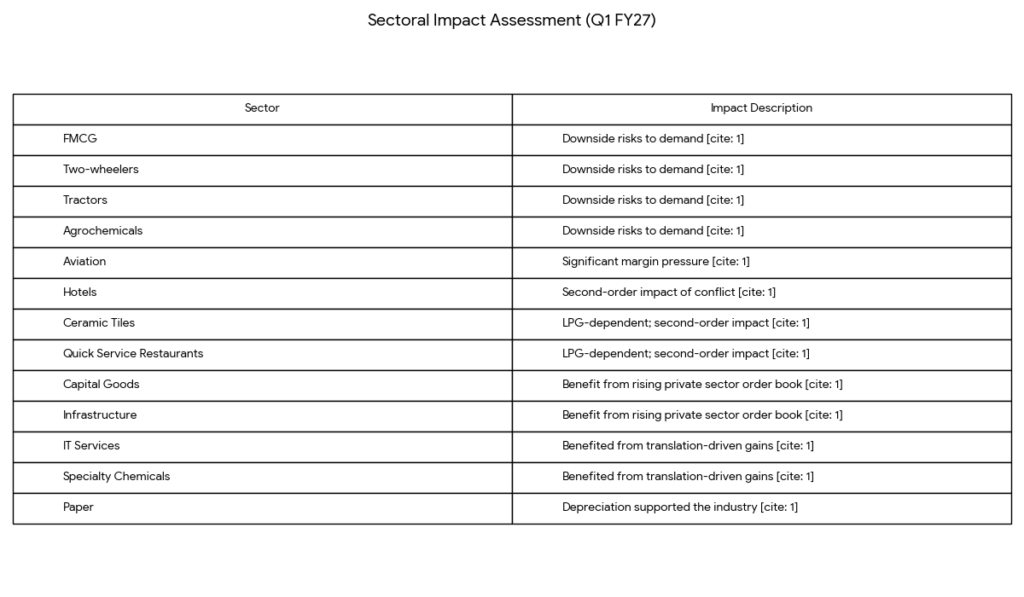
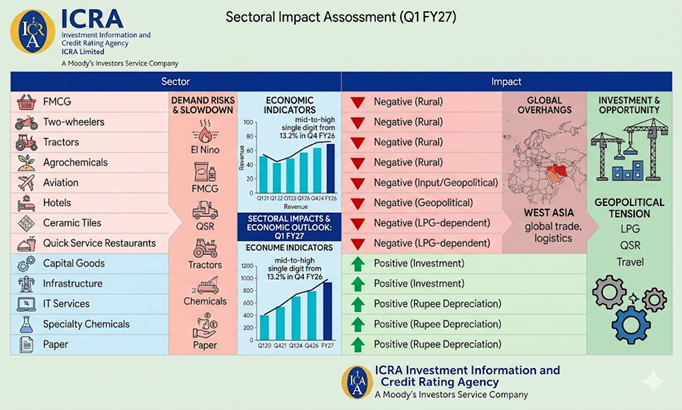
“Domestic demand conditions have become more nuanced in Q1, with below-normal monsoon expectations posing downside risks to demand across rural-linked segments such as fast-moving consumer goods (FMCG), two-wheelers, tractors, and agrochemicals. While stable income trends are likely to support urban consumption to some extent, the overall demand environment is expected to remain challenging due to inflationary pressure amid a surge in crude oil prices and rupee depreciation, constraining volume growth in consumption-oriented sectors,” Kinjal Shah, Senior Vice President & Co-Group Head-Corporate Ratings, ICRA,said.
“In contrast, investment-led segments, including capital goods and infrastructure, may benefit from a rising order book from some of the private sectors, partially offsetting the broader consumption slowdown,” Shah said.
The ongoing geopolitical tension in West Asia is likely to act as a key overhang, given its significant implications on global trade flows, logistics costs and demand sentiments in key export markets. Further, the conflict results in a second-order impact on travel and tourism-linked businesses like aviation and hotels targeting foreign tourists, LPG-dependent industries like ceramic tiles, quick service restaurants, among others.
El Nino may disrupt rural demand
Besides, development of El Nino conditions could potentially disrupt rural demand, impacting revenues of a large section of the corporate sector, which had posted a healthy revenue growth in Q4.
Elevated fuel, logistics, and packaging costs arising from the West Asia crisis and cost escalation for imported inputs caused by rupee depreciation are likely to weigh on the aggregate profit margins of India Inc.
In the near term, however, the margin pressure could be partially offset by price revision, albeit partially or with a lag, as an abrupt price hike may impact demand and competitive position. In addition, focus on fixed cost optimisation and efficiency improvement by organised players amid a challenging operating environment and the benefits arising from rupee depreciation for exporters are expected to cushion the margin pressure at an aggregate level, to a certain extent.
Divergent Sectoral Impact
The aviation sector witnessed significant margin pressure in Q4 owing to elevated aviation turbine fuel costs besides weakening demand conditions. In contrast, oil refining and marketing companies benefited from robust refining spreads and inventory gains, which largely offset the impact of weaker marketing margins, particularly due to LPG under-recoveries and subdued retail fuel spreads, translating into overall margin expansion.
Meanwhile, gas transmission companies, especially integrated players, reported relatively weaker profitability, primarily on account of softness in non-core segments such as petrochemicals and gas trading, while the margins in the core gas transmission business remained stable, albeit with limited upside in the absence of meaningful tariff revisions.
The sharp depreciation of the rupee in Q4 in divergent sectoral outcomes, with export-oriented sectors such as IT services and specialty chemicals benefiting from translation-driven gains. This was despite facing headwinds in constant-currency growth owing to weak underlying demand conditions.
Depreciation of the rupee supported the domestic paper industry as the threat of imports was mitigated, which had weighed on realisations over the past couple of years. Conversely, import-dependent sectors, including aviation, oil marketing companies and FMCG, faced margin pressure due to elevated input and fuel costs, with limited ability to fully pass on such price hikes.
Amid apprehensions of a rise in inflation, borrowing costs could increase as bond yields are hardening and banks’ Marginal Cost of Funds Based Lending Rate (MCLR) may also rise, although the repo rate remains unchanged.
Sectors such as electronics manufacturing and consumer durables resorted to the precautionary stocking of critical imported inputs to maintain production continuity. However, the corporate sector’s aggregate inventory days relative to turnover (for a sample of more than 2,000 manufacturing entities) remained largely stable at 57 days as on March 31, 2026, vis-à-vis 56 days a year earlier.
This indicates there is no major impact of the geopolitical crisis on the overall working capital cycle.
“While the balance sheets remain resilient, the operating environment is becoming less conducive for investments due to the ongoing West Asia crisis. Private capex stands out in select segments of manufacturing (like defence, electronics manufacturing, electric mobility and other production-linked incentive-supported segments), power equipment, real estate and data centres among others,” Shah added.
Most Popular

1 day ago
India’s Mumbai records 3,145 luxury property transactions in H1 FY27
The city registered 3,145 luxury residential property transactions worth ₹32,623 crore between April and…

3 days ago
Kotak Mahindra Bank’s profits soar, but margins refuse to join the party
Management expects the full-quarter impact of FCNR(B) deposits to weigh on margins in the…

4 days ago
Infosys Q2 net profit rises 6% to ₹7,823 crore
India's second-largest IT services company trims FY27 revenue guidance

4 days ago
CG Power’s consolidated Q2 net profit rises 44% to ₹409 crore
A sharp rise in Power Systems margins, swelling order book underpin the engineering conglomerate's…
