
Analysis
21 - 05 - 2026
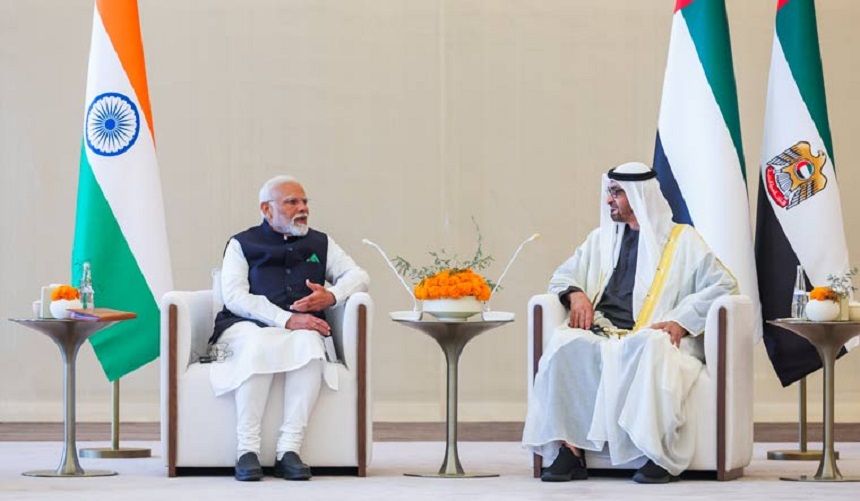
India, UAE sign energy and defense deals during Modi Gulf visit
Energy pact includes LPG supply, storage cooperation as New Delhi seeks stronger Gulf ties
India and the UAE used Prime Minister Narendra Modi’s stop in Abu Dhabi to do something that is becoming more common in Indian foreign policy: mix hard-headed economic bargaining with strategic signalling.
The deals announced on Friday were not just about trade flows or ceremonial warm words. They were about energy security, financial leverage and the steady widening of a relationship that now matters to India far beyond the Gulf.
The package is notable first for what it says about energy. A pact on strategic petroleum reserves and an agreement for the supply of liquefied petroleum gas reflect India’s continuing need to secure reliable fuel imports at a time when the global energy system remains exposed to conflict, shipping disruptions and price shocks.
The reference to cooperation on LNG and LPG storage in India points to something more important than another announcement: a desire to build buffers, not just buy cargoes. For India, the lesson of recent years has been that energy diplomacy is no longer only about price; it is about resilience.
The UAE has become a useful partner in that effort because it offers more than crude. It brings capital, logistics, financial depth and a willingness to invest alongside the Indian state. The pledge of $5 billion in investment, including funds flowing through Emirati financial institutions and the Abu Dhabi Investment Authority, reinforces that point. India is not merely buying fuel from the Gulf; it is tying Gulf capital to Indian infrastructure and banking, creating a web of interests that is harder to unwind than a one-off shipment contract.
Beyond oil and optics
The other agreements show how the relationship is broadening beyond hydrocarbons. A ship-repair cluster at Vadinar in Gujarat fits neatly into India’s longer-term ambition to become a bigger player in maritime services and industrial logistics. A supercomputer cluster, meanwhile, suggests that the relationship is stretching into higher-value technology cooperation, not just energy and shipping.
That matters because India increasingly wants its Gulf partnerships to look less like old-style supplier ties and more like platforms for industrial and digital collaboration. The defense framework is equally revealing. It does not amount to a security alliance, but it does show that the two countries are comfortable putting strategic language around a relationship that once leaned mostly on commerce and expatriate ties.
That is important in a Middle East where conflict, drone attacks and shipping risk have made even commercial relationships feel more strategic. Modi’s condemnation of attacks on the UAE was therefore not just diplomatic courtesy. It was also a statement of alignment with a partner that India sees as central to the stability of the Gulf and the flow of energy through the Strait of Hormuz.
That strait remains the unspoken backdrop to the whole visit. India’s economy depends on uninterrupted energy shipments through a waterway that can be disrupted by conflict between Iran, the United States and their regional rivals. Modi’s call for the strait to remain open and safe was a reminder that New Delhi has a direct stake in Gulf stability, even if it avoids the language of bloc politics.
India prefers to present itself as a civilizational power and a pragmatic interlocutor, not a camp follower. The UAE fits that posture neatly: a partner that can deliver capital, energy and diplomatic reach without forcing India into a rigid alignment.
The wider significance of the visit is that India is trying to convert geopolitical relevance into practical advantage. The UAE is one of the clearest examples of that strategy working. It is a Gulf state, an investor, an energy supplier, a trade partner and increasingly a platform for deeper strategic cooperation.
For India, that makes the relationship valuable not just because it is strong, but because it is adaptable. In an uncertain world, adaptability is often the most strategic asset of all.
Most Popular

4 days ago
CG Power’s consolidated Q2 net profit rises 44% to ₹409 crore
A sharp rise in Power Systems margins, swelling order book underpin the engineering conglomerate's…

1 day ago
India’s Mumbai records 3,145 luxury property transactions in H1 FY27
The city registered 3,145 luxury residential property transactions worth ₹32,623 crore between April and…

4 days ago
DCGI Approves Toripalimab Combination Therapy for Advanced Oesophageal Cancer in India
Dr Reddy’s Laboratories’ Zytorvi, combined with cisplatin and paclitaxel, gains a first-line indication for…

4 days ago
Infosys Q2 net profit rises 6% to ₹7,823 crore
India's second-largest IT services company trims FY27 revenue guidance
