
Analysis
08 - 08 - 2026
Thali prices surge in July on rising input costs: Crisil
Onion prices rose 20 per cent YoY driven by higher-priced stored rabi stocks
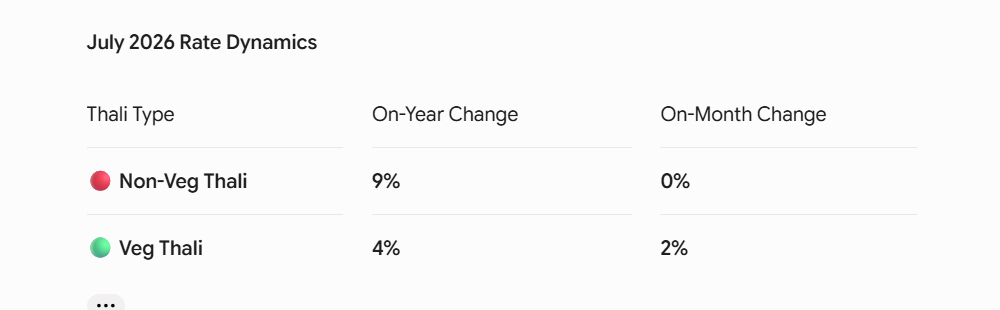
Rising input costs drove up home-cooked thali – traditional Indian set meal served on a single platter – prices in July, with vegetarian meals rising 4 per cent and non-vegetarian options by 9 per cent from a year ago.
Soaring onion prices, vegetable oil and liquefied petroleum gas (LPG) kept the cost high for both veg and non-veg thalis. While potato and tomato prices fell, the increase in overall thali cost was partly offset by decline of 12 per cent and 2 per cent on-year in the prices of potato and tomato, respectively, Crisil said in a report.
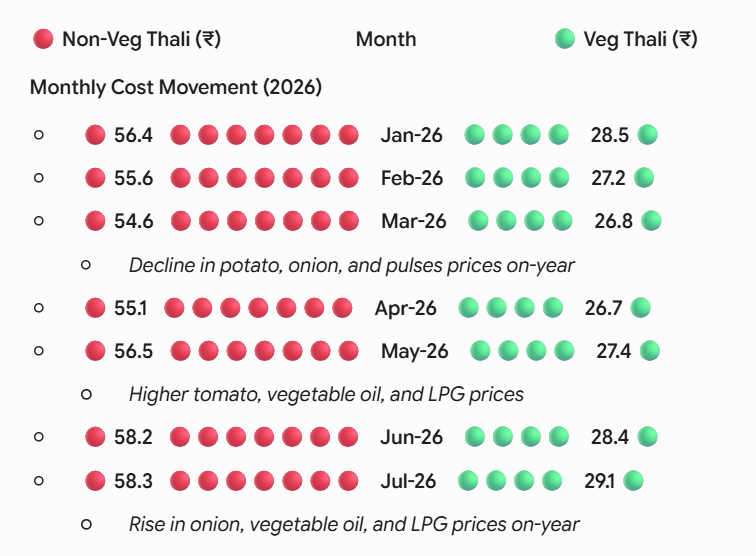
The monthly change reflects the impact on the common man’s expenditure.
Onion prices rose 20 per cent on-year driven by the arrival of higher-priced stored rabi stocks in the market. Unseasonal rainfall and hailstorms in Maharashtra during March-April reportedly damaged the late-season crop and stored inventories, further tightening supplies. Vegetable oil and LPG cylinder prices rose 11 per cent and 10 per cent on-year, respectively, primarily due to supply disruptions and elevated energy prices resulting from the ongoing West Asia conflict.
“Onion prices rose on tighter supply following weather-related damage to crops and inventories in Maharashtra, which accounts for 40 per cent share in India’s onion production. Edible oil and LPG prices remained inflated amid supply disruptions and higher energy costs linked to the West Asia conflict,” Pushan Sharma, Director, Crisil Intelligence, said.
“The rise in cost was sharper for the non-vegetarian thali, driven by a 14 per cent increase in broiler prices, which account for nearly half of its cost. Higher feed costs and low-base effect—the holy Shravan month fell in July in 2025 but shifts to August this year—supported broiler prices,” he added.
Inclement turn
On-month, the cost of veg thali rose 2 per cent, while that of non-veg thali remained stable. Onion and potato prices rose 23 per cent and 4 per cent on-month, respectively, pushing up thali costs; however, a 1 per cent decline in tomato prices and relatively stable prices of other commodities prevented a further uptick.
The non-veg thali cost rose due to an estimated 14 per cent on-year increase in broiler prices, which account for ~50 per cent of the cost. Higher feed costs and a low base effect from the shift of the Shravan month from July in 2025 to August this year spurred prices. The cost of a non-veg thali remained stable because of an estimated 2 per cent on-month decline in broiler prices amid moderation in demand.
Rise in rabi output
Potato prices softened due to a 2-3 per cent rise in rabi production, supported by acreage expansion. Tomato prices remained lower on-year due to delayed arrival of the summer crop due to prolonged high temperatures during February-March; this postponed planting by nearly a month and shifted the supply cycle, resulting in higher market arrivals in July.
“Going forward, onion prices are expected to remain firm due to tight rabi supplies and an expected delay in kharif onion arrivals. Potato prices may inch up as high-priced cold-storage stock is released into the market, while tomato prices will likely remain stable in the near term, supported by fresh arrivals from the south, before strengthening from September on account of delayed kharif arrivals and seasonal festive demand,” Pushan Sharma said.
“Prices of edible oil are also expected to remain firm. Higher crude oil prices are keeping the pressure on freight and landed costs of imports, even as elevated polymer and resin prices are hardening packaging costs,” he added.

Most Popular

3 days ago
Vast Bets on Commercial Space Stations to Open a New Era of Orbital Research
Tom Shelley says predictable access to orbit could take human spaceflight beyond government programmes,…

4 days ago
‘50 Launches a Year’: ISRO Chief V Narayanan Says India’s Space Ambitions ‘Cannot Be Done Only by ISRO’
With demand for 200–300 new satellites over the next six to seven years, Narayanan…

4 days ago
India veg thali cost rises 1 per cent on-year, non-veg thali up 5 per cent
Home-cooked thali costs rise on higher onion, LPG prices and broiler costs: Crisil

3 days ago
AAHL fundraise in line with monetisation strategy, strong growth outlook
The fund raising of ₹98 billion values Adani Airport Holdings Ltd at ₹1.7 trillion:…
