
Analysis
03 - 06 - 2026
Anthropic’s Claude hit by major outage as AI sector wrestles with ‘capacity constraints’
Disruption comes just 24 hours after the San Francisco-based group filed for a highly anticipated Wall Street IPO
Claude, the flagship artificial intelligence chatbot developed by Anthropic, suffered a major global outage on Tuesday, highlighting the systemic infrastructure strain facing the world’s leading generative AI companies at a critical moment for their financial valuations.
The service disruption prevented users worldwide from processing queries. While subscribers were able to log into the Claude interface, the platform failed to return responses, instead displaying a message: “A bit longer, thanks for your patience.”
As the outage dragged on, a subsequent pop-up message explicitly detailed the infrastructure challenges under the hood: “Due to unexpected capacity constraints, Claude is unable to respond to your message. Please try again soon.”
San Francisco-based Anthropic acknowledged the service-level disruption and stated it was actively working on a fix. The company did not immediately disclose the exact technical catalyst behind the capacity crunch.
Sensitive time
The outage could not have come at a more sensitive time for the company. Just 24 hours earlier, Anthropic announced it had submitted its draft registration to the US Securities and Exchange Commission (SEC) for a proposed initial public offering (IPO) of its common stock.
Founded in 2021 by former OpenAI executives, Anthropic has positioned itself as a primary challenger to its cross-town rival, largely on the strength of Claude’s advanced reasoning and coding capabilities. The group recently reported an annualised revenue of $47bn, driven by enterprise adoption and developers building on its API.
The group’s capital requirements have escalated sharply alongside its valuation. Only last week, Anthropic disclosed it had raised $65bn in a Series H funding round, valuing the company at a staggering $965bn—up from a valuation of $380bn in February.
To power its increasingly complex models, Anthropic recently struck a deal with Elon Musk’s SpaceX for access to graphics processing unit (GPU) capacity inside its Colossus 1 and Colossus 2 AI supercomputers. Yet Tuesday’s failure underscores that even massive compute partnerships are struggling to keep pace with explosive user demand.
“The economics of generative AI remain bound by the physical laws of compute and data centres,” said an independent technology analyst. “When millions of enterprise clients and consumer users simultaneously hit these models, the backend compute grids can bottle-neck quickly. An outage right after an IPO filing is a stark reminder to Wall Street that these companies face massive capital expenditure risks just to keep the lights on.”
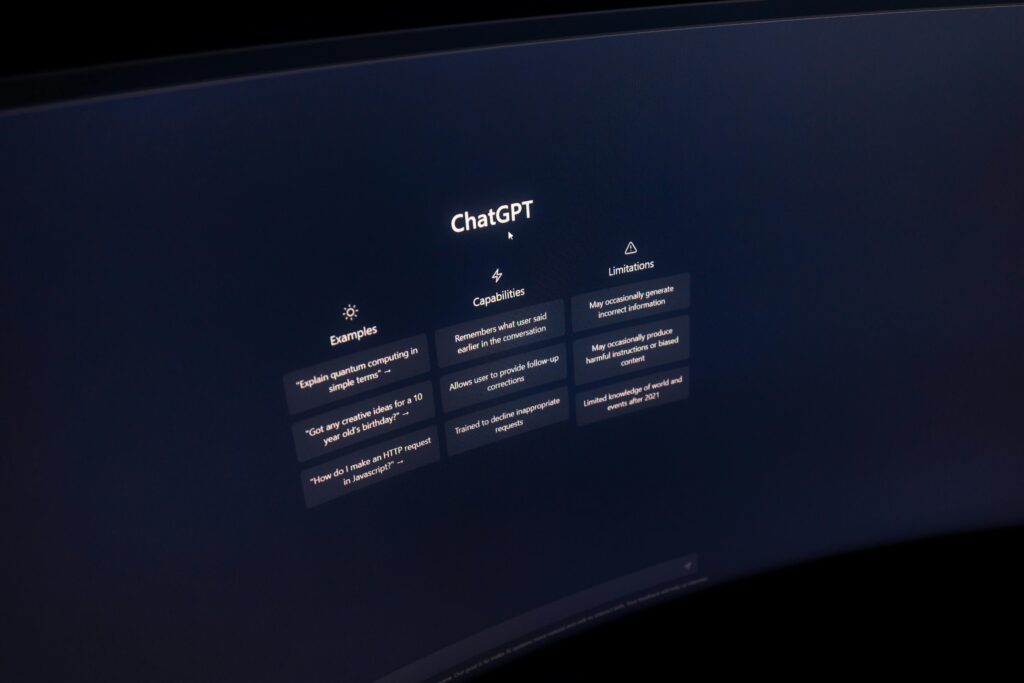
Anthropic is far from alone in dealing with growth pains. The wider artificial intelligence sector has frequently been plagued by infrastructure failures as the race for market dominance intensifies.
OpenAI’s ChatGPT has suffered several high-profile global outages since its inception. In late 2023, ChatGPT was knocked offline for over 90 minutes due to what the company later identified as an abnormal traffic pattern reflecting a distributed denial-of-service (DDoS) attack coupled with intense organic traffic.
More recently, OpenAI was forced to temporarily pause new registrations for its paid tier because usage had outstripped its capacity. Similarly, OpenAI’s multi-billion dollar ‘Stargate’ supercomputer project in the UK was recently put on hold due to soaring energy costs and grid constraints—underscoring the macro bottlenecks hitting the entire industry.
Google’s Gemini and Microsoft’s Copilot services have similarly experienced intermittent service degradation over the past year, often tied to cloud infrastructure updates or unexpected surges in API calls from enterprise clients. The sudden downtime of Claude will serve as a crucial test case for institutional investors currently weighing Anthropic’s blockbuster public listing.
With OpenAI also preparing to go public in the US in the coming weeks, Wall Street is preparing to assess whether the immense infrastructure costs and operational vulnerabilities of these AI pioneers justify their near-trillion-dollar valuations.
Most Popular
2 hours ago
L&T Q2 cons net profit rises 33% to at ₹5,202 crore
The group’s consolidated revenue rose 16% to ₹78,750 crore, driven by progress in its…

4 days ago
Infosys Q2 net profit rises 6% to ₹7,823 crore
India's second-largest IT services company trims FY27 revenue guidance

3 days ago
Kotak Mahindra Bank’s profits soar, but margins refuse to join the party
Management expects the full-quarter impact of FCNR(B) deposits to weigh on margins in the…

1 day ago
India’s Mumbai records 3,145 luxury property transactions in H1 FY27
The city registered 3,145 luxury residential property transactions worth ₹32,623 crore between April and…
