
Features
30 - 05 - 2026
TSMC Effect and Lessons from the Messy Love Triangle for India
TSMC effect is the phenomenon by which a single company can dominate a national index and thereby tilt a country’s equity fortunes
One of the most popular jokes –on the ’TSMC effect’ among the tech community (like programmerhumor.io) – is about the “Messy Love Triangle” among the leading chipmakers, Nvidia, AMD and Taiwan Semiconductor Manufacturing Company (TSMC).
The Taiwanese hotshot is smartly playing both sides, acting like the best friend to the one – who is dating your ex – right after the break-up – all to its benefit.
A strategic chokepoint
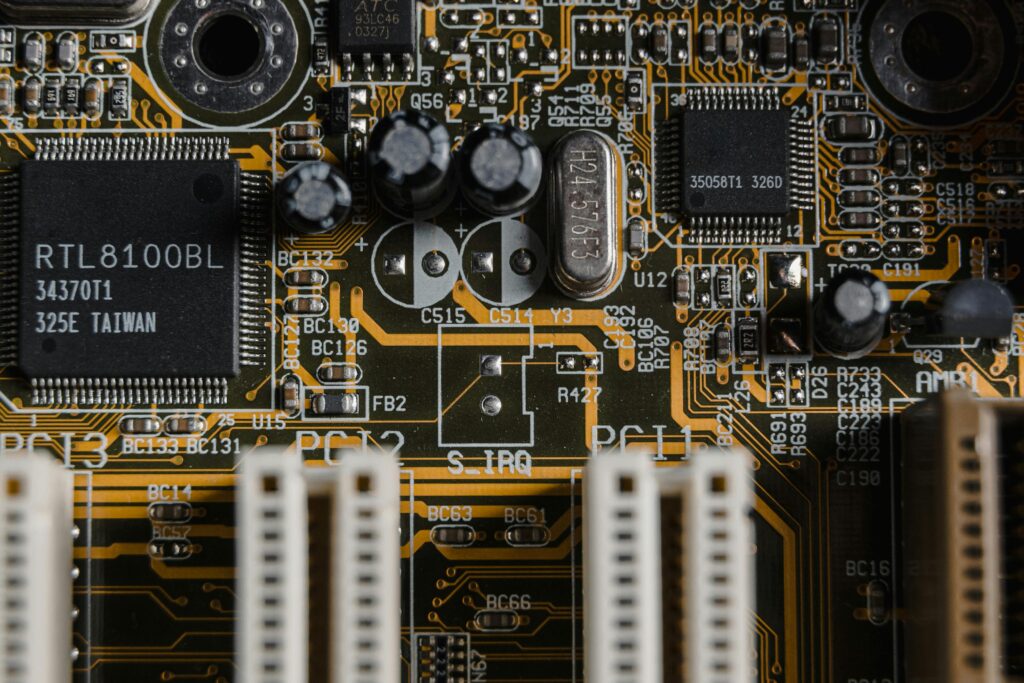
TSMC is not merely a profitable firm; it is a bottleneck. Most of the world’s leading systems designers—Nvidia, Apple, AMD, Google—rely on its ability to translate complex designs into working silicon. When TSMC raises its revenue forecasts, signals strong capital expenditure plans or reports a smooth pilot run at its Arizona plant, markets take this as validation of the entire AI and advanced‑compute investment thesis.
That is why its results and guidance added hundreds of billions to its market value in a matter of days, and why its ADR briefly traded near $320. “TSMC’s ecosystem is the linchpin of modern chipmaking; without reliable capacity there is no AI buildout at scale,” the company’s chief executive told investors in recent remarks. The markets listened.
Concentration and market mechanics
The so‑called “TSMC effect” is the phenomenon by which a single company can dominate a national index and thereby tilt a country’s equity fortunes. TSMC now accounts for roughly 42% of Taiwan’s benchmark, helping the island to eclipse India as the world’s fifth‑largest stock market. That degree of concentration is striking. By comparison, the six largest U.S. tech names amount to around 29% of the S&P 500.

Concentration amplifies returns in good times and magnifies risk in bad. Fragmented markets spread shocks across sectors; markets dominated by one superstar transmit a single company’s fortunes to the whole economy. History offers examples: a sharp pullback in AI capital spending, a cybersecurity breach, or a geopolitically induced supply disruption would do more than dent TSMC’s shareholders—such shocks would ripple through an index that leans so heavily on one firm. “Concentration can create extraordinary value, but it also creates a single point of failure for investors,” a rival CEO observed at a recent conference.
Implications for India
Should India fret? The short answer is: be cautious but not alarmed. India’s market is less dependent on any single corporate behemoth. Its index is supported by a diverse mix of banks, consumer companies, pharmaceuticals, energy and telecoms. That diversification confers resilience against sector‑specific shocks that would be catastrophic in a highly concentrated market.

Yet the recent runs into Taiwan and South Korea—markets with clearer exposure to AI hardware—explain some of the capital flight. Foreign portfolio investors have withdrawn about $21bn over two months, a reminder that flows chase narratives of “pure” AI plays. Critics also point out that parts of India’s market trade at elevated multiples without commensurate upgrades in corporate earnings, a mismatch that can be exposed when global sentiment shifts.
Policy and industrial strategy
India does not need, and arguably should not seek, a TSMC‑sized monoculture. Such a model is fragile: geopolitical friction, energy shocks or single‑firm operational trouble can reverberate across an economy. But nor can India afford to be absent from the supply chains that will underpin the next wave of industrial transformation. The remedy is not one superstar; it is many capable ones.
That argues for a focused but plural industrial policy. Accelerating the Semiconductor Mission, streamlining approvals, and committing larger, predictable budgets could attract fabrication, packaging and design activity. Equally important is nurturing scale‑capable champions across sectors—10–20 firms that can compete globally in manufacturing, semiconductors, advanced materials and industrial AI.
“India must build linkages into global high‑tech supply chains rather than merely celebrating GDP growth on paper,” said a senior executive at an Indian conglomerate. “Scale, clarity of policy and predictable capital are what will turn ambitions into manufacturing jobs and exports.”
A pragmatic path
The TSMC story offers both a warning and a template. The warning is about the fragility of markets and economies that hinge on one corporate superstar. The template is about what deep industrial capability can deliver: not just corporate profit but the confidence that underpins global investment in entire technology stacks.
India’s best strategy is therefore neither to mimic Taiwan with a single champion nor to accept irrelevance in future tech cycles. It should aim for diversified depth—multiple industrial champions supported by predictable policy—and so convert its vast domestic market into a more tangible seat at the table in next‑generation manufacturing.
Most Popular
48 minutes ago
L&T Q2 cons net profit rises 33% to at ₹5,202 crore
The group’s consolidated revenue rose 16% to ₹78,750 crore, driven by progress in its…

4 days ago
Infosys Q2 net profit rises 6% to ₹7,823 crore
India's second-largest IT services company trims FY27 revenue guidance

4 days ago
DCGI Approves Toripalimab Combination Therapy for Advanced Oesophageal Cancer in India
Dr Reddy’s Laboratories’ Zytorvi, combined with cisplatin and paclitaxel, gains a first-line indication for…

4 days ago
CG Power’s consolidated Q2 net profit rises 44% to ₹409 crore
A sharp rise in Power Systems margins, swelling order book underpin the engineering conglomerate's…
