
News
9 hours ago
TCS eyes Bosch’s Indian technology empire
German engineering giant explores sale of part of its Indian technology operations; Bengaluru, home to a large chunk of its engineering workforce, could be at the centre of the proposed transaction.
There was a time when multinational companies came to India to set up factories, hire engineers and enjoy the benefits of cheaper labour. Then came the information technology revolution, and India became the back office of the world. Now, it appears, even the back offices are becoming commodities to be bought and sold.
The latest name in this corporate marketplace is Bosch, the German engineering giant, and the prospective buyer is none other than Tata Consultancy Services (TCS), India’s largest IT services company.
Bosch is reportedly exploring the sale of part of its Indian technology and product development operations, with TCS among the companies in the race. The proposed transaction could involve around 3,000 employees, making it a potentially significant deal in India’s technology services industry.
The discussions are understood to be at a preliminary stage, with further deliberations expected at the board level next month before any decision is taken.
For Bosch, this is essentially a question of economics. Running a large technology operation costs money, and German engineering, however impressive, is not immune to the universal corporate disease of wanting to spend less while earning more. The company is reportedly examining ways to rationalise costs by transferring parts of its technology and product development operations.
For TCS, the attraction is rather different. It is not merely acquiring employees; it could be acquiring years of engineering experience, specialised expertise and an established technology ecosystem.
In an age when artificial intelligence is no longer content with writing essays and answering questions but is increasingly being embedded in machines, robots and autonomous vehicles, such engineering talent could prove particularly valuable.
Bengaluru connection
Bosch’s Indian technology story began in Bengaluru in 1997 through Bosch Global Software Technologies (BGSW). Over the years, the operation expanded to Hyderabad, Pune and Coimbatore, becoming an important part of the German company’s global technology and engineering network.
India accounts for approximately four-fifths of Bosch’s global capability centre workforce of 28,900 employees. Bengaluru alone houses roughly half of these employees.
What began as an Indian technology operation nearly three decades ago has grown into a substantial engineering powerhouse.
The proposed transaction could therefore have considerable significance for India’s technology industry, particularly Bengaluru, where a large concentration of Bosch’s engineering workforce is based.
There is, however, an important distinction. Robert Bosch GmbH, the German parent company, is the majority shareholder in listed Bosch Ltd through its promoter group companies. The potential transaction concerns the German group’s technology and product development operations and should not be confused with a sale of Bosch Ltd’s Indian automotive manufacturing business.
Why TCS is interested
TCS has been steadily expanding its presence through acquisitions and technology partnerships. Buying an established captive technology centre gives an IT services company something that is often difficult to build organically: an experienced workforce and an existing relationship with a multinational client.
There is also the attraction of relatively assured business.
When an IT company takes over a multinational’s in-house technology operations and enters into a long-term services agreement, it can secure revenue for several years. In an uncertain global technology market, predictable revenue is a luxury that even the biggest IT companies appreciate.
However, there is a catch. Acquiring 3,000 employees is one thing; making the acquisition profitable is quite another.
The salaries of employees working in global capability centres are often higher than those in conventional IT services operations. Integrating such a workforce could initially put pressure on margins, particularly if the new business arrangement does not provide adequate financial returns.
TCS’s acquisition strategy
The Bosch discussions are not an isolated development.
TCS has already pursued similar transactions this year. In October, it acquired Best Buy’s India technology centre. In August, it acquired Porsche’s management and IT consulting arm, MHP, for $373 million.
The Porsche transaction also came with a five-year IT modernisation contract worth $1.45 billion.
These deals indicate that TCS is increasingly looking beyond conventional organic expansion to strengthen its engineering, consulting and technology capabilities through acquisitions.
The Bosch opportunity, if it materialises, would fit into this larger strategy.
For Bosch, the decision could help reduce operating costs while allowing it to reassess the structure of its technology operations. For TCS, it could mean access to a large pool of engineers familiar with complex industrial technologies.
The real prize may lie in physical AI — the emerging field in which artificial intelligence is integrated into machines, industrial systems, robots and autonomous vehicles.
Software companies have spent years teaching computers to think. The next challenge is teaching machines to act.
Bosch has considerable engineering experience in this field, and TCS would have obvious reasons to covet that expertise.
But corporate transactions have a habit of looking more attractive in boardroom presentations than in balance sheets. Employee costs, contractual obligations, integration challenges and the terms of any long-term service agreement will determine whether this prospective marriage is a success.
For now, the talks remain preliminary. No final decision has been announced.
If the deal goes through, however, it would be another reminder that India’s technology industry is entering a new phase. The country is no longer merely providing engineers to global corporations. Its IT giants are increasingly acquiring the very technology operations that multinational companies once established here as prized captive assets.
And somewhere in Bengaluru, 3,000 engineers may soon discover that while the office building remains the same, the name on their salary slip could change.
By B D Narayankar
Most Popular

16 hours ago
Why computing in space is technically demanding
Led by PSG, with strategic investment from Micron Technology, the funding will expand production…
2 days ago
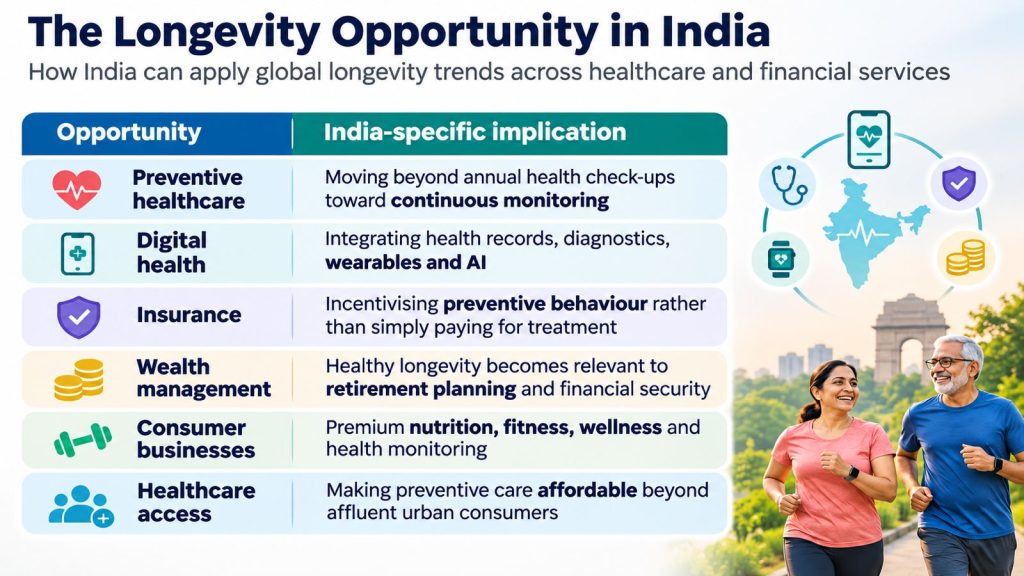
Why longevity is no longer just a healthcare Issue, but a ‘Financial Planning’ one
In India, where life expectancy at birth reached 72.2 years in 2024, the financial…

1 day ago
Meganet Technologies files initial papers for ₹740 crore IPO
Motilal Oswal Investment Advisors, ICICI Securities are the book-running lead managers

17 hours ago
IIT Guwahati Wins National Semiconductor Systems Engineering Competition
With 803 teams from 189 colleges competing, the Bengaluru finale highlights India's growing demand…
