
Analysis
16 hours ago
NASA to unveil first images from Nancy Grace Roman Space Telescope on December 7
The first images will be released during the American Geophysical Union’s annual meeting in San Francisco, offering an early look at the observatory’s wide-field infrared capabilities and its mission to investigate dark energy, dark matter and exoplanets.
NASA will release the first images from its Nancy Grace Roman Space Telescope on December 7, marking a major milestone in the commissioning of the next-generation space observatory designed to investigate dark energy, dark matter and planetary systems beyond our solar system.
The images will be unveiled during a public livestream from the American Geophysical Union (AGU) Annual Meeting in San Francisco at 3:30 p.m. Eastern Standard Time (12:30 p.m. Pacific Standard Time). NASA will simultaneously publish the images on its website.
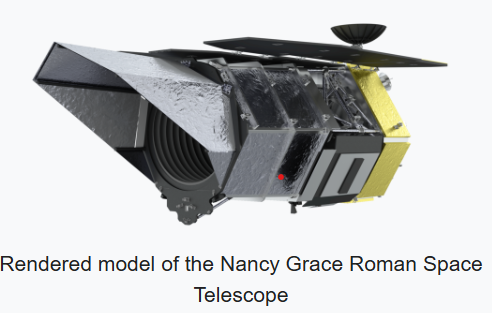
The announcement, made on November 17, provides the first confirmed public-release schedule for Roman’s initial observations following its launch on August 30, 2026.
The unveiling is expected to demonstrate the telescope’s distinctive observational capabilities, particularly its combination of a wide field of view and high-resolution infrared imaging. NASA describes Roman as an observatory capable of capturing panoramic views of the universe at a scale that will significantly expand the scope of astronomical surveys.
New observatory for mapping the universe
The Nancy Grace Roman Space Telescope is designed to investigate some of the fundamental questions in modern astrophysics, including the nature of dark energy, the distribution of dark matter and the formation and evolution of planetary systems. Its principal scientific advantage lies in its ability to survey large areas of the sky while maintaining detailed infrared imaging capabilities.
Roman’s Wide Field Instrument features a 300-megapixel infrared camera equipped with 18 detectors. Its field of view is at least 100 times larger than that of the Hubble Space Telescope, allowing it to observe extensive regions of the universe in individual exposures.
This combination of wide-field coverage and imaging precision is expected to help astronomers build large-scale maps of galaxies, study cosmic structures and investigate how the universe has evolved over billions of years.
While the James Webb Space Telescope is designed to examine selected regions and objects in exceptional detail, Roman will complement it by surveying much larger portions of the sky. The two observatories therefore address different but complementary scientific requirements.
Dark energy, dark matter among central objectives
One of Roman’s primary objectives is to investigate dark energy, the poorly understood component associated with the accelerating expansion of the universe. By conducting extensive surveys of galaxies and mapping cosmic structures, the telescope will help scientists examine how the universe has expanded over time and how dark energy influences its evolution.
Roman will also contribute to research into dark matter, which cannot be observed directly through conventional light-based imaging but whose presence can be inferred through its gravitational effects. Its wide-field observations will allow scientists to study the distribution of matter across large cosmic distances and investigate how galaxies and large-scale structures have formed.
The telescope will additionally conduct a major survey of exoplanets, including using gravitational microlensing to identify planets beyond our solar system. Its coronagraph instrument will demonstrate technologies for directly imaging planets around other stars by suppressing the glare of their host stars.
From launch to commissioning
Roman launched on August 30, 2026, aboard a SpaceX Falcon Heavy rocket from NASA’s Kennedy Space Center in Florida. Following launch, the observatory began its journey towards the Sun-Earth Lagrange Point 2 (L2), approximately 1.5 million kilometres from Earth. The location provides a stable observing environment for infrared astronomy.
NASA has been conducting commissioning activities to activate, calibrate and test the spacecraft’s systems and scientific instruments before regular observations begin.
The first images will provide an early demonstration of the observatory’s imaging performance and scientific readiness. Their release is part of the transition from spacecraft commissioning towards the beginning of its scientific survey programme.
NASA’s launch announcement indicated that Roman would transmit approximately 1.4 terabytes of scientific data each day, making data processing and analysis a significant part of the mission. Artificial intelligence, machine learning and citizen-science initiatives are expected to assist researchers in identifying scientifically significant patterns within the enormous volume of observations.
Adopt a Pixel initiative
Alongside the image release, NASA is inviting members of the public to participate through an initiative called Adopt a Pixel. Once the first images are published, participants will be able to claim an individual pixel representing a portion of the observed universe and receive a digital trading card containing information about that part of the image.
The initiative is intended to connect the public with the scientific observations and encourage wider engagement with the mission. NASA will also support community events organised around the December 7 unveiling.
A new era of wide-field infrared astronomy
The Roman Space Telescope is expected to complement the scientific capabilities of Hubble and James Webb while opening a different observational window into the universe. Its ability to survey large areas of the sky rapidly could help astronomers identify billions of galaxies, discover new planetary systems and investigate cosmic phenomena that require extensive statistical observations.
The first images will not represent the completion of the mission’s commissioning process or the full start of its long-term scientific surveys. They will, however, provide an important early indication of how the observatory performs in space and the quality of data it can deliver.
For NASA, the December 7 release will be an opportunity to demonstrate the capabilities of an observatory designed not simply to capture distant objects, but to build a much broader picture of the universe and its evolution.
By Subramanya Joshi
Most Popular

4 days ago
Microsoft restores services after 24 hours, rules out cyberattack
The disruption, which began on late Thursday, lasted nearly 24 hours and affected to…

2 days ago
Why longevity is no longer just a healthcare Issue, but a ‘Financial Planning’ one
In India, where life expectancy at birth reached 72.2 years in 2024, the financial…

1 day ago
Singaporean company Megaspeed was under US investigations since 2024
US to pursue full extent of law against Megaspeed over semiconductor export probe

1 day ago
India’s Tata group shares rise as RBI reiterates mandatory of holding-investment company
Tata Chemicals, Tata Investment lead group stock gains after Reserve Bank of India letter
