
News
29 - 04 - 2026
Transmission targets slip as sector braces for capital push
The outlook remains stable, anchored by policy support and the resilience of commissioned assets, yet the sector’s success will hinge on its ability to accelerate delivery in line with India’s energy transition goals.
By A Staff Writer
Mumbai, April 1, 2026
India’s transmission expansion continues to fall short of National Electricity Plan goals, with annual line additions missing targets for three consecutive years up to February 2026.
As of January 2026, about three-fourths of the planned Inter-State Transmission System line length had been commissioned, while intra-state networks showed slightly higher completion levels, according to a CareEdge Ratings’ report.
Yet in FY25 only 8,830 circuit kilometres were added, 42 per cent below the target of 15,253 circuit kilometres (ckm), highlighting the persistent drag from right-of-way acquisition, forest clearances and land procurement for substations.
Despite these setbacks, the sector is poised for a significant scale-up in capital expenditure over the medium term, driven by rising peak demand and rapid renewable energy additions. Peak demand is projected to reach 458 gigawatts (GW) by FY32 from about 275 GW in mid financial year 2025, with renewable capacity targeted at 500 GW by 2030.
To meet this trajectory, the Government of India has finalised a transmission expansion plan involving a capital outlay of ₹9.16 lakh crore, of which ₹6.60 lakh crore is allocated to the Inter-State Transmission System.
The plan calls for more than 6 lakh ckm of new lines and 24 lakh megavolt amperes of transformation capacity by FY32, underscoring the scale of investment required to keep pace with the energy transition, it said.
The Central Transmission Utility of India has identified 67,263 ckm of new lines and 6.30 lakh megavolt amperes of capacity additions up to financial year 2031, requiring ₹4.86 lakh crore in capital outlay.
The Central Transmission Utility of India has identified 67,263 ckm of new lines and 6.30 lakh megavolt amperes of capacity additions up to financial year 2031, requiring ₹4.86 lakh crore in capital outlay. Projects worth ₹2.22 lakh crore are already under implementation, while the remainder are in planning or bidding stages.
Achieving these targets will demand average annual capital expenditure of about ₹81,000 crore from financial year 2026 to financial year 2031, nearly double the industry’s average of ₹45,000 to ₹48,000 crore over the past three years. Of 82 projects currently under way, 35 are on schedule, while most others face delays of up to 12 months, suggesting execution risks remain but are manageable.
While the opportunity pipeline is substantial, the sector’s ability to scale resources and overcome regulatory hurdles will be tested. The stable cash flow profile of operational assets, backed by healthy collection efficiency, normative line availability and long concession periods, lends resilience to credit quality, but the ambitious targets highlight the intensity of the challenge.
The outlook remains stable, anchored by policy support and the resilience of commissioned assets, yet the sector’s success will hinge on its ability to accelerate delivery in line with India’s energy transition goals.
Most Popular
3 days ago
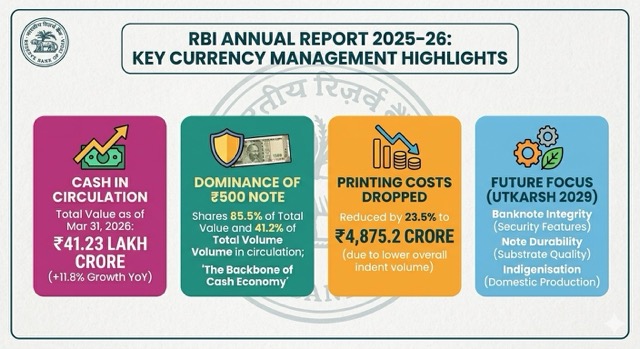
Cash is King, says RBI Annual Report for FY26
RBI's retail Central Bank Digital Currency (CBDC) pilot has encountered a speed bump

4 hours ago
India polishes G-Sec investment rules for FPIs
The Central Government has eliminated Capital Gains Tax on foreign investments in government securities,…

4 days ago
US sanctions Indian firm as energy fight widens
India has no blocking statute that would shield local firms from foreign sanctions in…
2 days ago
Anthropic’s Claude hit by major outage as AI sector wrestles with ‘capacity constraints’
Disruption comes just 24 hours after the San Francisco-based group filed for a highly…
