
Features
05 - 10 - 2026
How is India’s Long Road to Indigenous Aero-Engines Shaping Up
Reported 48.5 kN dry-thrust performance in Russian trials marks another step in GTRE’s effort to turn decades of Kaveri development into a viable propulsion technology for unmanned combat aircraft
India’s Kaveri engine programme has spent more than three decades confronting one of the hardest problems in aerospace engineering: developing a high-performance military gas-turbine engine without relying on foreign technology for its critical foundations.
Now, a derivative of the engine is reported to have delivered 48.5 kN of dry thrust during high-altitude and flight trials in Russia, against a target of around 46 kN. If sustained through the remaining testing and certification process, the result would strengthen the case for the non-afterburning derivative as a propulsion option for India’s future unmanned combat aircraft.
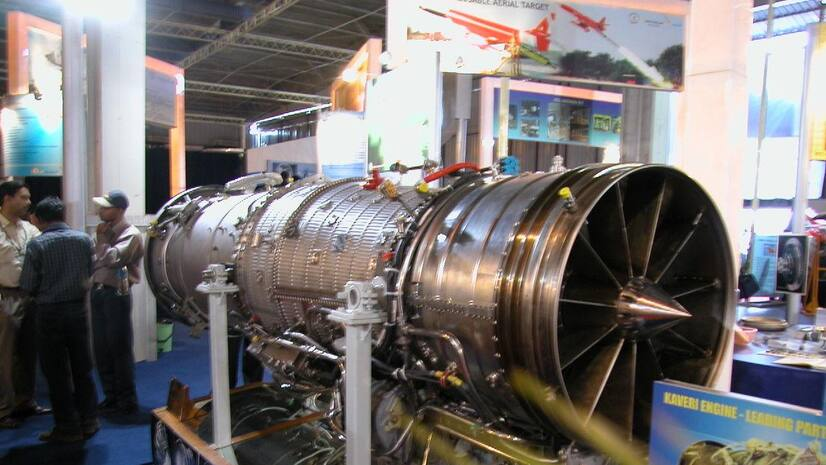
The development is significant not because the derivative has suddenly transformed the Kaveri programme, but because it represents a different path for technology accumulated through a project that did not ultimately meet the requirements of the fighter aircraft for which it was originally conceived.
From Tejas engine to unmanned-aircraft propulsion
The Kaveri programme was sanctioned in 1989 to power India’s indigenous Light Combat Aircraft, the programme that eventually produced the Tejas. GTRE developed nine full prototypes and four core engines, while the programme accumulated 3,217 hours of testing, including altitude and Flying Test Bed trials.
The original engine, however, could not deliver the required fighter-aircraft performance. Government records note that the Kaveri in its existing configuration could not meet the thrust requirement for the Tejas, resulting in the aircraft being integrated with an imported engine.
The programme encountered a range of technological and industrial difficulties, including complex engine-system development, availability of critical materials and components, limitations in domestic infrastructure and specialised manpower.
DRDO subsequently shifted part of its focus towards derivatives that could exploit the technologies and experience developed through Kaveri without requiring the full performance envelope of a fighter engine.
One such route was the dry Kaveri derivative, which removes the afterburner and is intended for unmanned applications. The government has previously stated that this derivative was being pursued for an Indian unmanned combat aircraft.
Why the dry engine matters
A military turbofan designed for a fighter aircraft faces a substantially different performance requirement from an engine intended for a stealth unmanned combat aircraft.
The original Kaveri was expected to deliver high thrust, including afterburning performance, while maintaining the weight, reliability and thermal characteristics necessary for a fighter. The dry derivative operates within a less demanding thrust envelope and can therefore make practical use of technologies developed during the longer Kaveri effort.
Earlier technical reporting carried in DRDO publications has put the dry Kaveri derivative at approximately 49–51 kN of thrust, a level identified as suitable for UAV applications such as the Ghatak programme.
The reported 48.5 kN result in the latest Russian trials is therefore significant primarily as a validation of the derivative’s intended performance range rather than as evidence that the original fighter-engine problem has been solved.
Russia remains part of the Kaveri test story
Russia has been closely associated with the Kaveri programme’s testing history.
The original Kaveri underwent high-altitude testing in Russia and was subsequently integrated into an IL-76 Flying Test Bed at the Gromov Flight Research Institute. Government records from the earlier programme document flight testing to an altitude of 12 km and speeds of up to Mach 0.7. That experience helped GTRE build expertise in testing and evaluating an indigenous military aero-engine under conditions that could not be fully replicated through conventional ground testing.
| Metric | Performance/Result | Context or Target |
|---|---|---|
| Dry Thrust (Derivative) | 48.5 kN | Target: ~46 kN |
| Max Altitude (Original) | 12 km | Integrated into IL-76 Flying Test Bed |
| Max Speed (Original) | Mach 0.7 | Integrated into IL-76 Flying Test Bed |
| Testing Facility | Gromov Flight Research Institute | Russian trial location |
The accumulated knowledge has also become one of the more important outputs of the programme. The government has previously noted that technologies developed through Kaveri have been used in subsequent engine-development programmes and that the engines themselves have served as test platforms for newer technologies.
The bigger challenge is still ahead
A successful thrust result is an important milestone, but it is not equivalent to certification or operational deployment.
An aircraft engine must demonstrate sustained reliability across a wide range of operating conditions, including thermal loads, altitude changes, vibration, endurance and repeated operating cycles. Its controls, materials and individual components must also meet stringent certification and airworthiness requirements.
That is particularly important for India because the strategic value of an indigenous aero-engine extends well beyond one aircraft programme. Engine technology requires expertise in hot-section materials, turbine blades, compressors, combustion, digital controls, manufacturing and testing—capabilities that can take decades to develop.
GTRE’s continuing work reflects that longer learning curve. In February 2026, Defence Minister Rajnath Singh visited GTRE in Bengaluru and witnessed a Kaveri engine test with the afterburner engaged. DRDO said technologies and engine components developed through Kaveri and its derivatives were among the systems showcased during the visit.
The organisation is also looking beyond Kaveri itself. DRDO has said that the experience gained from the programme is being carried into next-generation engine development, including work aimed at future fighter platforms.
The reported Russian trial therefore represents another chapter in a much longer story. Kaveri may not have become the engine originally intended for the Tejas, but its technologies, testing experience and engineering knowledge have continued to feed India’s effort to build an indigenous aero-engine capability.
For the Ghatak and other unmanned platforms, the dry derivative could provide one practical destination for that legacy. For India’s wider aerospace industry, the more consequential outcome may be the expertise accumulated along the way—and whether that knowledge can finally be converted into a dependable family of indigenous engines for the aircraft programmes that follow.
By Subramanya Joshi
If you spotted a mistake or have feedback on this story, write to us at editor@newsassociate.com. Email us your press releases on the same ID.
Most Popular

3 days ago
Kotak Mahindra Bank’s profits soar, but margins refuse to join the party
Management expects the full-quarter impact of FCNR(B) deposits to weigh on margins in the…

1 day ago
India’s Mumbai records 3,145 luxury property transactions in H1 FY27
The city registered 3,145 luxury residential property transactions worth ₹32,623 crore between April and…

4 days ago
Infosys Q2 net profit rises 6% to ₹7,823 crore
India's second-largest IT services company trims FY27 revenue guidance

3 days ago
Tech Mahindra partners with SpaceXSI to bring Grok AI coding tools into enterprise workflows
The collaboration will target legacy application modernisation, software development and developer productivity, with a…
