
Analysis
30 - 09 - 2026
Hormuz oil flows recover, but the workaround is fragile
For India, a partial recovery in Hormuz flows is positive but does not eliminate the energy-security risk
Oil exports through the Strait of Hormuz have recovered to about 76 per cent of pre-conflict levels, according to an analysis by Euler, which was reviewed by Izvestia. The recovery has been driven less by a full reopening of the waterway than by a logistical workaround: ship-to-ship transfers off Oman and the UAE.
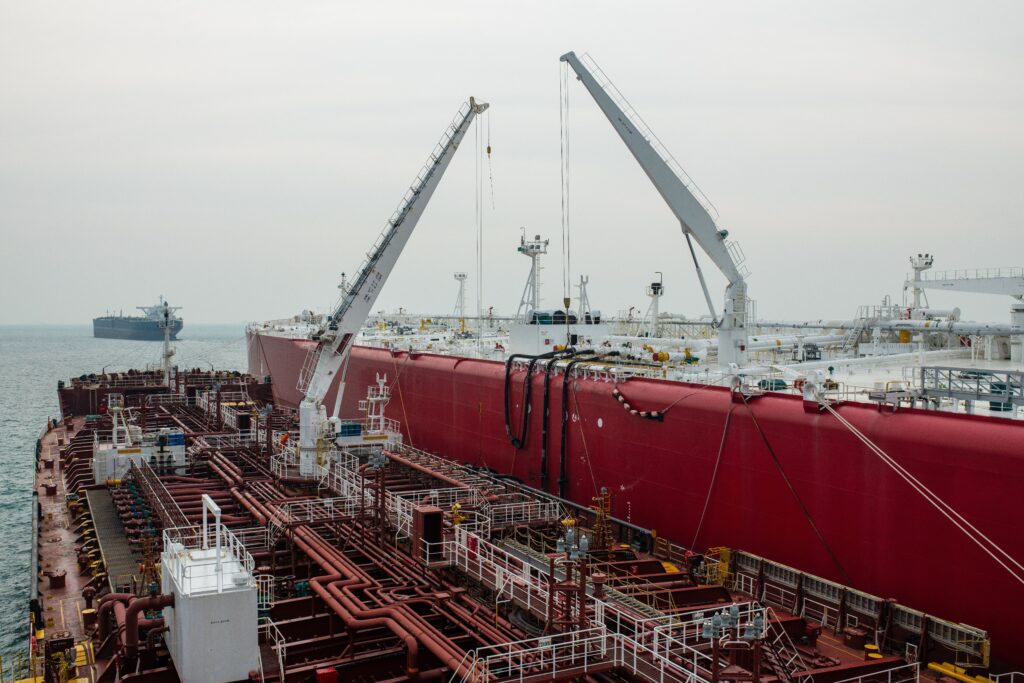
Euler estimated that crude flows through Hormuz reached 10.7mn barrels a day in the week of September 12–18, the highest weekly level since the conflict began. Of this, 9.9mn b/d was moved through offshore transshipment operations near the UAE and Oman, while only 0.8mn b/d was transported directly through the strait.
The arrangement relies on smaller tankers shuttling cargoes from Gulf ports through the risk zone before transferring them offshore to larger vessels for onward delivery. It has helped restore volumes, but it is more complex, costlier and potentially riskier than conventional direct shipping. The system also depends on tanker availability, insurance cover, port access and a level of security that remains uncertain.
Saudi Arabia and the UAE have supplemented the maritime workaround with alternative export routes. Pipeline systems that bypass Hormuz, including Saudi Arabia’s East-West pipeline to the Red Sea and the UAE’s Habshan–Fujairah route, offer some relief. But their capacity is limited relative to the volumes that normally pass through the narrow Gulf chokepoint. The disruption has also extended beyond Hormuz: insecurity around Bab el-Mandeb has added another layer of risk for cargoes moving towards the Red Sea and Europe.
The central question is therefore not whether exports can recover. It is whether the region can restore flows without relying on an expensive and operationally fragile patchwork of offshore transfers, diverted cargoes and constrained pipeline capacity.
What it means for India
For India, a partial recovery in Hormuz flows is positive but does not eliminate the energy-security risk.
India is one of the world’s largest oil importers and remains heavily exposed to the Gulf. Before the disruption, about 40 per cent of India’s crude imports passed through Hormuz, according to government-linked estimates cited by Reuters. Other assessments put the share closer to half, depending on the period and the definition of cargo flows. Iraq, Saudi Arabia, the UAE, Kuwait and Qatar are among India’s key suppliers.
Also, India is exposed because it imports more than 88% of its crude requirements and Russia remains its largest supplier. Russian shipments stood at around 2.1 million barrels per day (bpd) in August and were tracking at roughly 1.9 million bpd in September, according to preliminary data.
New Delhi has cushioned the immediate impact by drawing on diversified supplies and alternative sourcing. India now imports crude from more than 40 countries, and the government has said that about 70 per cent of crude imports are sourced through routes outside Hormuz, compared with about 55 per cent previously. India had also secured around 60 days of oil supplies during the disruption and refiners turned to Latin American and African grades as Gulf cargoes became harder to move.
US crude supplies to India averaged about 177,000 barrels per day (bpd) during January-August, making it the country’s sixth-largest supplier over the period. The US has also become India’s largest supplier of liquefied natural gas (LNG), with Indian imports rising 172% year-on-year in April-July to 2.39 million tons, according to an RT report.
But diversification has a cost. Crude from Latin America and Africa typically involves longer voyages, higher freight charges and possible refinery-adjustment costs. A prolonged disruption could also raise the cost of insurance, delay cargoes and put pressure on India’s trade balance, inflation and rupee.
The risk is broader than crude oil. India depends on the Gulf for a significant share of liquefied petroleum gas and liquefied natural gas as well. A disruption affecting Hormuz, Bab el-Mandeb and Saudi pipeline routes simultaneously can therefore hit fuel, petrochemical and fertiliser supply chains at the same time.
Why the recovery matters
A sustained rise in Hormuz export capacity would likely ease some of the risk premium embedded in oil prices. Greater availability of Gulf barrels should reduce pressure on benchmark prices, freight markets and refinery procurement costs.
That would benefit large importers such as India, whose oil import bill and inflation outlook remain highly sensitive to crude prices. It would also reduce pressure on public finances if the government is required to manage retail fuel or LPG affordability.
For Russia, however, a more fully functioning Hormuz would be less welcome. Easier access to Gulf supply could soften global crude prices and reduce the value of Russian export barrels. Russia’s revenues are particularly sensitive not only to benchmark prices but also to the discount at which its crude trades relative to other grades.
The recovery in flows is therefore not simply a shipping story. It is a test of how quickly Gulf producers can restore supply reliability—and of whether markets are prepared to treat improvised logistics as a substitute for secure, normal navigation.
A more resilient, not risk-free, India
India has emerged from the disruption with a more diversified import base and greater flexibility than in previous oil shocks. But the episode reinforces a structural reality: diversification can reduce dependence on Hormuz; it cannot fully remove exposure to Middle Eastern supply, shipping routes and price formation.
By Venkatesh G
If you spotted a mistake or have feedback on this story, write to us at editor@newsassociate.com. Email us your press releases on the same ID.
Most Popular

4 days ago
DCGI Approves Toripalimab Combination Therapy for Advanced Oesophageal Cancer in India
Dr Reddy’s Laboratories’ Zytorvi, combined with cisplatin and paclitaxel, gains a first-line indication for…

4 days ago
CG Power’s consolidated Q2 net profit rises 44% to ₹409 crore
A sharp rise in Power Systems margins, swelling order book underpin the engineering conglomerate's…

1 day ago
India’s Mumbai records 3,145 luxury property transactions in H1 FY27
The city registered 3,145 luxury residential property transactions worth ₹32,623 crore between April and…

4 days ago
Infosys Q2 net profit rises 6% to ₹7,823 crore
India's second-largest IT services company trims FY27 revenue guidance
