
Analysis
21 - 09 - 2026
Aerospace Delays Could Render Indigenous Technologies Obsolete: India’s Defense Minister Warns
Defence Minister urges realistic development timelines, stronger R&D and deeper civil–military collaboration as HAL pushes ahead with the HTT-40, Dhruv NG and LCA Tejas Trainer programmes
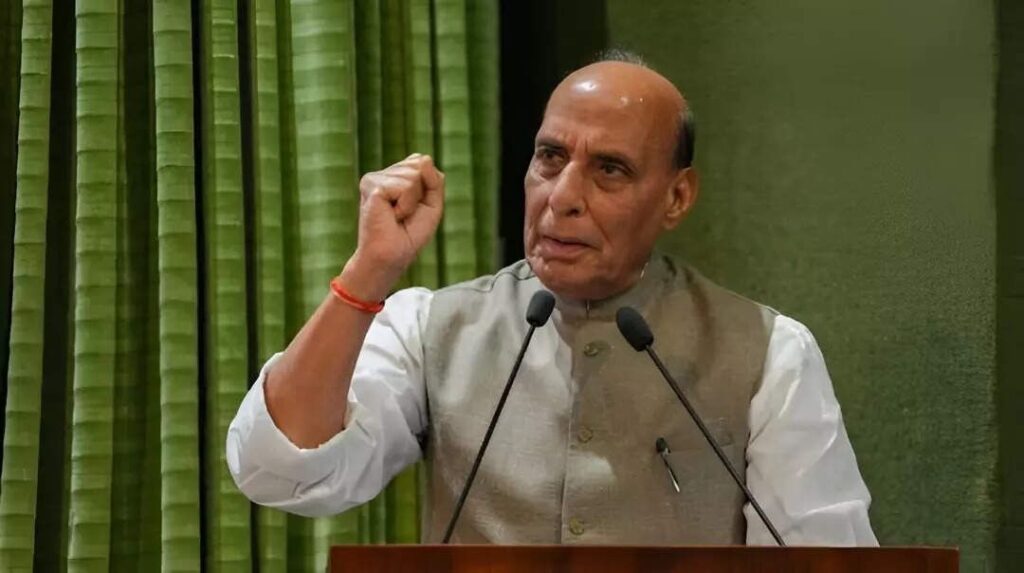
Defence Minister Rajnath Singh on Friday warned that delays in critical aerospace programmes could create capability gaps, increase costs and render indigenous technologies obsolete before they enter operational service, calling for realistic timelines, sustained investment and faster development.
Addressing a ceremony marking major milestones for Hindustan Aeronautics Limited’s (HAL) HTT-40 basic trainer, Dhruv Next Generation (NG) civil helicopter and LCA Tejas FOC Trainer, Singh said India’s pursuit of aerospace self-reliance must be supported by disciplined programme planning and continuous technological development. “Delays in crucial defence requirements create gaps in our capability and also force us to face cost escalation,” Singh said.
He cautioned that the rapid pace of technological change presented an additional challenge for long-duration aerospace programmes. “By the time a particular technology reaches service, a better technology may already have emerged elsewhere,” he said, referring to the risk of technology obsolescence.
Singh said complex aerospace systems could not be developed through a “big bang” approach and instead required a gradual process in which individual technologies, products and components were developed as part of a longer roadmap.
“Aerospace system development is a very gradual process. Every product and component is a small step in a long staircase. We have to move forward one step at a time,” he said.
His remarks came as HAL marked three milestones across military and civil aviation. The HTT-40 Ankur basic trainer received its Restricted Military Type Certificate and related release-of-service and delivery documents for the Indian Air Force. The Dhruv NG received its civil type certificate from the Directorate General of Civil Aviation, while four helicopters were handed over to Pawan Hans Limited. The final certification document for the LCA Tejas FOC Trainer was also handed over to the IAF.
Singh described the occasion as more than a ceremonial transfer of aircraft and certification documents, saying it reflected progress in Indian engineering, aerospace technology, manufacturing and the wider national effort towards Atmanirbharta.
From basic training to fighter transition
The HTT-40 represents the foundational stage of India’s military pilot-training ecosystem. Singh noted that every fighter pilot’s journey begins with basic flight training and said India had historically depended on imported aircraft for this stage.
The first HTT-40 from series production being handed over to the IAF, he said, demonstrated India’s ability to develop and manufacture a basic trainer domestically. Singh also pointed to the aircraft’s potential for international markets, saying its export prospects could reflect the growing capabilities of India’s wider aerospace ecosystem.
The LCA Tejas FOC Trainer represents a subsequent stage in the training pipeline, enabling pilots to transition from basic flying instruction towards operational fighter aircraft.
Singh described indigenous fighter-aircraft development as a highly complex undertaking involving advanced technologies and a broad national knowledge base. The LCA programme, he said, has helped build capabilities across flight controls, composite structures, avionics, radar integration, weapons systems and certification.
He said India’s growing fighter-aircraft ecosystem would be particularly important as the nature of warfare changes and operational effectiveness increasingly depends on trained personnel, advanced technology, integrated systems and rapid decision-making.
Singh also referred to ongoing programmes such as the Advanced Medium Combat Aircraft, LCA Mk-2 and aero-engine development as part of India’s longer-term effort to deepen indigenous aerospace capabilities.
One more step towards ‘Atmanirbharta’
The Dhruv NG’s civil type certification represents another dimension of the country’s aerospace strategy, taking a platform derived from military experience into the civilian market.
Singh said the helicopter had already demonstrated its capabilities in demanding operating environments, including offshore operations. He also highlighted the integration of the DGCA-certified indigenous Shakti engine as an important element of India’s aerospace indigenisation efforts.
He stressed that civil aviation certification requires extensive testing and compliance with stringent airworthiness requirements before a helicopter can enter commercial operations.
Defence Minister Rajnath Singh stressed that aerospace self-reliance would require a long-term roadmap, clearly defined milestones, sustained investment and patience. He also warned that delays could become particularly costly in aerospace because technology can become outdated before a system reaches operational service.
The Defence Minister called for closer integration between military and civilian aerospace, saying capabilities developed in aircraft design, avionics, flight-control systems, manufacturing, certification and subsystem development could benefit both sectors.
He praised the HTT-40 for reducing dependence on imported basic trainers and highlighted the LCA programme as evidence of India’s growing capabilities in fighter-aircraft design, composite structures, flight-control laws, avionics, radar integration and weapons certification.
Singh also called for greater investment in research and development and urged public- and private-sector organisations to work together across the aerospace value chain, from design and manufacturing to certification, lifecycle support, overhaul, repair and maintenance.
If the government’s projection of a nearly 1,000-strong civil helicopter fleet materialises over the next five to eight years, the Dhruv NG’s entry into the civilian market could provide HAL with a domestic platform around which a wider ecosystem of operators, maintenance providers, component manufacturers and specialised aviation services can develop.
Singh said capabilities developed in aircraft design, avionics, propulsion, composite materials, flight-control systems, manufacturing and certification should be leveraged across the wider aerospace industry.
“A vibrant aerospace industry should not be limited to meeting defence requirements. We need an ecosystem that can effectively address the requirements of both civil and military aviation,” he said.
He called for an integrated aerospace ecosystem capable of supporting the entire value chain, from research, design and development to manufacturing, certification, maintenance, repair, overhaul and lifecycle support.
Naidu similarly urged HAL to extend its defence-sector capabilities into civilian aviation. He said the government was targeting the development of a Made-in-India civilian aircraft within the next two years and cited programmes such as the C-295 production line, Saras Mk2 and Hansa trainer as part of the country’s broader aviation manufacturing push.
He also highlighted HAL’s Dornier Do-228, which operates on challenging regional routes including Guwahati and Itanagar, as an example of an indigenous aircraft serving connectivity requirements that are not easily addressed by larger commercial airliners.
R&D at the centre of long-term capability
Singh placed particular emphasis on research and development, arguing that India’s aerospace ambitions cannot rely only on adapting or reproducing existing technologies.
“I want to give our young scientists, engineers and designers a challenge — to create technology that does not exist today,” he said.
He argued that breakthroughs in R&D could fundamentally alter India’s position in the global aerospace technology landscape and encouraged young researchers to pursue technologies aimed at future requirements.
At the same time, he called for more realistic budgeting and programme timelines so that research, development, certification and production remain aligned with the pace of technological change.
The Defence Minister also urged public-sector and private-sector organisations to view one another as complementary rather than simply competing entities.
“Public and private sectors should not be seen as competition, but as supplements to each other,” he said.
The LCA programme already involves more than 500 private-sector partners, including over 350 MSMEs, while more than 100 MSMEs, startups, academic institutions and private companies have contributed to the Dhruv NG programme.
For HAL, the three milestones demonstrate the progression of indigenous aerospace capability from design and engineering to certification, production and operational deployment. For the government, they also reinforce a larger objective: creating an aerospace ecosystem that can simultaneously address India’s defence requirements and growing civilian aviation ambitions.
Singh, however, made clear that achieving technological self-reliance would depend not merely on developing indigenous platforms, but on delivering them within realistic timelines, continuously investing in R&D and ensuring that the technology remains relevant when it finally reaches service.
The challenge, therefore, is no longer only whether India can design and build complex aerospace systems, but whether it can develop, certify, manufacture and deploy them quickly enough to remain technologically competitive.
By Subramanya Joshi
If you spotted a mistake or have feedback on this story, write to us at editor@newsassociate.com. Email us your press releases on the same ID.
Most Popular

3 days ago
Tech Mahindra partners with SpaceXSI to bring Grok AI coding tools into enterprise workflows
The collaboration will target legacy application modernisation, software development and developer productivity, with a…

1 day ago
India’s Mumbai records 3,145 luxury property transactions in H1 FY27
The city registered 3,145 luxury residential property transactions worth ₹32,623 crore between April and…

4 days ago
CG Power’s consolidated Q2 net profit rises 44% to ₹409 crore
A sharp rise in Power Systems margins, swelling order book underpin the engineering conglomerate's…

3 days ago
Kotak Mahindra Bank’s profits soar, but margins refuse to join the party
Management expects the full-quarter impact of FCNR(B) deposits to weigh on margins in the…
