
News
30 - 07 - 2026
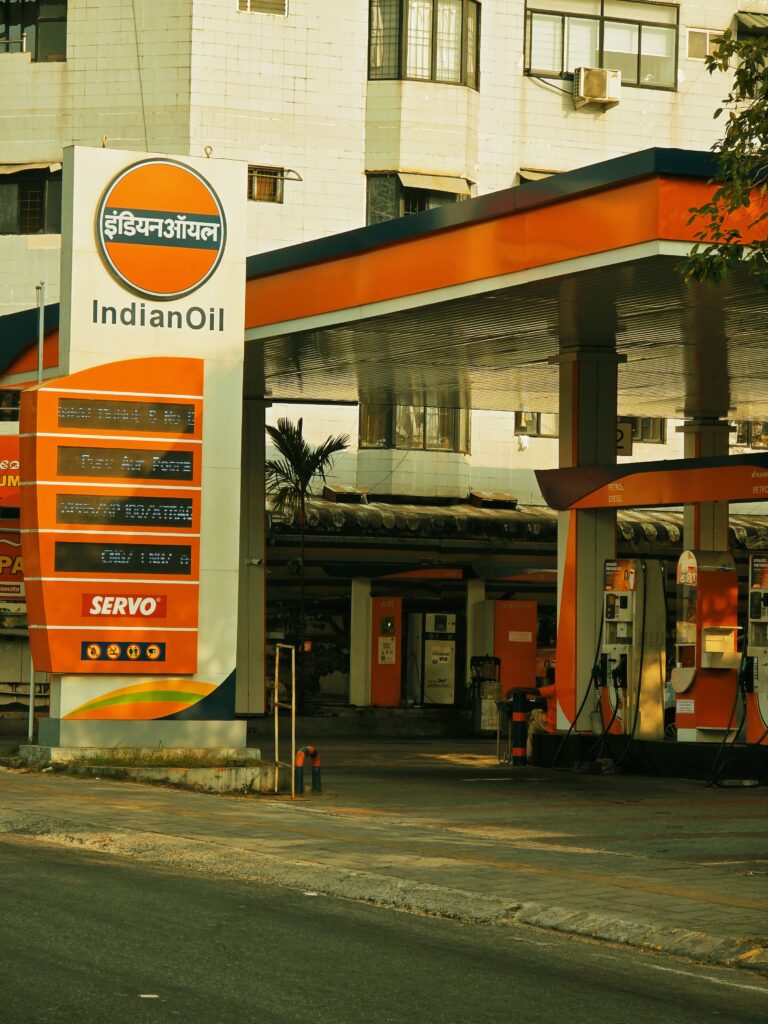
Indian government debunks the E20 scare
India has a curious habit. We trust petrol that comes out of a pump, but distrust the chemistry that goes into it.
Throw in a viral social media post, garnish it with rumours of engines dying untimely deaths, and suddenly every tea stall has an automotive expert. The Ministry of Petroleum and Natural Gas has now decided it has heard enough.
In an unusually detailed rebuttal issued on Thursday, the Ministry tore into what it called misleading claims surrounding the Ethanol Blended Petrol (EBP) programme, insisting there is no scientific or real-world evidence that E20 fuel is wrecking engines, crippling vehicles or turning crores of motorists into unwilling guinea pigs.
The government’s argument is simple enough. If E20 were really the mechanical villain it is made out to be, India would have witnessed a spectacular automotive funeral procession by now. More than 20 crore two-wheelers and over three crore petrol cars have been running on higher ethanol blends for over two years. Workshops would have been overflowing, warranty claims would have multiplied, manufacturers would have been scrambling to save their reputations and social media would not have needed to invent horror stories. None of that has happened, the Ministry said.
To support its case, it reached for numbers rather than rhetoric. A leading automobile manufacturer serviced 2.84 crore vehicles during FY2025-26, including nearly 1.5 crore older vehicles that were never designed as E20-compatible. Its verdict: no unusual corrosion, no abnormal wear and no shortening of component life attributable to ethanol.
Another manufacturer tracked 1.4 crore vehicles running on E20 and reached much the same conclusion. A leading two-wheeler company reported similar field experience.
Not an exotic experiment
The Ministry also reminded sceptics that ethanol is hardly an exotic experiment. Brazil has been filling fuel tanks with far higher ethanol blends for decades, while India began its own ethanol journey with a pilot project in 2001. What started with a modest five per cent blend has climbed gradually to 20 per cent after years of testing, consultation and infrastructure expansion.
Then there is the favourite doomsday prediction—that 30 crore vehicles will become obsolete overnight. The Ministry dismissed it with almost visible impatience. Had E20 rendered older vehicles unusable, India’s roads would have resembled giant parking lots rather than the chaotic rivers of traffic they remain today.
Automobile manufacturers, often accused of privately disliking E20 while publicly praising it, also found themselves drafted into the government’s defence. Executives from Toyota Kirloskar, Maruti Suzuki, Hero MotoCorp, Hyundai Motor India, TVS Motor Company and Bajaj Auto, speaking at a joint press conference earlier this month, reaffirmed that E20 had been introduced only after rigorous testing and validation.
Maruti Suzuki said its service records showed no E20-linked damage. Hero MotoCorp reported no unusual failures in two-wheelers. Toyota maintained that international testing standards had been followed before the fuel reached consumers.
Mileage, another perennial complaint, also received a dose of reality. The Ministry conceded that some older vehicles designed for E10 fuel could witness a modest reduction of around three to five per cent in fuel economy. But it added that tyre pressure, driving habits, clogged air filters, stop-and-go traffic and an enthusiastic right foot usually do far more damage to mileage than ethanol ever could.
The government also argued that E20 brings compensating gains—higher octane ratings, cleaner combustion, smoother engine performance and reduced dependence on imported crude oil.
Finally came the political charge: that manufacturers are under pressure to hide the truth. The Ministry rejected it outright, pointing out that listed companies cannot conceal widespread product failures without inviting lawsuits, warranty costs, regulatory penalties and commercial embarrassment.
Carmakers continue to honour warranties on vehicles using specification-compliant E20 fuel, the Ministry said, because engineering data—not political persuasion—dictates those decisions.
Facts, unfortunately, are rarely as entertaining as rumours. Engines exploding make better conversation than engines quietly doing their job. The Ministry’s latest clarification is, in essence, an attempt to replace WhatsApp mechanics with engineering. Whether it succeeds is another matter. In India, faith often travels faster than fuel.
Most Popular

3 days ago
Tech Mahindra partners with SpaceXSI to bring Grok AI coding tools into enterprise workflows
The collaboration will target legacy application modernisation, software development and developer productivity, with a…

4 days ago
DCGI Approves Toripalimab Combination Therapy for Advanced Oesophageal Cancer in India
Dr Reddy’s Laboratories’ Zytorvi, combined with cisplatin and paclitaxel, gains a first-line indication for…
3 days ago
Kotak Mahindra Bank’s profits soar, but margins refuse to join the party
Management expects the full-quarter impact of FCNR(B) deposits to weigh on margins in the…

4 days ago
Infosys Q2 net profit rises 6% to ₹7,823 crore
India's second-largest IT services company trims FY27 revenue guidance
