
News
27 - 07 - 2026
After Aadhaar, Nilekani to solve India’s exam trust crisis
The Indian government’s decision to appoint Nilekani to head a high-powered task force on examination reforms comes at a time when India’s competitive examination system is facing its own crisis of credibility
India once had a simple problem: it needed to know who its citizens were.
It was a country where a person could have multiple identities, sometimes multiple documents, and occasionally a relationship with bureaucracy that depended less on proof and more on patience. Then came Nandan Nilekani with Aadhaar.
The former Infosys chief was given the formidable task of creating a digital identity for more than a billion people — a number so large that most countries would hesitate even to count it. The question was straightforward: “Who are you?” The answer came in the form of fingerprints, iris scans and a digital identity that attempted to bring order to a complicated system.
Now, years later, Nilekani has been handed a different question, one that may prove even more difficult.
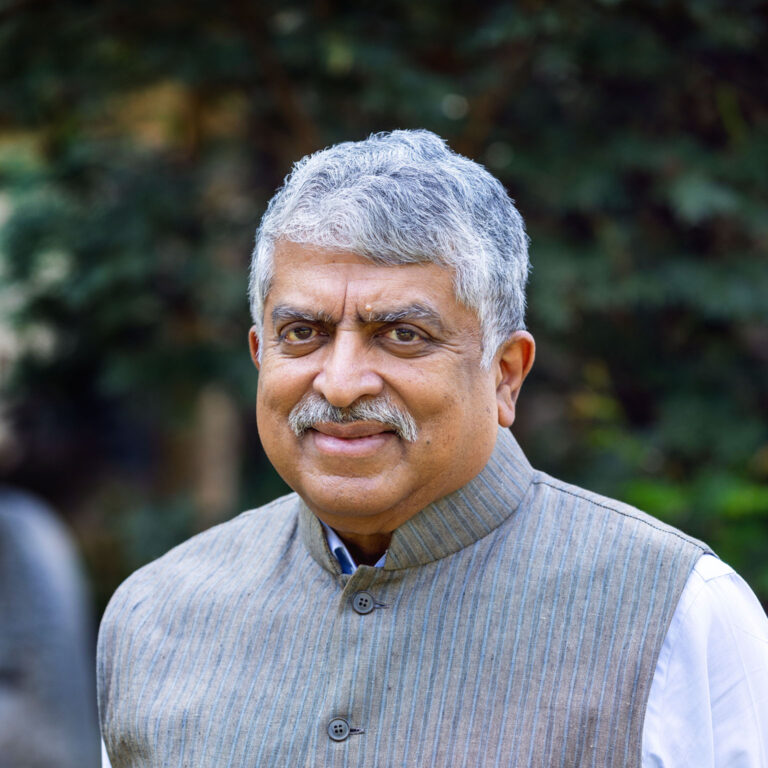
Crisis of credibility
The Indian government’s decision to appoint Nilekani to head a high-powered task force on examination reforms comes at a time when India’s competitive examination system is facing its own crisis of credibility. For lakhs of students, the fear is no longer only about a tough paper or a difficult rank. It is about whether the race itself is fair.
A student may spend years preparing for NEET, JEE or a government recruitment examination. Parents may spend their savings. Families may build their hopes around a single result. And then, one question paper leak or one security failure is enough to make an entire generation suspicious of the system.
This is where Nilekani’s latest assignment becomes interesting. The man who helped India create a mechanism to verify identity is now being asked to strengthen the integrity of opportunity.
Aadhaar was built around trust — trust that a person’s identity could be verified anywhere. The examination reform exercise will require a similar foundation — trust that a student’s performance reflects ability, not the weakness of a system.
The parallels are obvious. Both involve millions of people. Both require secure technology. Both depend on citizens believing that the system works.
The solutions may include stronger candidate authentication, encrypted question paper systems, artificial intelligence-based monitoring, transparent evaluation processes and digital audit trails. But technology alone cannot solve what is essentially a governance problem.
A machine can identify a candidate. It cannot create confidence. That remains the harder task.
A social contract
India’s examination system is not merely an administrative arrangement. It is a social contract. For a young person from a small town, an entrance examination is often the bridge between limited opportunity and a better future. If that bridge appears shaky, the entire promise of merit comes under question.
Nilekani knows something about building systems at scale. He helped turn Infosys into a global technology brand and later worked on some of India’s biggest digital governance initiatives. But examinations present a different challenge.
With Aadhaar, the question was whether technology could help identify people. With exams, the question is whether technology can help people believe in fairness.
That distinction matters. India has spent years building digital highways — for identity, payments and public services. The next test may be whether those highways can carry something less tangible but more valuable: public confidence.
Nilekani’s new assignment is therefore not just about computer systems, biometric checks or secure servers. It is about restoring a fragile commodity in public life — trust.
The first question India asked him was: “Who are you?” The question millions of students now want answered is far more personal: “After all my hard work, can I trust that the system will judge me fairly?”
And that may be the toughest technology problem Nilekani has been asked to solve.
Most Popular

1 day ago
India’s Mumbai records 3,145 luxury property transactions in H1 FY27
The city registered 3,145 luxury residential property transactions worth ₹32,623 crore between April and…
2 hours ago
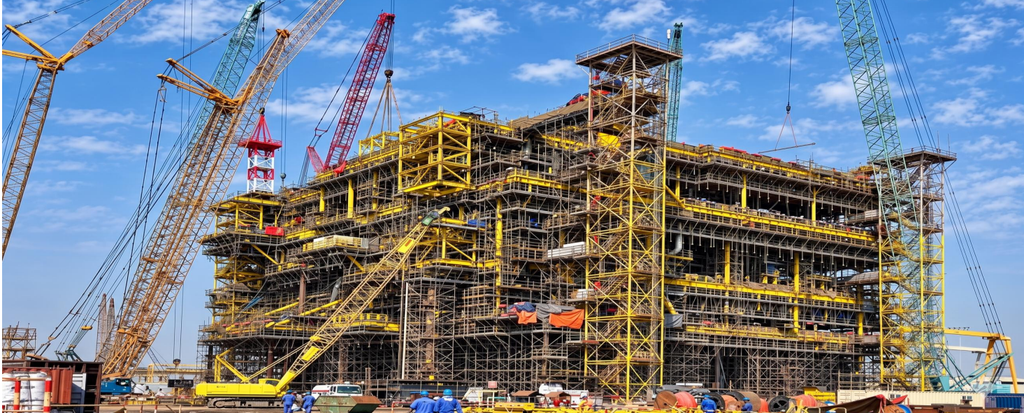
L&T Q2 cons net profit rises 33% to at ₹5,202 crore
The group’s consolidated revenue rose 16% to ₹78,750 crore, driven by progress in its…

4 days ago
Infosys Q2 net profit rises 6% to ₹7,823 crore
India's second-largest IT services company trims FY27 revenue guidance

3 days ago
Tech Mahindra partners with SpaceXSI to bring Grok AI coding tools into enterprise workflows
The collaboration will target legacy application modernisation, software development and developer productivity, with a…
