
News
25 - 07 - 2026
India’s Next Financial Revolution May Be Hidden in the Ledgers of Rural Women
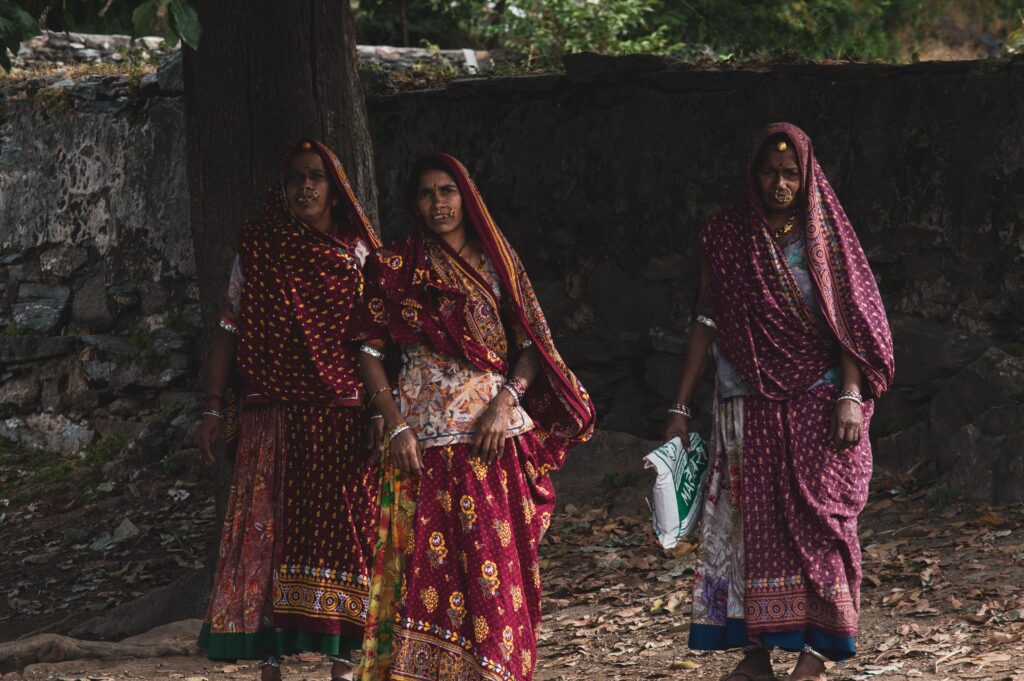
Long before India’s digital payments revolution reshaped everyday commerce, millions of women across rural India had built something far less visible but potentially just as transformative: years of disciplined borrowing and repayment through self-help groups.
Those transactions, however, exist largely on paper, beyond the reach of banks and credit bureaus. Kalpana Ajayan, South Asia Regional Head of Women’s World Banking, believes bringing those records into the digital economy could redefine financial inclusion for women in India, much as the Unified Payments Interface redefined payments.
“The next breakthrough in financial inclusion may not come from creating another payment platform,” Ajayan said on the sidelines of the Fintech Fusion Festival here. “It may come from making the financial history of nearly 10 crore women visible.”
For decades, self-help groups have served as informal financial institutions in villages and small towns, enabling women to borrow modest sums, build savings and establish repayment records. Yet because those transactions are rarely digitised, women who have repaid loans faithfully for years often appear to formal lenders as if they have never borrowed at all.
Consequences of disconnect
The disconnect has real consequences. Most women begin with loans of around Rs 25,000 within their groups but struggle to obtain larger loans from banks to expand small businesses, despite having demonstrated financial discipline over many years.
“These women have built trust within their communities,” Ajayan said. “The banking system simply cannot see that trust because it exists outside formal credit records.”
Digitising SHG lending history, she argued, would allow banks to evaluate borrowers using actual repayment behaviour rather than the absence of conventional credit scores. Such a shift could open formal credit to millions of women entrepreneurs who today remain excluded from mainstream finance.
The implications extend beyond banking. As India seeks to create jobs and expand entrepreneurship, women-owned enterprises are increasingly viewed as an important source of economic growth. Ajayan pointed to government initiatives such as the Lakhpati Didi programme as evidence of that policy shift.
“When one woman succeeds in building a business, she rarely grows alone,” she said. “She creates opportunities for three to five other women. The economic impact multiplies.”
India has already laid much of the technological foundation through the Jan Dhan-Aadhaar-Mobile ecosystem, which dramatically expanded access to bank accounts and digital identity. But access, Ajayan argued, is no longer the central challenge.
Women’s World Banking estimates that roughly 200 million women own smartphones and have internet connectivity but remain on the margins of the formal financial system. “The question now is whether digital access translates into meaningful financial participation,” she said. “Savings, insurance, credit and digital financial services must become part of everyday economic life.”
Ajayan also urged lenders to reconsider traditional models that rely heavily on collateral, noting that many women lack ownership of land or property despite running viable businesses. Instead, she said, banks should increasingly assess enterprise cash flows, business performance, supply-chain relationships and repayment capacity when extending credit.
She pointed to another imbalance: while women account for more than half of Jan Dhan account holders, only about 13-14 per cent of banking correspondents are women. Expanding that workforce, she said, could strengthen trust and improve access in communities where women are often more comfortable dealing with female financial agents.
Awareness remains another obstacle. Many entrepreneurs, she said, do not know they are eligible for collateral-free loans under the Credit Guarantee Fund Trust for Micro and Small Enterprises (CGTMSE). Finance alone, however, is not enough.
“Women need more than capital,” Ajayan said. “They need business skills, digital confidence, market connections and continued support. Credit works best when it is combined with capability.”
India’s digital public infrastructure has already altered the way money moves. Ajayan believes the next chapter could be about changing who has access to opportunity.
“If we can make millions of women entrepreneurs visible to the formal financial system and equip them with credit, capability and resilience,” she said, “it could become one of India’s defining growth stories on the road to Viksit Bharat 2047.”
Most Popular

1 day ago
India’s Mumbai records 3,145 luxury property transactions in H1 FY27
The city registered 3,145 luxury residential property transactions worth ₹32,623 crore between April and…

4 days ago
DCGI Approves Toripalimab Combination Therapy for Advanced Oesophageal Cancer in India
Dr Reddy’s Laboratories’ Zytorvi, combined with cisplatin and paclitaxel, gains a first-line indication for…

1 hour ago
L&T Q2 cons net profit rises 33% to at ₹5,202 crore
The group’s consolidated revenue rose 16% to ₹78,750 crore, driven by progress in its…

4 days ago
CG Power’s consolidated Q2 net profit rises 44% to ₹409 crore
A sharp rise in Power Systems margins, swelling order book underpin the engineering conglomerate's…
