
Features
18 - 07 - 2026
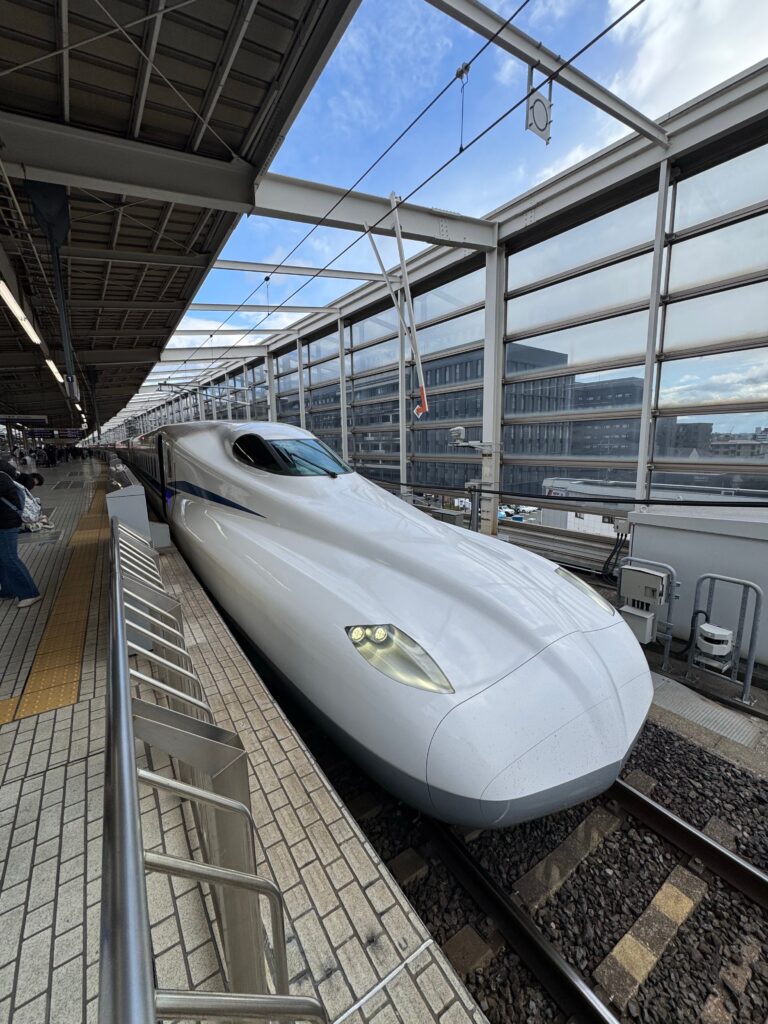
India Flexes Industrial Muscle in Shinkansen Standoff
Tokyo’s concessionary lending was explicitly tied to the procurement of Japanese industrial exports: their rolling stock, their proprietary signaling architectures, and critically, their pricing mechanisms on their own terms
The landmark 2015 agreement between New Delhi and Tokyo to build India’s first high-speed rail corridor—a ₹1.08 lakh crore ($15bn), 508 km link between Mumbai and Ahmedabad—was hailed as a masterstroke of economic diplomacy.
Backed by a massive Japanese soft loan covering the vast majority of project costs at a near-invisible 0.1 percent interest rate over 50 years, the deal appeared flawless on paper: world-class Shinkansen technology financed by remarkably cheap capital. Yet, in international infrastructure financing, cheap capital rarely comes without operational strings.
Tokyo’s concessionary lending was explicitly tied to the procurement of Japanese industrial exports: their rolling stock, their proprietary signaling architectures, and critically, their pricing mechanisms on their own terms. It is the standard calculus of bilateral aid, designed less out of altruism than to stimulate domestic industry.
However, deep-seated friction over procurement pricing and delivery timelines has fundamentally altered the project’s trajectory, triggering a nationalist shift toward indigenous engineering and sparking a rare public diplomatic spat.
A Breakdown in the Bilateral Script
The partnership hit a wall on two specific fronts: capital expenditures and temporal realities. First, the cost of Japanese Shinkansen trainsets emerged as a major pain point, leaving Indian negotiators feeling aggressively overcharged for imported rolling stock.
Second, the structural timeline collapsed. Tokyo’s newest high-speed trainsets—initially earmarked for the project—are still under development and reportedly will not be ready for export to India until the early 2030s. Faced with the prospect of completing a massive civil engineering project only to leave the tracks sitting idle for years, New Delhi chose to break the traditional script.
Rather than waiting out the delay and absorbing inflated import costs, India pivoted to an indigenous workaround. State-owned BEML Limited in Bengaluru was handed an ₹866.87 crore contract to design and manufacture domestic high-speed train prototypes engineered to operate at 280 km/h.
BEML B28 Indigenous Trainset Profile
───────────────────────────────────────────────────────
Design Speed: 280 km/h
Target Testing: Early 2027 (Surat Depot)
First Phase Route: Surat to Vapi / Bilimora (August 2027)
Contract Value: ₹866.87 crore (for initial prototypes)
Under the revised strategy, India will inaugurate its high-speed network using locally built rolling stock on the operational Surat stretch around August 2027, integrating Japanese Shinkansen trainsets at a later date when market terms soften.
The Signaling Fracture
A more contentious break occurred within the project’s digital nervous system. India decoupled from Japan’s proprietary Digital Communication & Automatic Train Control (DS-ATC) architecture, electing instead to implement the European Train Control System (ETCS) Level 2 standard—the same family of signaling already deployed on the Delhi-Meerut Regional Rapid Transit System (RRTS).
The shift has drawn sharp rebukes from Tokyo. Hideki Makihara, Japan’s former Justice Minister, publicly criticized the negotiations on social media, accusing the Indian side of “sheer recklessness” and an inability to honor established commitments. The Ministry of External Affairs in New Delhi swiftly dismissed the remarks as an “individual opinion at considerable variance with facts,” clarifying that “no Japanese offer was received” that aligned with the project’s aggressive launch timelines.
From New Delhi’s perspective, the decision was pragmatic rather than punitive. The Japanese signaling package was deemed too expensive, overly restrictive, and incompatible with India’s desire for vendor competition and global standardized interfaces.
Friction of Strategic Autonomy
To an external observer, India’s negotiating style can appear frustratingly volatile. New Delhi routinely pushes its domestic interests right up to the final hours of a contract, frequently renegotiating terms that international partners assumed were legally settled. For Japanese officials operating within a corporate culture that prioritizes absolute predictability and polite consensus, this transactional brinkmanship can feel like a breach of trust.
But viewed through India’s macroeconomic lens, the mandate of the National High-Speed Rail Corporation is not to preserve foreign diplomatic comfort; it is to deliver a capital-intensive project at a defensible fiscal price while aggressively absorbing industrial capabilities.
For decades, the standard post-colonial infrastructure dynamic was simple: wealthy nations provided the capital, and developing economies quietly imported the bundled components without argument. By accepting Japan’s long-term financing while systematically unbundling the technology—demanding its own trains, its own open signaling standards, and domestic factory allocation—India has effectively upended that historical power dynamic.
Japan’s engineering credentials remain beyond reproach; the Shinkansen boasts an unparalleled six-decade record of zero passenger fatalities from collisions or derailments. Yet by refusing to remain a passive consumer in its own mega-project, India has managed to leverage an ultra-cheap, 50-year capital facility while successfully forcing the domestic development of its own high-speed industrial ecosystem.
Most Popular
4 days ago
Infosys Q2 net profit rises 6% to ₹7,823 crore
India's second-largest IT services company trims FY27 revenue guidance

3 days ago
Tech Mahindra partners with SpaceXSI to bring Grok AI coding tools into enterprise workflows
The collaboration will target legacy application modernisation, software development and developer productivity, with a…
2 hours ago
L&T Q2 cons net profit rises 33% to at ₹5,202 crore
The group’s consolidated revenue rose 16% to ₹78,750 crore, driven by progress in its…

4 days ago
CG Power’s consolidated Q2 net profit rises 44% to ₹409 crore
A sharp rise in Power Systems margins, swelling order book underpin the engineering conglomerate's…
