
News
03 - 07 - 2026
Karnataka HC says 50-paise gig worker levy is no undue burden, keeps law in force
The interim order requires app-based companies including Zomato, Swiggy, Blinkit and Zepto to deposit the April-June welfare contribution with the court registry within three weeks, while shielding them from coercive action until the constitutional challenge is decided
The Karnataka High Court on Friday said that a welfare levy of 50 paise per delivery is too small to be an unfair burden on digital platforms, and it refused to pause the state’s new gig worker welfare law.
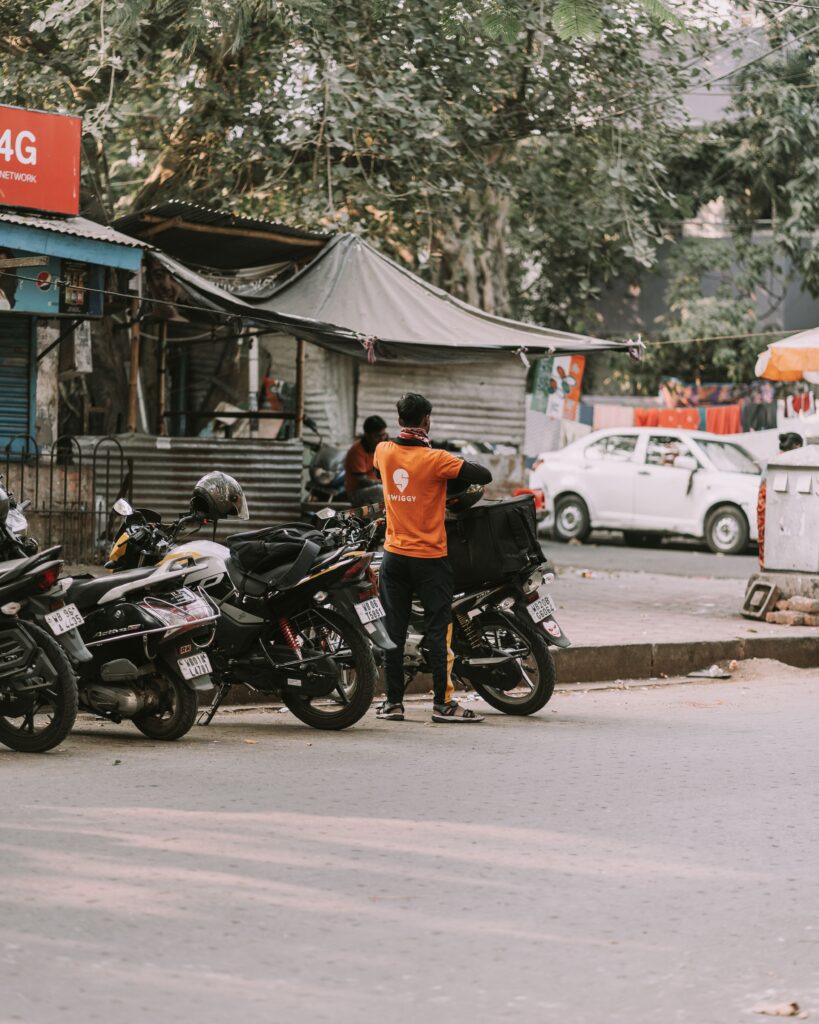
The interim order requires app-based companies including Zomato, Swiggy, Blinkit and Zepto to deposit the April-June welfare contribution with the court registry within three weeks, while shielding them from coercive action until the constitutional challenge is decided.
The ruling is closely watched by investors and technology companies because it tests how far Indian states can go in imposing social security obligations on digital platforms, an issue with potentially wider implications for the country’s rapidly expanding food delivery, ride-hailing and quick-commerce sectors.
Justice M Nagaprasanna, hearing petitions filed by the Internet and Mobile Association of India (IAMAI) and several platform companies, declined to stay the Karnataka Platform-Based Gig Workers (Social Security and Welfare) Act, 2025, saying the interests of businesses, the state and lakhs of gig workers had to be balanced pending a final decision. The Karnataka Platform Based Gig Workers (Social Security and Welfare) Act, 2025 is the first state-level law in India specifically for app-based gig workers, coming into force on May 30, 2025. It mandates a welfare fee of 1% to 5% on platform payouts to fund a dedicated Welfare Board and Social Security Fund.
During the hearing, the judge questioned the platforms’ opposition to a nominal welfare contribution, observing that companies charged customers for home deliveries but resisted paying a small amount towards workers who routinely delivered orders in rain, heat and other difficult conditions.
The companies had sought suspension of the law, arguing that Karnataka lacked the legislative competence to enact it because Parliament had already occupied the field through the Code on Social Security, 2020. They contended that the state law was therefore unconstitutional under Article 254 of the Constitution.
The court indicated that the central issue would be whether the Karnataka legislation merely supplemented the federal law by providing additional welfare benefits or whether it conflicted with it. It said the two statutes would have to be examined to determine whether they could be harmoniously construed.
The companies also requested permission to furnish an unconditional bank guarantee instead of depositing the welfare contribution, arguing that making the payment would affect their financial statements. The court rejected the request, holding that the levy flowed from a law that remained in force and that the funds should remain secured until the constitutional challenge was resolved.
The Karnataka government defended the legislation, saying there was no inconsistency with the central social security framework. It told the court the welfare contribution was capped at 50 paise per trip for two-wheelers, 75 paise for three-wheelers and Re 1 for four-wheelers, and argued that similar laws had already been enacted in Rajasthan, Bihar and Telangana.
Lawyers for the platforms also argued that no welfare schemes had yet been notified for distributing the funds collected from aggregators, while the Union government supported the constitutional challenge, contending that the state law was inconsistent with the Code on Social Security.
Apart from challenging the Act itself, the petitions seek to quash the notification constituting the Karnataka Platform-Based Gig Workers Welfare Board, the government order implementing the levy and directions requiring platforms to establish Internal Dispute Resolution Committees.
The High Court directed the Karnataka government to file its response by July 30 and scheduled the next hearing for July 31.
B D Narayankar
Most Popular

2 hours ago
L&T Q2 cons net profit rises 33% to at ₹5,202 crore
The group’s consolidated revenue rose 16% to ₹78,750 crore, driven by progress in its…

4 days ago
DCGI Approves Toripalimab Combination Therapy for Advanced Oesophageal Cancer in India
Dr Reddy’s Laboratories’ Zytorvi, combined with cisplatin and paclitaxel, gains a first-line indication for…

4 days ago
CG Power’s consolidated Q2 net profit rises 44% to ₹409 crore
A sharp rise in Power Systems margins, swelling order book underpin the engineering conglomerate's…

3 days ago
Tech Mahindra partners with SpaceXSI to bring Grok AI coding tools into enterprise workflows
The collaboration will target legacy application modernisation, software development and developer productivity, with a…
