India’s nutraceutical market projected to reach $37–38 billion by 2026
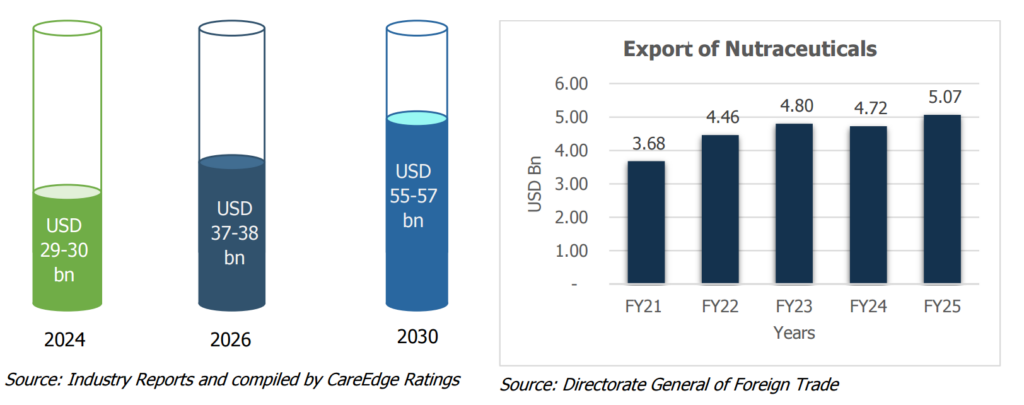
Valued at about $29-30 billion in 2024, it will further expand to $55-57 billion by 2030: CareEdge Ratings.
India’s nutraceutical market is expected to reach $37–38 billion by 2026, entering a phase of growth driven by an expanding consumer shift towards preventive healthcare.
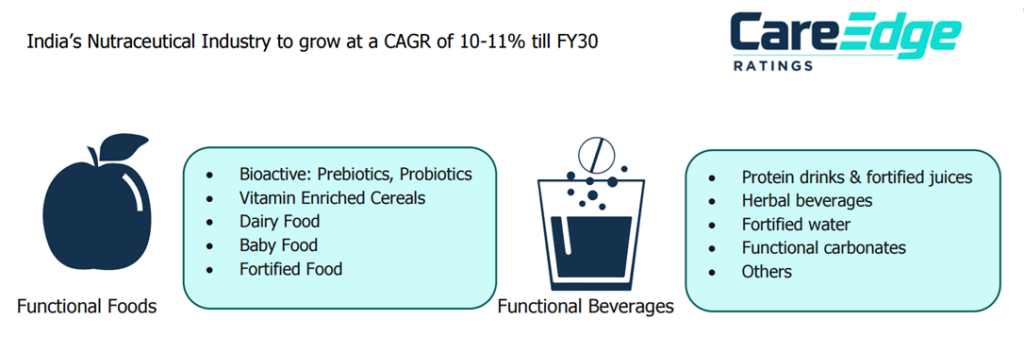
Valued at about $29-30 billion in 2024, the market will expand to nearly $55-57 billion by 2030, recording a compound annual growth rate (CAGR) of around 10.5 per cent, according to a report by CareEdge Ratings.
“The Indian nutraceutical industry is well-positioned for sustained long-term growth, driven by rising health awareness, persistent malnutrition, supportive government policies, increasing adoption of preventive healthcare, and evolving lifestyle trends,” says Uday Kumar, Lead Analyst at CareEdge Ratings.
“Improved accessibility through the rapid expansion of digital channels and e-commerce has further accelerated consumer uptake, while India’s strong agricultural base supports a reliable supply of key raw materials for both domestic and export markets. Although certain regulatory challenges remain, ongoing efforts by Food Safety and Standards Authority of India to strengthen claim verification, introduce clearer timelines, and improve regulatory clarity can enhance transparency and streamline decision-making across the sector,” he added.
Before the COVID-19 pandemic, India’s nutraceutical industry was relatively niche, largely centred around dietary supplements and Ayurvedic or wellness-oriented products, with limited mainstream adoption.
Consumption was mostly driven by fitness users, specific clinical needs, and urban early adopters, while preventive nutrition was still not a dominant consumer behaviour.
Structural shift after COVID-19
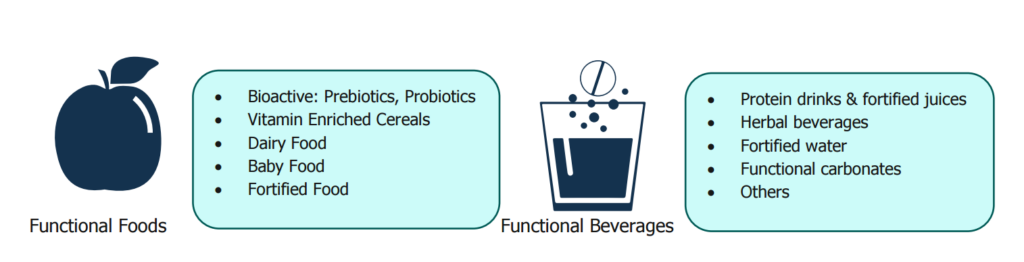
However, the outbreak of COVID-19 marked a structural shift in the industry. Rising concerns around immunity and preventive healthcare significantly changed consumer perception, moving nutraceuticals from being seen as optional wellness products to essential daily health support. This shift accelerated demand across categories such as vitamins, minerals, herbal supplements, and later expanded into functional foods and fortified beverages (FFB), CareEdge said.
At present, FFB dominates India’s nutraceutical market, accounting for about 70 per cent of consumption, while dietary supplements (DS) make up the remaining share. Growth in FFB is being driven by natural and plant-based offerings, along with rising demand for functional drinks, as consumers increasingly seek choices.
Malnutrition bane
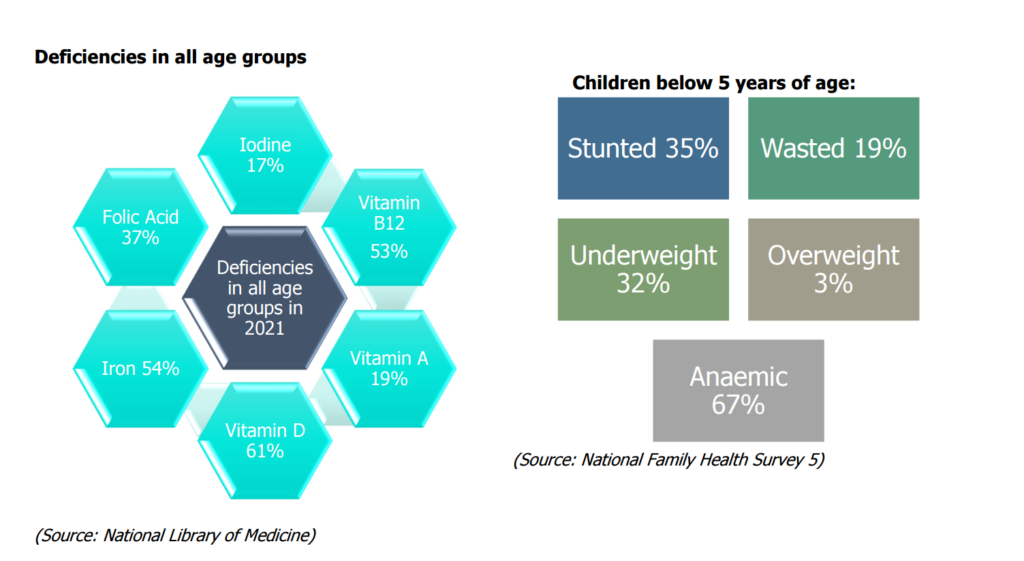
India continues to struggle with a malnutrition burden. About 35 per cent of children under five are stunted, 19 per cent are wasted, 32 per cent are underweight, and 3 per cent are overweight, reflecting growth patterns.
In addition, 67 per cent of children under the age of five and 57 per cent of women aged 15-49 are affected by anaemia. Beyond these indicators, a burden of “hidden hunger” also persists, with micronutrient deficiencies widely reported: around 53 per cent of the population is deficient in vitamin B12, about 19 per cent in vitamin A, and nearly 17 per cent suffer from iodine deficiency disorders, along with prevalence of iron and vitamin D deficiencies.
The nutraceutical industry faces regulatory challenges, as it lacks the oversight seen in the pharmaceutical sector. This leads to inconsistencies in product quality, safety, and efficacy, with some products making unsubstantiated claims or containing adulterated or substandard ingredients.
Gaps in scale-up and manufacturing infrastructure pose a hurdle, especially for startups and small and medium enterprises. Limited access to pilot-scale facilities, standardised production processes, stability testing, and clinical-grade manufacturing creates a bottleneck in transitioning from research to commercialization. Furthermore, limited availability of scientific evidence is a challenge, and cost is a barrier, as nutraceuticals are priced higher than conventional dietary supplements or regular food products.