
News
16 - 06 - 2026
Central banks pivot to gold as geopolitical tensions reshape reserve strategy
A World Gold Council survey of 76 central banks finds record intent to buy gold, growing unease over the US dollar, and a quiet shift in where nations store their bullion.
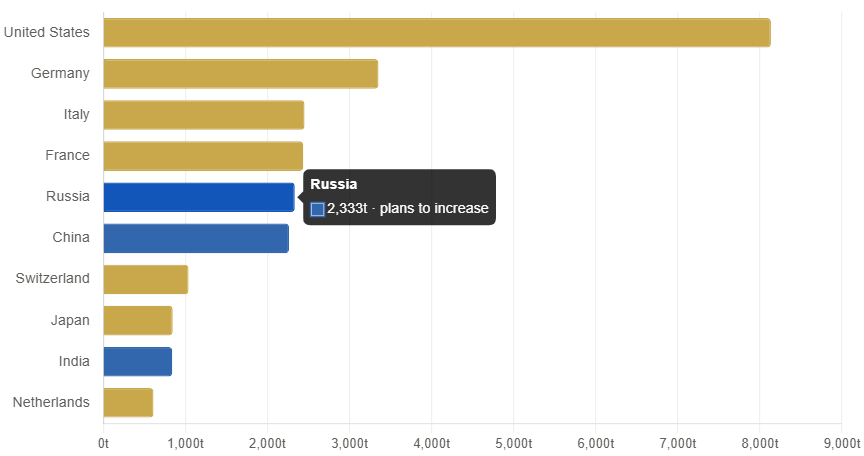
Central banks across the world have accumulated an average of 1,000 tonne of gold over the past four years, up significantly from the 500-tonne average over the preceding decade, as geopolitical and economic uncertainty clouds the outlook for reserve managers.
The findings are from the World Gold Council’s (WGC) 2026 Central Bank Gold Reserves (CBGR) survey, conducted between February 5 and May19. The survey was conducted in partnership with YouGov, according to the report.
About 89 per cent of the respondents expect global central bank gold reserves to increase over the next 12 months. A record 45 per cent said they expect their own institution’s gold reserves to rise over the same period, up from 43 per cent last year, while 1 per cent expect their holdings to decrease.
Looking further ahead, 84 per cent of respondents believe gold will hold a moderately or significantly higher share of total reserves five years from now, up from 76 per cent last year. Emerging markets and developing economies (EMDE) continue to lead advanced economies in gold accumulation intent: about half of EMDE respondents said their own gold reserves would increase in the next 12 months.
Dollar losing ground
Sentiment towards the US dollar has weakened. The dollar accounted for 42 per cent of total reported reserves — foreign exchange and gold — as of the third quarter (Q3) of 2025, according to International Monetary Fund (IMF) Currency Composition of Official Foreign Exchange Reserves (COFER) data cited in the report. Some 74 per cent of respondents expect the dollar’s share to be lower five years from now, with both advanced economy and EMDE respondents aligned on this view.
One respondent said: “We expect that there will be a downward shift in the share of total reserves held in US dollars.”
Another noted that “the liquidity and depth of dollar-denominated assets remain far superior to those of other alternatives,” even as interest in diversifying away from the dollar grows.
On the Chinese renminbi (CNY), 53 per cent of respondents expect its share to remain unchanged, while views on the euro were similarly static, with 38 per cent expecting no change from the current 15 per cent share.
Why central banks hold gold
The top factors cited for holding gold included performance during times of crisis (90 per cent rated it highly or somewhat relevant, a record high for this factor), gold’s role as a long-term store of value (84 per cent) and gold as an effective portfolio diversifier (83 per cent).
Geopolitical risk hedging was rated relevant by 85 per cent of EMDE respondents, compared with 56 per cent of advanced economy respondents. On reserve management decisions more broadly, 92 per cent of respondents cited interest rate levels as relevant, while geopolitical instability — likely elevated by the war in Iran — overtook inflation concerns this year.
Among those planning to increase gold reserves, the top drivers were: reserves diversification policy (31 out of 34); the need for gold as a hedging instrument (23 out of 34); and higher economic risks in reserve currency economies (23 out of 34).
How purchases will be funded
In a question added for the first time in 2026, respondents planning to buy gold were asked how they would fund purchases. Half said through a domestic purchase programme in local currency, 38 per cent said through selling existing reserve assets, and 32 per cent said using newly accumulated reserves.
The Bank of England (BoE) remains the most used vaulting location at 57 per cent, followed by domestic storage at 49 per cent — down from 59 per cent last year — and the Bank for International Settlements (BIS) at 16 per cent. The Swiss National Bank (SNB) saw a notable decline, dropping to 6 per cent from 12 per cent in 2025.
A trend toward storage diversification is emerging. Some 9 per cent of respondents said they had increased domestic storage in the past 12 months, and 10 per cent said they had diversified overseas storage locations, compared with 5 per cent and 2 per cent respectively in last year’s survey. Looking ahead, 7 per cent plan to increase domestic storage and 9 per cent plan to diversify overseas storage locations in the coming 12 months.
London Good Delivery bars remain the preferred form for both purchasing (62 per cent) and holding (93 per cent) physical gold.
Active management
Some 37 per cent of respondents said they actively manage their gold reserves. Of those, 85 per cent cited enhancing returns as the aim, while 42 per cent cited risk management — up sharply from 22 per cent in 2025. The use of gold deposits was the most common active management instrument.

Most Popular

4 days ago
DCGI Approves Toripalimab Combination Therapy for Advanced Oesophageal Cancer in India
Dr Reddy’s Laboratories’ Zytorvi, combined with cisplatin and paclitaxel, gains a first-line indication for…

4 days ago
Infosys Q2 net profit rises 6% to ₹7,823 crore
India's second-largest IT services company trims FY27 revenue guidance

3 days ago
Kotak Mahindra Bank’s profits soar, but margins refuse to join the party
Management expects the full-quarter impact of FCNR(B) deposits to weigh on margins in the…

3 days ago
Tech Mahindra partners with SpaceXSI to bring Grok AI coding tools into enterprise workflows
The collaboration will target legacy application modernisation, software development and developer productivity, with a…
