
News
21 - 05 - 2026
MANN+HUMMEL Bets Big on India with ₹100 crore Expansion Push
In a world rattled by geopolitical anxieties, fractured supply chains, and the fashionable rediscovery of “de-risking,” India has become the place where global corporations come to hedge their uncertainties and perhaps even their future.
B.D. Narayankar
On Wednesday, German filtration giant MANN+HUMMEL stepped into that narrative with investments exceeding ₹100 crore.
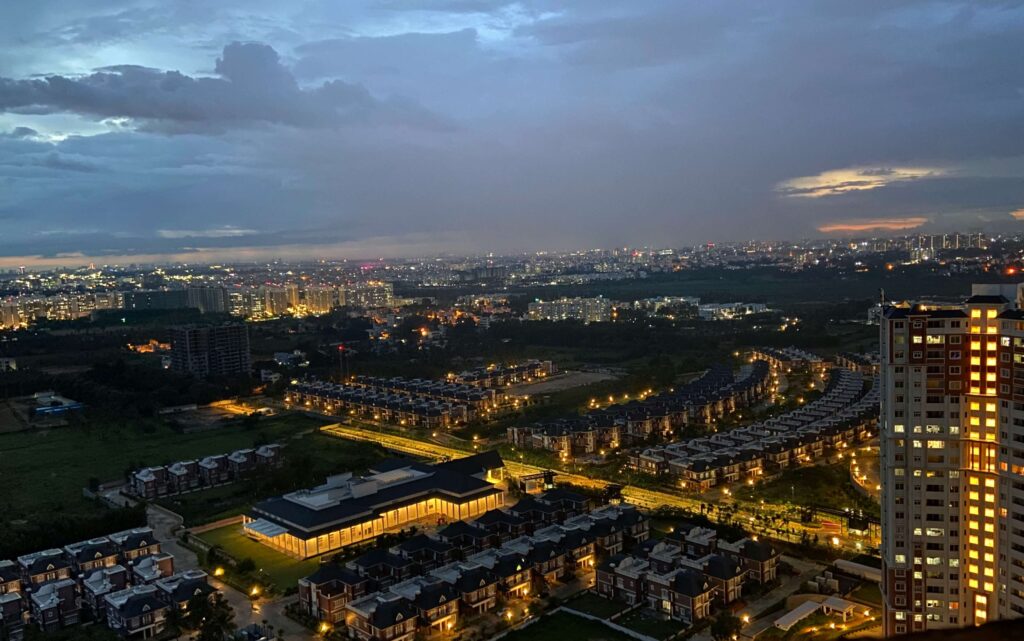
The company, headquartered in a country where engineering is almost a religion, unveiled its Global Technology & Innovation Centre in Tumkur, Karnataka — its largest such facility outside Germany — and simultaneously announced plans for a new manufacturing unit in Pune. Together, these moves are meant to signal not just expansion, but intent; not just presence, but permanence.
The timing is hardly accidental. In a world rattled by geopolitical anxieties, fractured supply chains, and the fashionable rediscovery of “de-risking,” India has become the place where global corporations come to hedge their uncertainties and perhaps even their futures.
Beyond assembly
Executives at MANN+HUMMEL pointed out their optimism. India, they suggested, is no longer the polite junior partner in global manufacturing, content to assemble what others design. It is now being recast as a laboratory of ideas, engineering, and export-grade innovation.
“We have a very clear philosophy of ‘in the region, for the region’,” they said, in the measured tone of people who have learned that slogans travel better than spreadsheets. The subtext was simpler: the world is too unstable to depend on itself.
Hasmeet Kaur, President of the Transportation Division, removed even the remaining diplomatic varnish. “If we would not invest in India right now, that would be the real question. We are fully confident that without investing in India, we have no future,” she said — a sentence that could easily double as both corporate strategy and prophecy.
The Tumkur centre, by design and ambition, is meant to be more than a building filled with laboratories. It is being positioned as a nerve centre for next-generation filtration technologies — spanning mobility, industrial systems, electric vehicles, clean air solutions, water purification, and the increasingly fashionable domain of sustainable engineering.
Inside its walls, research laboratories sit alongside testing infrastructure, digital engineering tools, analytics systems, and validation facilities — a modern temple to efficiency, where the gods are data and the rituals are simulations.
MANN+HUMMEL insists that filtration, once a quiet backroom discipline of industrial engineering, is now central to the world’s anxieties: emissions, energy transition, environmental survival, and the bureaucratic machinery of sustainability.
India, meanwhile, has quietly become indispensable to this vision. More than one-third of the company’s global engineering R&D workforce already sits in Bengaluru.
Over the past two decades, the company’s India story has followed a familiar arc: first dependence on European designs, then local adaptation, and now, as executives put it with a certain finality, “from India to the world.”
The expansion does not end in Tumkur. Pune, with its well-worn reputation as an automotive and engineering hub, has been chosen for a new manufacturing facility catering to passenger vehicles, heavy-duty transport, and industrial applications.
The company currently operates manufacturing facilities in Tumkur and Bawal in Haryana and employs about 1,250 people in India. The new investments are expected to add 300 to 400 jobs over the next year, including a modest but telling expansion in R&D roles.
There is also the quiet suggestion, almost slipped in as an afterthought, that India is no longer just a consumer or a production base, but increasingly an export platform. Products designed and manufactured here are already being evaluated for European and global markets.
The old hierarchy — where innovation flowed from West to East and production flowed in the opposite direction — appears to be loosening, if not entirely dissolving. Headquartered in Ludwigsburg, MANN+HUMMEL was founded in 1941 and operates in more than 80 locations, employs over 20,000 people, and reported revenues of €4.2 billion in 2025.
Most Popular

3 days ago
Tech Mahindra partners with SpaceXSI to bring Grok AI coding tools into enterprise workflows
The collaboration will target legacy application modernisation, software development and developer productivity, with a…
3 hours ago
L&T Q2 cons net profit rises 33% to at ₹5,202 crore
The group’s consolidated revenue rose 16% to ₹78,750 crore, driven by progress in its…

4 days ago
Infosys Q2 net profit rises 6% to ₹7,823 crore
India's second-largest IT services company trims FY27 revenue guidance

4 days ago
CG Power’s consolidated Q2 net profit rises 44% to ₹409 crore
A sharp rise in Power Systems margins, swelling order book underpin the engineering conglomerate's…
