
Analysis
19 - 10 - 2026
Beds over Biotech: India’s healthcare consolidation goes off the global script
Wall Street is buying drugs to refill pipelines while Indian investors are looking for hospital beds
Deals follow need, and the two markets need different things. In New York, healthcare dealmakers are hunting for biotech. In India, they are scouting for beds.
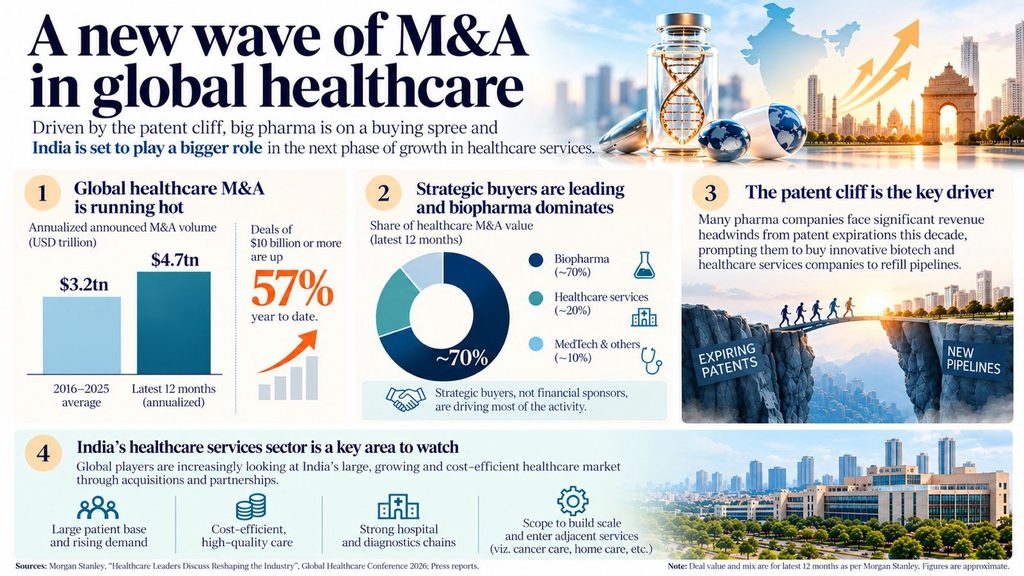
Globally, pharma is setting the deal market pace. Biopharma accounts for roughly 70% of healthcare M&As as Western drugmakers – facing patent expiries later this decade – are buying pipelines to replace the expected revenue loss.
Hospitals and other services, as bankers said at the recent Morgan Stanley’s Global Healthcare Conference, may not be the core focus, at least for another 12 to 18 months. India has no comparable cliff.
Its generics makers gain when Western patents lapse. It has fewer clinical-stage biotechs worth chasing. A market with price controls and limited out-of-pocket spending automatically shrinks the potential for high earning from new drugs.
So capital chases the next-biggest gap – hospital beds.
In July this year, Aster DM Healthcare completed its merger with Quality Care India, bringing Aster, CARE Hospitals, Evercare and KIMSHEALTH under one roof. In August, KKR agreed to buy Medicover India: 24 hospitals, about 4,800 beds and over 1,900 doctors. Baby Memorial, backed by KKR, has agreed to take control of Star Hospitals in Hyderabad.
Similar template
Sellers differ but the template is the same: a scaled multi-specialty network, a sponsor behind it, and a plan to keep on adding bed capacity. What India really lacks is the delivered capacity.
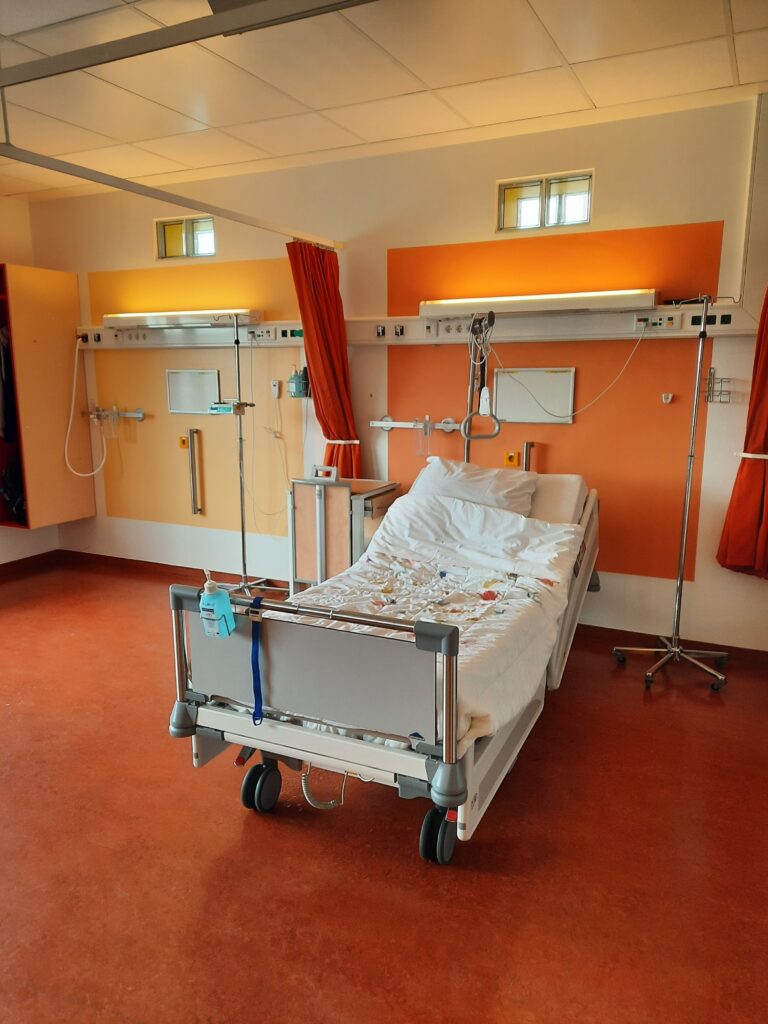
It has about 1.3 hospital beds per 1,000 people and govt hospitals have just 0.79 against the target of 2 beds per 1,000 – set in the National Health Policy 2017. Knight Frank estimates that 2.4 million more beds are needed to reach 3 beds per 1,000 people. The gaps are the widest in poorer states. For example, Bihar has 0.22/1,000.
Private hospitals already treat most inpatients, yet the sector is fragmented and remains short of quality beds. Already, 18 large private chains plan to add about 34,000 beds by FY30 for roughly ₹40,000 crore – yet it would only be around 1% of the 2.4 million shortfall.
Let’s see how consolidation fits our true needs and makes a business sense. A hospital deal does not add more beds alone, it also brings in an owner or financier who can fund the next few. It also facilitates centrally-planned purchasing, shared clinical protocols, expensive technology (which a solitary hospital would find hard to attain) and sponsor-capital that promoters and public markets often cannot supply.
A pipeline deal may change who owns a drug. A good hospital deal would decide how many more patients can be treated. The headline numbers are slowly justifying the trend.
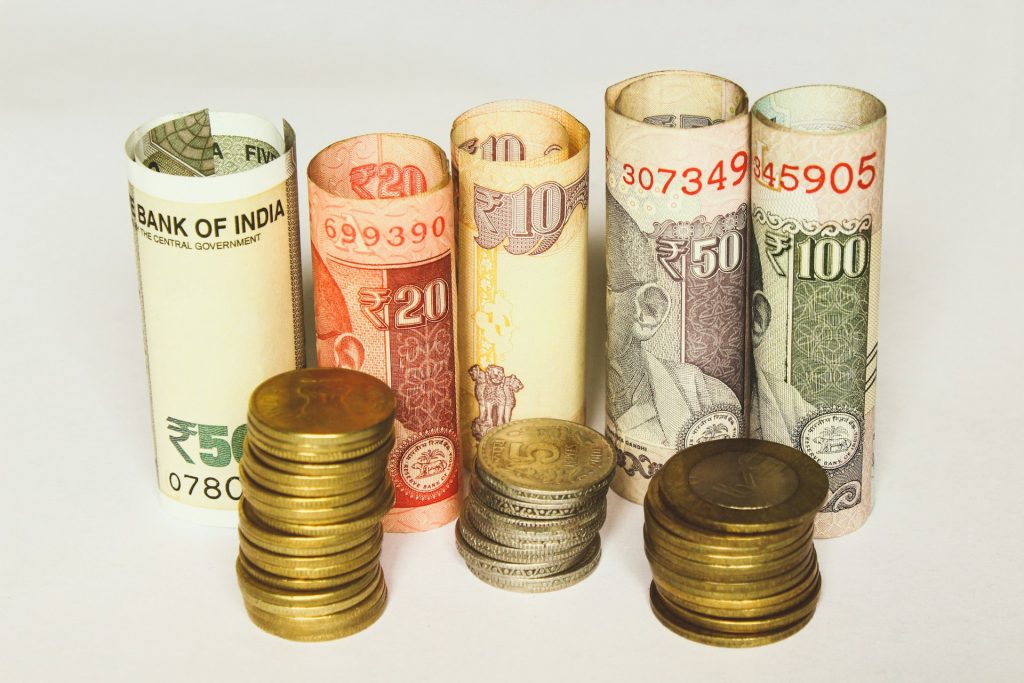
India’s pharma and healthcare M&A hit a record $13.2 billion in the June quarter, says Grant Thornton Bharat. Without Sun Pharma’s $11.75 billion purchase of Organon, the overall M&A was about $1.46 billion – up from $915 million in March but below $2.5 billion in the September 2025 quarter. Private equity investments averaged between $0.43 billion and $0.48 billion for four straight quarters.
The real action has been minimal so far and that is where the opportunity lies. Strip out Organon and the market looks much smaller and very regional. Most of the 78 deals in the March quarter were under $50 million, which Grant Thornton describes as regional hospital and pharma acquisitions.
Small deals mean small assets – which don’t earn the high valuations – that listed leaders enjoy. That gap is the roll-up play: buy regional hospitals cheaply, run them as one business, and sell the bigger platform at a premium. KKR–Medicover and Aster–Quality Care show what that platform looks like. The sub-$50 million deals are the raw material. With only 1.3 beds per 1,000 people, demand will not be constraint, at least for the foreseeable future.
For sponsors, the maths is simple. Listed hospital leaders trade from the mid-teens to over 30 times EV/EBITDA. So decent regional hospitals – bought cheaply, folded into a solid platform and managed better – can get a good re-rating. Within hospitals, large national chains and high- Average Revenue Per Occupied Bed (ARPOB) operators command premium multiples while smaller and mid-ARPOB/regional operators generally trade at a meaningful discount. For example, Manipal’s revenue – per occupied bed – has reportedly grown about 5% a year over three years, from roughly ₹58,900 to ₹69,000. Returns have to come from beds, occupancy and margins.
Here comes the other side of coin: At 30 times earnings, there is little room for slower occupancy. Dense local clusters may invite the scrutiny of regulators while the families, paying out of pocket, would certainly feel the true pinch of higher pricing power. Also, merging hospital with different cultures would be harder than merging balance sheets.
Equally, exits by investors remain an untested idea so far. Aster’s merger with Quality Care India offers a third route out: merge their platform into an already listed chain and hold its shares instead of selling outright or launching an IPO.
India’s hospital consolidation so far seems neither a bubble nor a bonanza – but a convinced bet that capacity, not code, is the scarce asset, and that someone will pay more for it later. Sponsors can buy, build and merge. Who will buy from them is the question that decides whether that bet pays.
By Sreevalsan M
If you spotted a mistake or have feedback on this story, write to us at editor@newsassociate.com. Email us your press releases on the same ID.
Most Popular
4 days ago
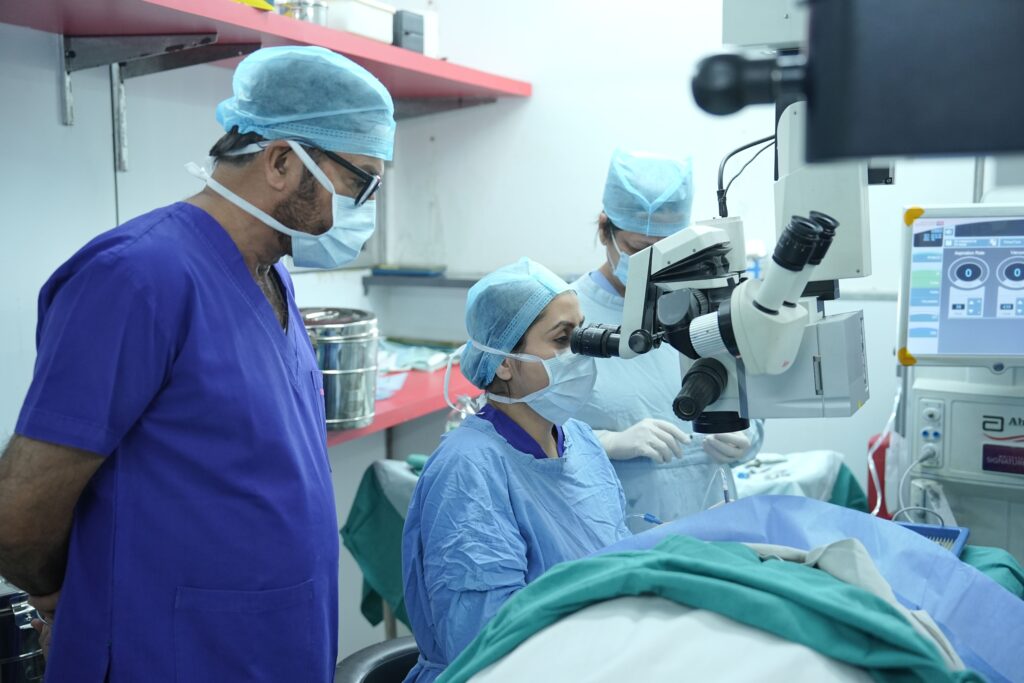
DCGI Approves Toripalimab Combination Therapy for Advanced Oesophageal Cancer in India
Dr Reddy’s Laboratories’ Zytorvi, combined with cisplatin and paclitaxel, gains a first-line indication for…
3 days ago
Kotak Mahindra Bank’s profits soar, but margins refuse to join the party
Management expects the full-quarter impact of FCNR(B) deposits to weigh on margins in the…

3 days ago
Tech Mahindra partners with SpaceXSI to bring Grok AI coding tools into enterprise workflows
The collaboration will target legacy application modernisation, software development and developer productivity, with a…

4 days ago
CG Power’s consolidated Q2 net profit rises 44% to ₹409 crore
A sharp rise in Power Systems margins, swelling order book underpin the engineering conglomerate's…
