
Features
14 - 10 - 2026
India’s Semiconductor Self-Reliance Is Becoming a Defence Imperative: DRDO Scientist
At a Bengaluru DRDO event, Dr Anupam Sharma linked chip dependence to future military vulnerabilities, highlighting the need to connect India’s design talent with domestic manufacturing, materials and advanced electronics capabilities
A military may possess advanced missiles, radar systems and satellites, but its technological advantage can be compromised if the critical electronics inside them depend on components that cannot be reliably sourced during a conflict.
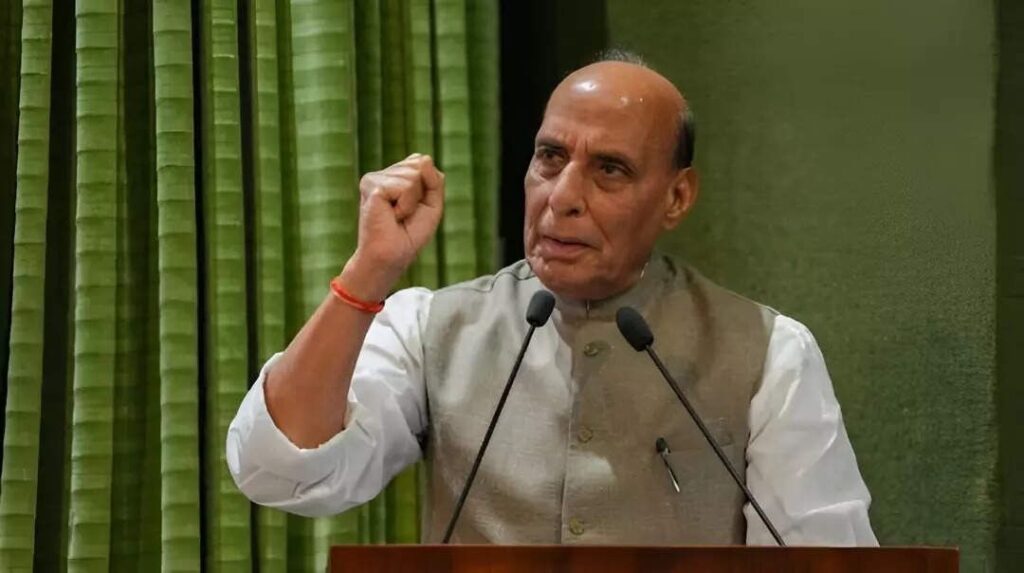
That was the central warning from Dr. Anesh Kumar Sharma, Director of Solid State Physics Laboratory (SSPL) at the Defence Research and Development Organisation (DRDO), who argued in Bengaluru that semiconductor capability is becoming inseparable from military preparedness.
“If we are not self-reliant in chips, the future war cannot be fought,” Sharma said in Hindi, warning that India could struggle in future conflicts if it cannot make and use its own semiconductors by 2043.
Speaking at a curtain-raiser for the Emerging Science, Technology and Innovation Conclave (ESTIC) 2026, Sharma connected the changing character of warfare with a problem extending well beyond defence laboratories: India’s ability to translate its substantial semiconductor-design talent into control over the components, manufacturing processes and technologies on which modern military systems depend.
His warning was not that every semiconductor must immediately be manufactured in India. It was that dependence on externally supplied critical components can become a strategic vulnerability when access is disrupted.
The battle begins with information
Sharma’s argument starts with how military operations are changing.
Future conflicts will depend increasingly on the ability to detect an adversary, process information, communicate securely and respond quickly. Satellites can monitor activity over large areas; artificial intelligence can help process data; cyber operations can target digital infrastructure; and electronic warfare can interfere with radar and other sensors.
Directed-energy weapons and hypersonic systems add further demands on the electronics, sensing and computing technologies that support military platforms.
“We have always thought of war as being fought with tanks, missiles or rifles by a soldier,” Sharma said. “But the future is going to change.”
The distinction is important. Advanced military equipment is only as effective as the systems that enable it to function. A radar may be sophisticated, but its operational value depends on its ability to detect and process signals under hostile conditions. A satellite may collect information, but that information must be transmitted, processed and converted into usable intelligence.
Semiconductors sit beneath many of these capabilities. They support processors, communications systems, sensors, control electronics and the computing infrastructure used across defence platforms.
Sharma also warned that cyber operations could affect civilian infrastructure, including power grids and financial systems, while information warfare could be used to manipulate public understanding of events. His broader argument was that national security increasingly depends on technological resilience across both military and civilian systems.
Why chip dependence matters
The strategic issue is not simply whether India can purchase advanced chips in international markets. It is whether defence programmes can reliably obtain the components they need, maintain control over critical technologies and continue operating if supplies are restricted.
That concern was echoed by Dr B. K. Das, DRDO’s Distinguished Scientist and Director General for Electronics and Communication Systems, in his keynote address.
Das argued that indigenisation must extend to the smallest but most consequential parts of a system. A defence platform may be largely designed and manufactured in India, he said, but a critical imported chip, software component or algorithm could still prevent it from operating if access were cut off.
He described this as the need for “last-mile indigenization”.
The argument has direct implications for how India measures domestic defence manufacturing. The proportion of a system assembled or produced locally does not necessarily reveal how much control the country has over its underlying technology.
A locally manufactured platform may still depend on imported processors, specialised sensors or other components that are difficult to replace. Genuine resilience therefore requires attention to the supply chain beneath the finished product.
For defence manufacturers, that means coordinating hardware, software, semiconductor design, materials and component qualification rather than treating each as a separate procurement issue.
Design talent is not the same as manufacturing control
The industrial challenge is particularly visible in semiconductors, where India has an established pool of design professionals but remains dependent on foreign suppliers for many fabrication inputs and manufacturing tools.
A presentation by Dr Aneesh Kumar Sharma, Director of DRDO’s Semiconductor Physics Laboratory, highlighted gaps in domestic access to materials and equipment, including chemicals, high-purity gases, wafers and fabrication machinery.
The presentation also cited an estimate that Indian professionals account for about 20% of the global chip-design workforce.
That is a significant human-capital base, but design expertise alone does not confer control over manufacturing.
The semiconductor supply chain extends from intellectual property and electronic design automation tools to materials, equipment, wafer fabrication, packaging and testing. Each stage requires specialised capabilities, infrastructure and technical knowledge.
A country may design a chip but still depend on overseas facilities to manufacture it. It may manufacture a component but rely on imported materials or equipment to maintain production. For defence applications, those dependencies can matter as much as the design itself.
The Semiconductor Physics Laboratory presentation identified gaps in large-scale production, pilot lines, shared clean rooms and domestic material supplies. It also highlighted specialised defence technologies, including sensors and focal-plane arrays, as part of the wider capability requirement.
These constraints explain why semiconductor self-reliance cannot be achieved simply by building fabrication plants. Manufacturing capacity must be supported by a dependable ecosystem of materials, tools, design expertise, packaging, testing and skilled personnel.
The industrial challenge is coordination
For India’s defence and semiconductor industries, the implications extend across the public and private sectors.
DRDO laboratories can develop technologies for strategic applications, while semiconductor companies and manufacturers can contribute design, production and packaging capabilities. Research institutions can support materials science and specialised devices, and startups can work on emerging technologies and applications.
But these capabilities must connect through a development and qualification process that allows components to move from research into dependable industrial production.
Sharma called for scientists, industry and startups to work together on the challenge, arguing that the country must convert its existing technical talent into domestic design, manufacturing and deployment capabilities.
That transition will require sustained investment and long development timelines. Semiconductor manufacturing involves expensive infrastructure and demanding process requirements, while defence components must satisfy the reliability and operational requirements of the systems in which they are used.
The immediate question is therefore not just how many chips India can produce, but whether domestic capabilities can meet the needs of critical applications at the required quality, scale and reliability.
The semiconductor roadmap presented at the Bengaluru event outlined milestones for 2030, 2035 and 2047, covering domestic production, AI accelerators, high-bandwidth devices, fabrication and packaging. These were presented as longer-term capability goals rather than evidence that the required manufacturing ecosystem is already in place.
A deadline framed as a warning
Sharma’s 2043 deadline gave the discussion a sharper strategic focus.
He did not present a detailed implementation plan or a technical forecast establishing that a particular military threshold would be reached in that year. Instead, he used the date to emphasise the consequences of failing to develop domestic semiconductor capability.
He also cited China’s stated plan to reduce ground-force manpower by 40% by 2035, presenting it as an illustration of the changing balance between conventional military strength and technology. That comparison was part of his argument about the direction of warfare, rather than proof that troop numbers will become less important in every future conflict.
His central contention was that conventional forces will increasingly depend on technological systems that must continue to function under pressure. For India, the challenge is to ensure that the development of those systems is matched by the ability to manufacture, maintain and upgrade their critical components.
ESTIC 2026, scheduled for October 27–29 at Bharat Mandapam in New Delhi, will bring together government, research institutions, industry and academia across 12 emerging technology areas. Semiconductors are among the fields being coordinated by DRDO for the conclave.
The Bengaluru discussion placed that industrial agenda in a defence context. Semiconductor manufacturing is not merely an economic ambition or a contest for a larger share of the global chip market. It is also about how much control India retains over the technologies supporting its national-security systems.
Tanks, aircraft, missiles and soldiers will remain central to military operations. But the ability to detect threats, process information, communicate securely and keep systems functioning when supply chains come under pressure will increasingly shape their effectiveness.
For India’s defence industry, the test is whether semiconductor design talent can be converted into dependable domestic capabilities across the supply chain—and whether that work can advance quickly enough to meet the demands of future military systems.
By Subramanya Joshi
If you spotted a mistake or have feedback on this story, write to us at editor@newsassociate.com. Email us your press releases on the same ID.
Most Popular

4 days ago
CG Power’s consolidated Q2 net profit rises 44% to ₹409 crore
A sharp rise in Power Systems margins, swelling order book underpin the engineering conglomerate's…

3 days ago
Tech Mahindra partners with SpaceXSI to bring Grok AI coding tools into enterprise workflows
The collaboration will target legacy application modernisation, software development and developer productivity, with a…
4 days ago
DCGI Approves Toripalimab Combination Therapy for Advanced Oesophageal Cancer in India
Dr Reddy’s Laboratories’ Zytorvi, combined with cisplatin and paclitaxel, gains a first-line indication for…
3 minutes ago
L&T Q2 cons net profit rises 33% to at ₹5,202 crore
The group’s consolidated revenue rose 16% to ₹78,750 crore, driven by progress in its…
