
Features
04 - 10 - 2026
Google Puts Four AI Chips in Orbit as Project Suncatcher Tests the Case for Space-Based Computing
The prototype mission with Planet and SpaceX moves Google’s orbital data-centre concept from modelling and laboratory tests to an experiment in the real environment of space
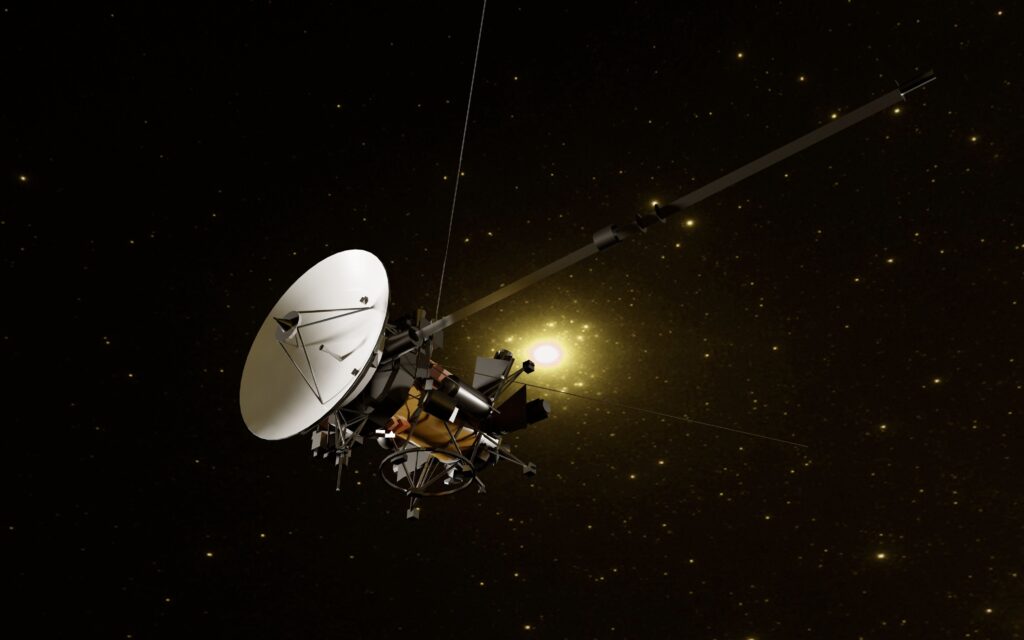
The idea of putting artificial intelligence infrastructure in orbit has moved from research papers to hardware in space. Google has launched a prototype satellite carrying four of its Tensor Processing Units (TPUs), beginning the first in-orbit test of Project Suncatcher, an ambitious research programme exploring whether machine-learning computing could eventually be scaled beyond terrestrial data centres.
The satellite, developed in partnership with Planet, launched on SpaceX’s Transporter-18 rideshare mission and has established contact with Google, which said the spacecraft is operating as expected.
The immediate objective is deliberately narrower than building an orbital data centre. Over the coming weeks, Google will collect data on how its TPUs respond to the physical stresses of spaceflight, radiation and the extreme thermal conditions encountered in orbit. The results will be used to refine subsequent spacecraft and computing architectures.
That distinction is important. Suncatcher is not yet demonstrating a commercially operational data centre in space; it is testing whether the underlying hardware and infrastructure can survive and function reliably in an environment fundamentally different from a conventional computing facility.
From concept to hardware
Google introduced Project Suncatcher in 2025 as a long-term research effort to explore solar-powered satellite constellations carrying TPUs and connected through high-bandwidth optical links. Its research has examined orbital configurations, radiation tolerance, communications and the economics of moving computing infrastructure into orbit.
The attraction is partly an energy equation. Google’s research has argued that solar panels in suitable low-Earth orbits could receive sunlight for much of their operating time and generate substantially more power than comparable panels on Earth. That could potentially provide an attractive energy source for compute-intensive workloads.
But abundant sunlight does not solve the central engineering problem.
AI accelerators generate substantial amounts of heat, and terrestrial data centres normally depend on airflow and sophisticated cooling systems to remove it. In the vacuum of space, there is no air to carry heat away. Google is therefore testing thermal systems based on heat pipes and radiators designed to transfer heat from the electronics and reject it into space.
The current mission is intended to provide real-world evidence on whether those approaches work outside laboratory conditions.
Radiation, heat and reliability
Radiation presents another fundamental challenge.
Semiconductor devices operating in orbit are exposed to energetic particles that can gradually damage electronics or trigger transient errors. Google has already conducted ground-based radiation testing of its TPU technology, including proton-beam experiments, but the orbital mission provides a substantially different test environment over an extended period.
The four TPUs aboard the prototype will therefore serve as technology demonstrators rather than the computational core of a production-scale service.
Google’s broader research envisions eventually placing multiple satellites in closely coordinated formations, with computing resources distributed across spacecraft and connected through free-space optical links. Such a system would require far greater communications capacity than current commercial inter-satellite links typically provide, as well as precise formation control and reliable thermal management.
That makes networking another major hurdle.
For large machine-learning workloads, processors cannot simply operate independently. They need to exchange enormous volumes of data with very low latency. Google’s research has consequently proposed tightly clustered satellites using optical inter-satellite communications to create a distributed computing architecture in orbit.
Technical feasibility, however, is only one part of the equation.
Launching computing hardware into orbit adds costs that terrestrial data centres do not face, including launch, spacecraft construction, radiation protection, thermal systems, communications and eventual replacement or servicing. Google’s own research identifies launch economics, on-orbit reliability, debris avoidance and ground connectivity among the issues that must be resolved before the concept can become commercially meaningful.
That is why Suncatcher’s significance lies in the data it can generate rather than in the number of processors now in orbit.
A successful demonstration would not establish that orbital data centres are commercially competitive. It would, however, reduce uncertainty around some of the hardest engineering questions: whether AI accelerators can operate reliably in space, how effectively they can be cooled, how they respond to radiation and what spacecraft architecture is required to support them.
Google has already indicated that further missions are planned. Its research programme has pointed to additional prototype satellites and future testing of high-bandwidth optical links as the next steps towards distributed computing in orbit.
The launch therefore marks a change in the nature of the question. Project Suncatcher is no longer asking only whether space-based AI infrastructure can be modelled on paper. It is beginning to test whether the hardware can survive long enough in orbit—and reliably enough—to make the concept worth pursuing.
For now, four TPUs are enough. The real test is whether what Google learns from them can eventually support a much larger machine-learning infrastructure above Earth.
By Subramanya Joshi
If you spotted a mistake or have feedback on this story, write to us at editor@newsassociate.com. Email us your press releases on the same ID.
Most Popular

4 days ago
Infosys Q2 net profit rises 6% to ₹7,823 crore
India's second-largest IT services company trims FY27 revenue guidance

4 days ago
CG Power’s consolidated Q2 net profit rises 44% to ₹409 crore
A sharp rise in Power Systems margins, swelling order book underpin the engineering conglomerate's…
4 minutes ago
L&T Q2 cons net profit rises 33% to at ₹5,202 crore
The group’s consolidated revenue rose 16% to ₹78,750 crore, driven by progress in its…

3 days ago
Kotak Mahindra Bank’s profits soar, but margins refuse to join the party
Management expects the full-quarter impact of FCNR(B) deposits to weigh on margins in the…
