
Analysis
02 - 10 - 2026
Kerala Develops AI-Based Dengue Early Warning System to Predict District-Level Dengue Risk
Machine-learning system combines disease surveillance with rainfall, temperature and humidity data to generate weekly district-level risk forecasts
Scientists at Kerala’s Institute of Advanced Virology (IAV) have developed a machine-learning-based Dengue Early Warning System (DEWS) designed to forecast dengue trends at the district level, potentially giving public-health authorities additional time to strengthen surveillance and prepare for an increase in cases.
The system uses six years of historical data, covering March 2020 to February 2026, and combines reported dengue cases with weather variables including rainfall, temperature and average humidity. It produces weekly forecasts for individual districts and classifies the expected risk into four categories: very high, high, moderate and low.
An initial assessment using Kerala surveillance data from March to July 2026 showed a positive relationship between the model’s forecasts and observed dengue trends, according to the information provided about the research. The system remains a research project and requires further refinement, annual updating and validation before it can be considered an established operational forecasting platform.
Moving to district-level warnings
One of the important features of the Kerala system is its geographical resolution. Rather than generating a single forecast for the entire state, DEWS produces separate predictions for individual districts. This allows the model to account for differences in local disease patterns and weather conditions.
The system draws epidemiological information from Kerala’s State Surveillance Unit and meteorological information from the India Meteorological Department. The principal inputs are the number of dengue cases, rainfall, temperature and average humidity.
That approach reflects a broader direction in disease forecasting: combining conventional surveillance with environmental information rather than waiting for a large increase in reported infections before triggering a response.
The World Health Organization has similarly promoted climate-informed early warning systems that combine surveillance and weather information to identify areas at elevated risk and enable preventive action before an outbreak reaches its peak. WHO’s dengue early-warning framework specifically supports analysis at smaller geographical scales and the development of real-time warning systems.
Why rainfall, temperature, humidity matter
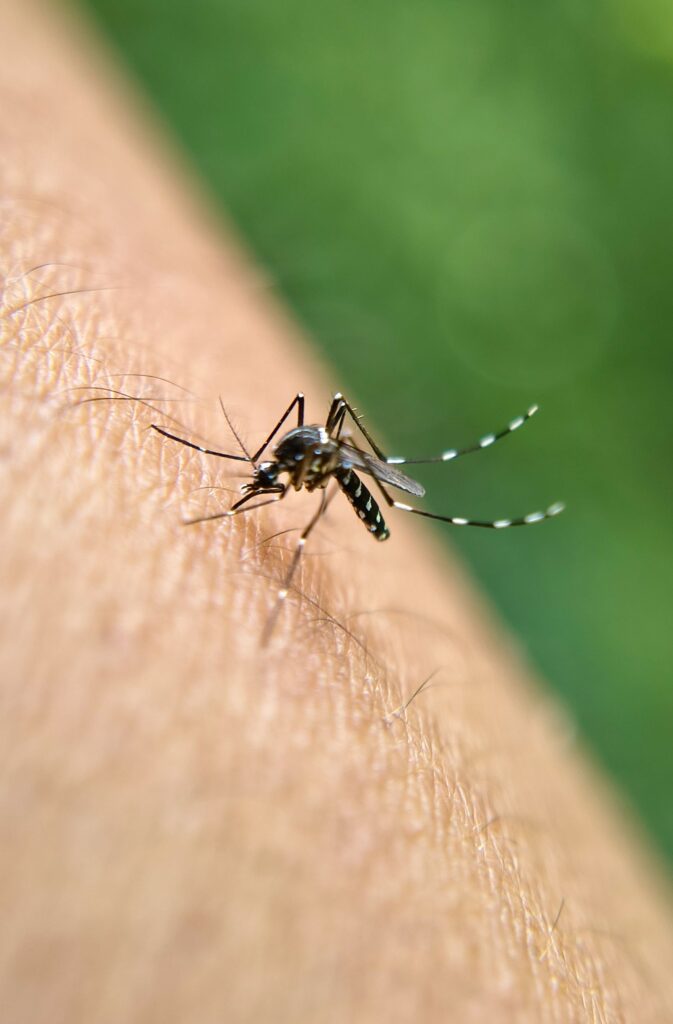
Dengue is transmitted primarily by infected Aedes mosquitoes, and the conditions under which those mosquitoes survive and reproduce are closely connected with weather and environmental factors. Rainfall can create temporary breeding sites, while temperature affects mosquito development and the period required for the dengue virus to become transmissible within the mosquito. Humidity can also influence mosquito survival.
WHO identifies temperature, precipitation and humidity among the climate factors that can affect climate-sensitive diseases such as dengue. At the same time, climate is only one component of transmission. Population movement, urbanisation, water-storage practices, mosquito abundance, immunity and the circulation of different dengue virus serotypes can also influence disease patterns.
That makes a machine-learning forecast fundamentally different from a simple weather-based warning. The objective is to identify relationships between several variables and subsequent disease incidence rather than assume that a particular amount of rainfall will automatically produce an outbreak.
Independent research published in GeoHealth in 2026 provides additional scientific context for the Kerala model.
A study using 14 years of dengue and climate data from 2006 to 2019 found a strong seasonal relationship between dengue incidence and Kerala’s rainfall cycle. Cases began increasing around May and reached their highest levels during the southwest monsoon, particularly in June and July.
The researchers examined temperature, rainfall, relative humidity and the El Niño–Southern Oscillation (ENSO) among the climatic variables associated with dengue transmission. Their machine-learning analysis found that an XGBoost regression model achieved an R² of 0.72 during the test period.
The study identified warmer pre-monsoon temperatures, moderate humidity and moderately high monsoon rainfall as conditions associated with higher dengue incidence in Kerala. It also found that large-scale climate patterns could provide additional predictive information.
These findings do not validate the IAV DEWS by themselves, because the two systems use different datasets, periods and modelling approaches. They do, however, provide independent evidence that weather and climate variables can contain useful predictive information for dengue transmission in Kerala.
What an early warning system can actually change
The value of DEWS is not in predicting dengue as an end in itself. Its potential public-health value lies in creating lead time. If a district is classified as having a high or very high risk, health authorities could potentially intensify vector surveillance and source reduction, increase diagnostic preparedness, review hospital capacity and strengthen public communication before case numbers rise substantially.
WHO describes this as the central purpose of climate-informed early warning systems: monitoring environmental conditions, forecasting high-risk situations, issuing alerts and establishing mechanisms for an early response. An early warning can therefore shift part of dengue control from a reactive model to a more anticipatory one.
For example, instead of increasing vector-control activity only after hospitals begin reporting a surge, local authorities could use a forecast as an additional trigger to inspect breeding sites, intensify community campaigns and ensure that diagnostic and clinical services are prepared.
But a forecast does not eliminate the need for conventional surveillance. It is an additional layer of information.
That distinction is particularly important when communicating AI-based disease forecasts. Machine-learning models learn patterns from historical data. Their performance can change when disease behaviour, climate conditions, reporting practices, population movement or mosquito ecology changes.
A systematic review of dengue early-warning systems found that predictive performance varied substantially across models and depended heavily on the quality of the underlying data. Meteorological variables such as temperature and rainfall were among the most commonly used predictors, but epidemiological, entomological, population and socioeconomic variables can also improve an early-warning framework.
For Kerala’s DEWS, this means continued validation will be crucial. The six-year training dataset provides a foundation, but the model needs to demonstrate that it can continue to produce useful forecasts when applied prospectively to new seasons and changing epidemiological conditions.
The system’s developers have therefore indicated that it requires further improvement, updating and annual validation. Kerala’s experiment also illustrates a larger shift in disease surveillance.
Traditional surveillance largely tells health authorities what has already happened. A forecasting system attempts to provide information about what may happen next. That distinction can be valuable for diseases such as dengue, where transmission is influenced by seasonal weather and where preventive interventions can be deployed before case numbers reach their peak.
WHO’s existing EWARS framework similarly uses historical disease records and prospective weekly meteorological information to generate area-specific predictions and support local decision-making. WHO reports that climate-informed dengue forecasting approaches are being tested or implemented in several countries, including India.
The Kerala DEWS therefore fits into an established global public-health direction while attempting to tailor forecasting to the state’s district-level epidemiology.
Its eventual significance will depend less on the sophistication of the machine-learning algorithm alone and more on whether its forecasts are sufficiently reliable, timely and interpretable to trigger effective action on the ground.
For Kerala, the immediate opportunity is to build that evidence base. If continued validation demonstrates that the system can consistently identify periods and districts at elevated risk, the technology could become another layer in the state’s dengue surveillance architecture—linking epidemiological data, weather information and public-health response before an increase in infections becomes visible through routine reporting.
By Subramanya Joshi
If you spotted a mistake or have feedback on this story, write to us at editor@newsassociate.com. Email us your press releases on the same ID.
Most Popular
4 days ago
DCGI Approves Toripalimab Combination Therapy for Advanced Oesophageal Cancer in India
Dr Reddy’s Laboratories’ Zytorvi, combined with cisplatin and paclitaxel, gains a first-line indication for…

4 minutes ago
L&T Q2 cons net profit rises 33% to at ₹5,202 crore
The group’s consolidated revenue rose 16% to ₹78,750 crore, driven by progress in its…

3 days ago
Tech Mahindra partners with SpaceXSI to bring Grok AI coding tools into enterprise workflows
The collaboration will target legacy application modernisation, software development and developer productivity, with a…
3 days ago
Kotak Mahindra Bank’s profits soar, but margins refuse to join the party
Management expects the full-quarter impact of FCNR(B) deposits to weigh on margins in the…
