
News
01 - 10 - 2026
SpaceX Starship Reaches Orbit for First Time, Deploys 26 Starlink V3 Satellites
Flight 14 marks the first orbital mission of the giant reusable vehicle, but an early engine shutdown led SpaceX to bring Starship home after about three hours
SpaceX’s Starship-Super Heavy has reached orbit for the first time, marking a major milestone in the company’s effort to develop a fully and rapidly reusable heavy-lift transportation system.
On September 28, Starship Flight 14 lifted off from Starbase, Texas, on the first orbital flight of the integrated vehicle after 13 previous flights were deliberately flown on suborbital trajectories. The mission achieved its two principal orbital objectives: Starship entered low Earth orbit and deployed 26 next-generation Starlink Version 3 satellites.
The mission did not, however, follow its planned nearly 10-hour profile. One of Starship’s six upper-stage Raptor engines shut down early during the climb. After reviewing telemetry, SpaceX determined that the vehicle retained sufficient capability to continue. A subsequent engine firing completed the climb to orbit, after which the spacecraft released its Starlink payload.
With the primary orbital and payload objectives accomplished, SpaceX brought Starship back to Earth approximately three hours after launch. The spacecraft completed a controlled atmospheric re-entry and splashed down in the Pacific Ocean north of Hawaii. It subsequently tipped over and was destroyed as residual propellants ignited, but the vehicle had already completed the principal objectives of the flight.
From suborbital testing to orbital operations
Flight 14 represented a fundamental change in Starship’s development programme.
Until this mission, SpaceX had deliberately kept Starship on suborbital trajectories. The company’s stated objective was to gather flight data while keeping test trajectories within designated safety areas. Flight 14 was designed to move the programme into orbital operations, a prerequisite for demonstrating the spacecraft’s intended role as a reusable system for transporting crew and cargo to Earth orbit and, eventually, beyond.
SpaceX had planned an orbital altitude of approximately 275 kilometres and about six orbits, followed by a controlled splashdown in the Pacific. The mission profile was subsequently shortened after the spacecraft completed orbital insertion and satellite deployment.
The Starship upper stage used on the flight was Ship 41, while the first-stage Super Heavy booster was Booster 21. The integrated vehicle stands about 124 metres tall, making it one of the largest and most powerful launch systems ever flown.
The deployment of 26 Starlink Version 3 satellites was another important part of the mission.
SpaceX had designed Flight 14 to demonstrate Starship not merely as an orbital vehicle but as a satellite-launch platform. The company said before launch that each Starlink V3 satellite was designed to add approximately 1 terabit per second of capacity to the constellation, meaning the 26 satellites represented a potential 26 Tbps of aggregate capacity.
The satellites were released after Starship completed its orbital-insertion manoeuvre. According to SpaceX, they were then expected to deploy their antennas and solar arrays, establish communications through radio-frequency and laser links, and use their own propulsion systems to raise their orbits.
The mission therefore demonstrated an important combination of capabilities: a Starship orbital insertion, payload deployment from the vehicle’s large internal volume and subsequent controlled return.
Three of the 26 Starlink V3 satellites also carried additional cameras intended to observe Starship’s heat shield during the flight. The imagery is part of SpaceX’s continuing effort to understand the thermal-protection system and eventually enable more ambitious recovery operations.
Engine shutdown tested Starship’s redundancy
The early shutdown of one upper-stage engine became the principal anomaly of the flight, but it did not prevent the spacecraft from achieving orbit.
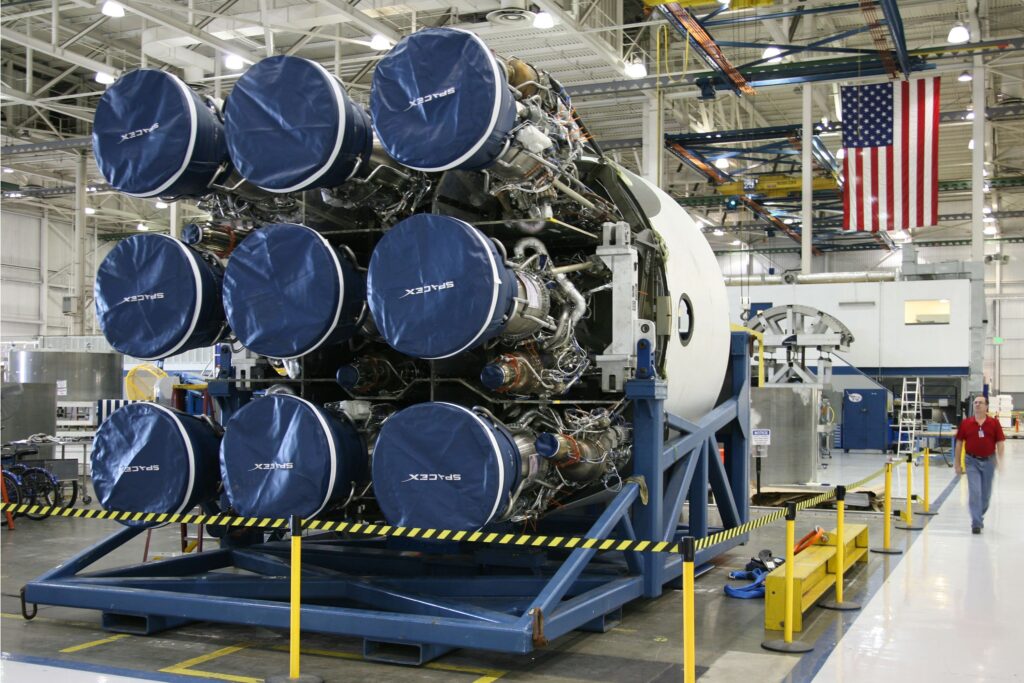
The Starship upper stage has six Raptor engines. During ascent, one shut down prematurely. SpaceX nevertheless proceeded after evaluating vehicle telemetry, and another engine firing allowed the spacecraft to complete its orbital insertion sequence.
The event consequently provided another real-world demonstration of the vehicle’s ability to tolerate an engine loss while continuing toward a mission objective.
The Super Heavy booster also experienced an engine shutdown during its return manoeuvre, according to post-flight reporting, but it nevertheless completed its planned return and splashdown near the Texas coast. Neither the booster nor the Starship upper stage was recovered on Flight 14; SpaceX continued to use ocean splashdowns rather than attempting a tower catch during this developmental stage.
Why reaching orbit matters
The significance of Flight 14 goes beyond a single successful launch. For Starship to become a practical transportation system, SpaceX needs to demonstrate a sequence of increasingly difficult capabilities: reliable launch and staging, orbital insertion, payload deployment, atmospheric re-entry, controlled landing and eventually rapid reuse of both stages.
Flight 14 demonstrated several of those capabilities in a single mission, although full recovery and rapid reuse were not demonstrated.
SpaceX describes Starship and Super Heavy as a fully reusable transportation system intended to carry crew and cargo to Earth orbit, the Moon, Mars and beyond. The company’s longer-term architecture depends on making the system capable of repeated flights with substantially less refurbishment than conventional expendable or partially reusable launch vehicles.
That objective is also closely connected to NASA’s Artemis programme. SpaceX is developing a Starship-derived lunar lander for NASA, and future lunar missions will require repeated launches of Starship-derived vehicles, including tanker flights, to place propellant in orbit before the lunar lander departs for the Moon.
Flight 14 therefore represents an important transition rather than the completion of Starship’s development programme.
The spacecraft reached orbit despite an engine shutdown, successfully deployed all 26 Starlink V3 satellites and demonstrated controlled re-entry. At the same time, neither stage was recovered, and the mission ended considerably earlier than the original six-orbit flight plan.
The next stage of testing will have to demonstrate that the orbital mission can be repeated reliably while progressively adding recovery and reuse capabilities. SpaceX had indicated before Flight 14 that the outcome of the mission could influence whether it attempted to catch the Starship upper stage on a subsequent flight.
For the commercial launch industry, however, the immediate significance is already clear: Starship has moved from a programme conducting suborbital demonstrations to one that has now reached orbit and delivered operational satellites.
That transition brings the vehicle closer to the role SpaceX ultimately envisions for it—a high-capacity, reusable orbital transportation system capable of launching large satellite constellations and supporting future human missions beyond low Earth orbit.
If you spotted a mistake or have feedback on this story, write to us at editor@newsassociate.com. Email us your press releases on the same ID.
Most Popular

4 days ago
Infosys Q2 net profit rises 6% to ₹7,823 crore
India's second-largest IT services company trims FY27 revenue guidance

1 day ago
India’s Mumbai records 3,145 luxury property transactions in H1 FY27
The city registered 3,145 luxury residential property transactions worth ₹32,623 crore between April and…

3 days ago
Tech Mahindra partners with SpaceXSI to bring Grok AI coding tools into enterprise workflows
The collaboration will target legacy application modernisation, software development and developer productivity, with a…

3 days ago
Kotak Mahindra Bank’s profits soar, but margins refuse to join the party
Management expects the full-quarter impact of FCNR(B) deposits to weigh on margins in the…
