
News
22 - 09 - 2026
FCC Accepts SpaceX’s 100,000-Satellite Starlink Gen3 Application for Filing
Proposed next-generation constellation would feature satellites designed for up to 1 Tbps downlink, 160 Gbps uplink and six 400 Gbps laser links, with Starship expected to dramatically increase deployment capacity
The US Federal Communications Commission (FCC) has accepted SpaceX’s application for filing covering a proposed 100,000-satellite Gen3 constellation, moving the ambitious Starlink expansion into the formal regulatory review process.
SpaceX submitted the application in July seeking a nod for up to 100,000 next-generation non-geostationary satellites. The FCC’s acceptance for filing does not constitute approval to deploy the constellation; the application remains subject to regulatory review and potential objections.
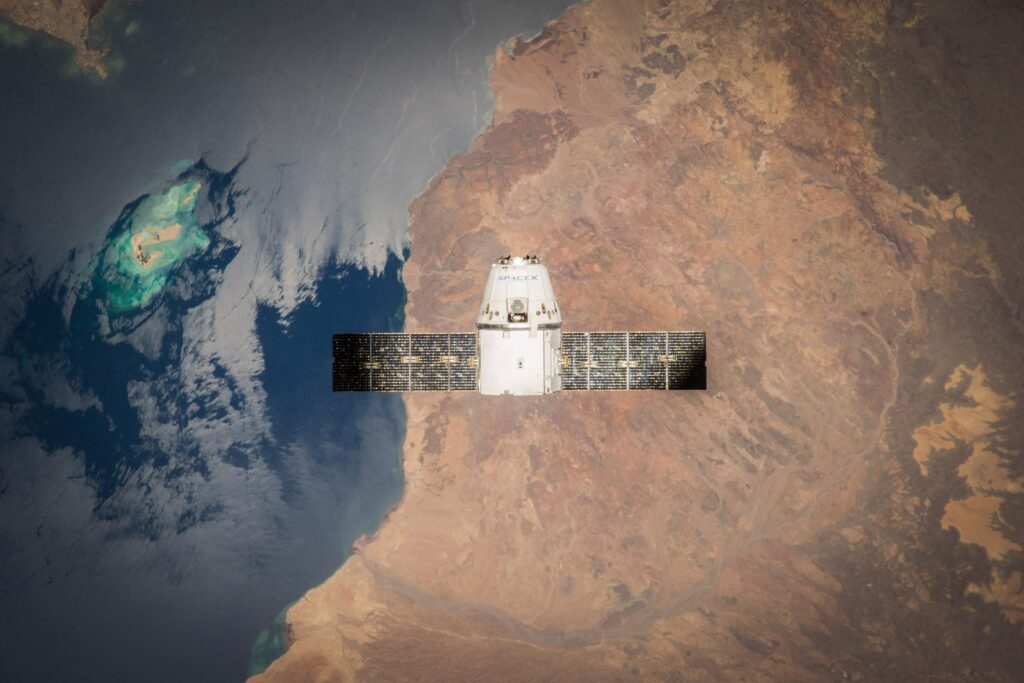
The proposed Gen3 architecture represents a major increase in satellite capacity compared with earlier Starlink generations. SpaceX’s published specifications indicate that each V3 satellite is designed to provide up to 1 Tbps of downlink capacity and 160 Gbps of uplink capacity. The satellites will also incorporate high-capacity optical inter-satellite links.
Six 400 Gbps laser links
One of the major upgrades is the satellite-to-satellite communications system.
The Gen3 design calls for six optical inter-satellite laser links, each rated at up to 400 Gbps, alongside radio-frequency backhaul capacity. This allows satellites to exchange large volumes of data in orbit before routing traffic towards appropriate ground stations.
The architecture is particularly relevant to applications requiring large amounts of data to move quickly across the network. SpaceX has also linked the higher-capacity Gen3 network to the growing requirements of artificial intelligence, including applications requiring substantial uplink capacity.
However, the 1 Tbps figure represents the satellite’s aggregate network capacity, not the internet speed available to an individual Starlink subscriber.
Starship changes the scale of deployment
The larger Gen3 satellites are being designed around SpaceX’s Starship launch system rather than the Falcon 9-based deployment model used extensively for previous Starlink generations.
SpaceX’s published material says a Starship launch could deploy up to 60 V3 satellites, adding about 60 Tbps of aggregate capacity to the network. That represents more than 20 times the capacity added by a typical Falcon 9 launch of earlier-generation Starlink satellites.
SpaceX expects to begin deploying V3 satellites using Starship in the second half of 2026, according to company disclosures.
The combination of substantially higher-capacity spacecraft and a larger launch vehicle is therefore central to the Gen3 strategy. The FCC filing would allow SpaceX to expand the Starlink architecture on a scale substantially beyond its currently deployed network.
The proposed satellites would operate in very low Earth orbits, with reported orbital shells around 323–327.5 km and 473–477.5 km. The lower operating altitudes could provide benefits for latency and atmospheric re-entry of satellites at the end of their operational lives, although the proposed configuration remains subject to FCC review.
The application is also separate from SpaceX’s other 2026 proposal seeking authority for a much larger orbital data-centre system.
What happens next?
Acceptance for filing starts the formal regulatory process rather than giving SpaceX permission to launch all 100,000 satellites.
The FCC will consider the application, technical issues and any petitions or objections submitted during the proceeding before deciding whether to grant, modify or deny the requested authority.
If the Gen3 system is ultimately authorised and Starship achieves the planned launch cadence, the combination could significantly accelerate the amount of communications capacity SpaceX can put into orbit with each launch.
For Starlink, the transition from Gen2 to Gen3 is therefore not simply an increase in the number of satellites. It represents a shift toward much higher-capacity spacecraft, high-speed optical networking between satellites and a launch architecture capable of deploying substantially more capacity per mission.
If you spotted a mistake or have feedback on this story, write to us at editor@newsassociate.com. Email us your press releases on the same ID.
Most Popular

3 days ago
Tech Mahindra partners with SpaceXSI to bring Grok AI coding tools into enterprise workflows
The collaboration will target legacy application modernisation, software development and developer productivity, with a…
4 days ago
DCGI Approves Toripalimab Combination Therapy for Advanced Oesophageal Cancer in India
Dr Reddy’s Laboratories’ Zytorvi, combined with cisplatin and paclitaxel, gains a first-line indication for…

4 days ago
CG Power’s consolidated Q2 net profit rises 44% to ₹409 crore
A sharp rise in Power Systems margins, swelling order book underpin the engineering conglomerate's…

3 days ago
Kotak Mahindra Bank’s profits soar, but margins refuse to join the party
Management expects the full-quarter impact of FCNR(B) deposits to weigh on margins in the…
