
Features
18 - 09 - 2026
UPI Is Free, But the Infrastructure Isn’t, Says Mohandas Pai
There remain legitimate questions about who should ultimately bear the cost, whether small merchants can absorb it, how the threshold would work and whether the economics of UPI should be structured differently
There is something wonderfully Indian about wanting everything free.
We want our trains subsidised, our electricity cheap, our roads pothole-free and, preferably, our digital payments without anyone asking who pays for the machinery humming behind the screen. So when Merchant Discount Rate, or MDR, raises its mildly ugly head over UPI, the first reaction is outrage. Tax! Burden! The poor merchant will suffer!
Mohandas Pai, the Infosys co-founder, has a simpler question: who, exactly, is paying for the party? Pai’s argument is that the proposed MDR will leave 96 per cent of UPI transactions untouched.
Much of the remaining controversy, he suggested, rests on the curious assumption that anything called a “charge” must necessarily be an assault on the common man.
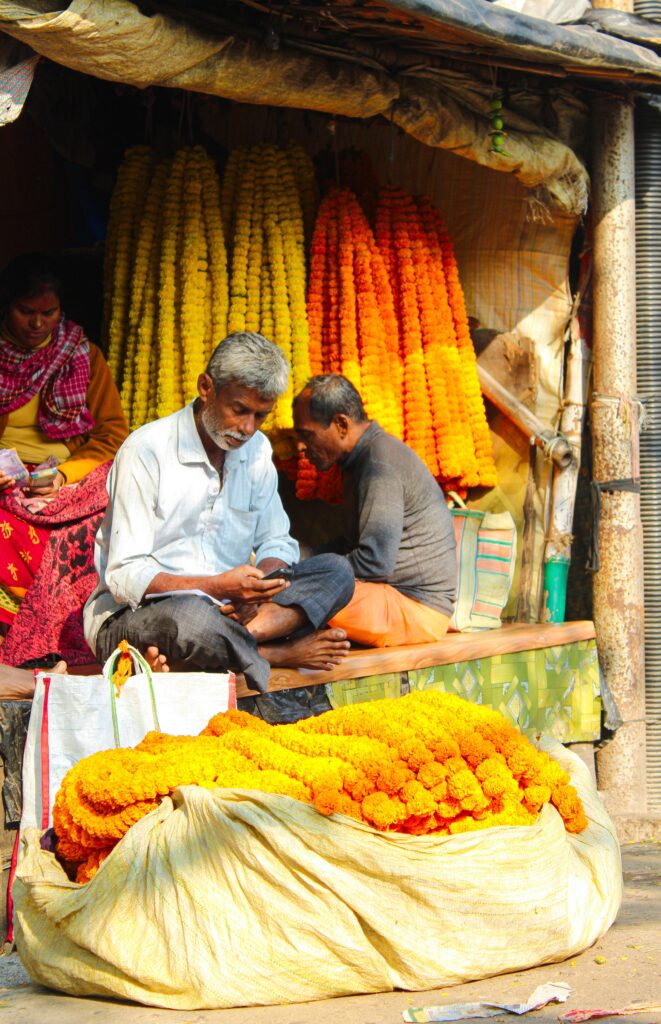
Consider the common man buying vegetables.
“How much do you buy per transaction — more than Rs 2,000?” Pai asked. Fruits from the roadside vendor? Again, presumably not Rs 2,000.
Even petrol, the great national test of financial pain, offers little drama at the threshold. A customer buying Rs 2,001 worth of fuel, Pai joked, could simply buy Rs 1,900 worth instead — or split the payment.
This is not, of course, a philosophical defence of every possible payment charge. It is a reminder that the arithmetic matters.
Pai says around 70 per cent of UPI payments are business-to-business and person-to-person transactions and would not attract the charge. Small-value retail payments would largely remain outside the proposed MDR as well.
The more interesting part of his argument, however, lies beneath the Rs 2,000 threshold.
For years, UPI has acquired the reputation of being free, as if the money travels from one bank account to another by divine intervention. In reality, there are banks, payment companies, servers, cybersecurity systems and vast quantities of technology standing between the tap of a phone and the familiar little sound announcing that the payment has gone through.
Who pays?
Someone pays for all this.
Pai says the free regime has already imposed substantial costs on banks, startups and digital-payment companies. And the appetite for investment is not diminishing. If UPI transactions rise from roughly 24 billion to 50 billion in two years, the plumbing will have to become considerably more sophisticated.
“We have to invest hundreds and thousands of crores to upgrade the system because we have come to a very large scale,” he said.
This is perhaps the least glamorous side of India’s digital revolution. We celebrate the QR code pasted on the tea stall but rarely think about the enormous technological infrastructure that makes the code useful.
Real-time payments are unforgiving. A system that handles billions of transactions cannot be maintained indefinitely on goodwill, government support and the balance sheets of banks.
Pai therefore compares MDR with the merchant charges levied on credit cards. If a merchant can pay around two per cent for accepting a credit-card transaction, he asks, why should a much smaller charge on a digital payment system be regarded as an outrage?
His proposed MDR, he said, is about 40 basis points (0.4%).
The argument may not settle the debate. There remain legitimate questions about who should ultimately bear the cost, whether small merchants can absorb it, how the threshold would work and whether the economics of UPI should be structured differently.
But Pai’s larger point deserves attention: free to the consumer does not mean free to the system.
India has built a payment network of extraordinary scale. The next question is rather less romantic — who will pay to keep it running?
And in India, as everyone knows, the bill eventually finds someone.
By B D Narayankar
Most Popular

3 days ago
Tech Mahindra partners with SpaceXSI to bring Grok AI coding tools into enterprise workflows
The collaboration will target legacy application modernisation, software development and developer productivity, with a…
4 days ago
Infosys Q2 net profit rises 6% to ₹7,823 crore
India's second-largest IT services company trims FY27 revenue guidance

4 days ago
CG Power’s consolidated Q2 net profit rises 44% to ₹409 crore
A sharp rise in Power Systems margins, swelling order book underpin the engineering conglomerate's…
4 days ago
DCGI Approves Toripalimab Combination Therapy for Advanced Oesophageal Cancer in India
Dr Reddy’s Laboratories’ Zytorvi, combined with cisplatin and paclitaxel, gains a first-line indication for…
