
News
13 - 05 - 2026
India PV sector set to sell 5.9 million units in FY27: Crisil
UVs remain the primary growth engine, with their market share expected to rise to 69% in FY27 from 67% last year. Conversely, the small car segment, representing about 30% of domestic volume, is forecast for modest growth of 2-4%.
India’s passenger vehicle industry is set to register a record sale of about 5.9 million units in this fiscal year, its highest-ever, buoyant on sustained demand for utility vehicles. A significant reduction in tax will also drive a 5-7% acceleration in volume, according to a report by Crisil Ratings.
However, the operating environment is changing. While the Goods and Services Tax (GST) tailwind continues, utility vehicles share has risen to 67% last fiscal and further gains are expected to be gradual. Rising input costs due to the West Asia conflict and expanding regulatory compliance requirements are factors to watch even as domestic demand stays healthy.
Total revenue for the sector is forecast to grow 9-10% this fiscal. However, the surge in input and transportation costs is expected to compress operating margins by 50-80 basis points to between 9.7% and 10%.
Despite these margin pressures, the credit profiles of major manufacturers, who account for 94% of wholesale volume, remain healthy due to robust liquidity and nearly debt-free balance sheets, it added.
“The GST tailwind will continue in fiscal 2027, though its intensity will moderate gradually. The small car segment, at ~30% of domestic volume, is expected to grow 2-4% on improved affordability and renewed first-time buyer interest amid a stable interest rate environment,” Anuj Sethi, Senior Director, Crisil Ratings, said.
Domestic sales volume, which accounts for about 86% of total output, was significantly bolstered by the GST rate cut last fiscal. The reform propelled volumes by 16.7% in the second half of the previous year, reversing an initial 1.4% decline.
Utility vehicles (UVs) remain the primary growth engine, with their market share expected to rise to 69% in fiscal 2027 from 67% last year. Conversely, the small car segment, representing about 30% of domestic volume, is forecast for modest growth of 2-4%.
WEST ASIA IMPACT
Geopolitical tensions in West Asia present a dual risk to the sector’s momentum. The region accounts for 25% of India’s total export volume, and the ongoing conflict is expected to slow export growth to 6-8% this fiscal, down from a 17.5% uptick in fiscal 2026.
Additionally, manufacturers are facing sharp increases in the costs of steel, aluminium, copper, and platinum group metals, alongside elevated shipping expenses.
“The West Asia conflict has pushed up commodity prices and freight costs sharply. Most manufacturers have taken calibrated price hikes of 1-3% so far in this fiscal, passing on only a part of cost increase to protect volume momentum. The GST cut of September 2025 had reduced prices by 11-13% on sub-4 metre vehicles, forming little over half of the total volumes. With prices in this segment still well below pre-reform levels, demand impact is expected to remain limited and volume momentum likely to hold, provided there is no significant rise in fuel prices,” Poonam Upadhyay, Director, Crisil Ratings, said.
The industry is entering a phase of increased investment requirements as new standards approach, including Corporate Average Fuel Efficiency-III (CAFE-III) norms effective April 1, 2027, and Bharat Stage VII emission standards.
While electric vehicles currently represent only 5% of volume, they are expected to benefit from this regulatory push, though the pace of charging infrastructure development remains a “critical enabler” for market penetration.

Most Popular
2 hours ago
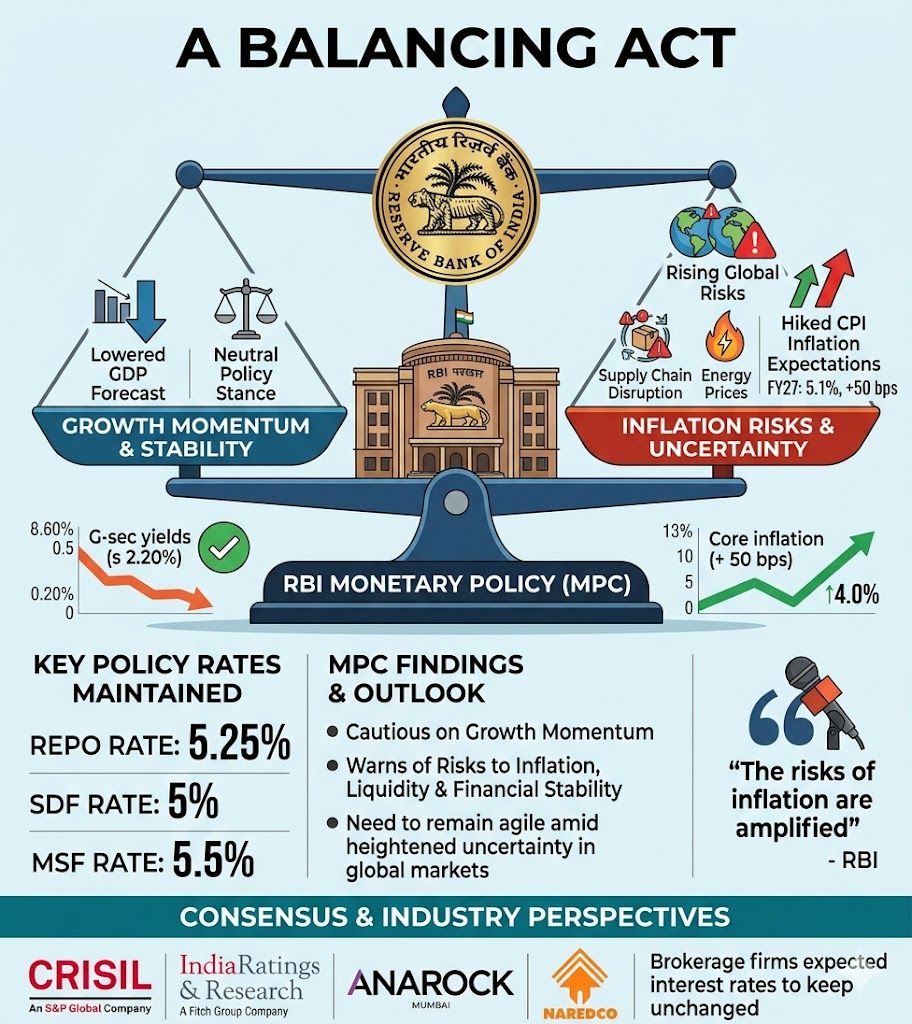
RBI keeps repo rate at 5.25% amid slowing growth, rising inflation risks
RBI has prioritised market agility and financial stability by freezing interest rates, even as intensifying geopolitical tensions force a sharp upward revision to inflation forecasts.
4 hours ago
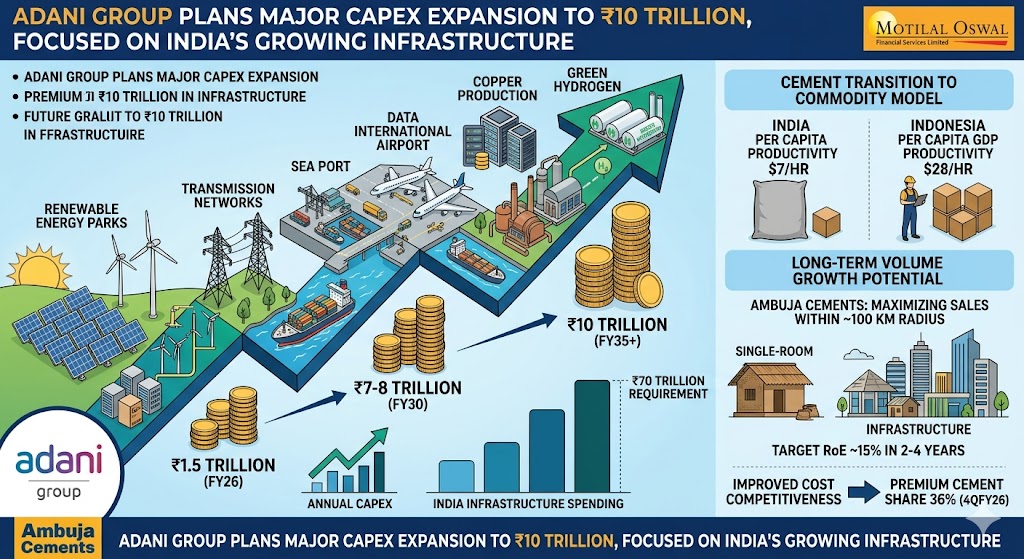
Adani Group to hike capex to ₹7-8 lakh crore by FY30
The group had invested ₹1.5 trillion in FY26, the largest by an Indian corporate.

4 hours ago
India polishes G-Sec investment rules for FPIs
The Central Government has eliminated Capital Gains Tax on foreign investments in government securities, enhancing the attractiveness of Indian sovereign bonds for international investors. This initiative coincides with India’s efforts to draw stable foreign capital amidst global uncertainties, rising oil prices, and intermittent pressures on the rupee. By enhancing post-tax returns for foreign investors, India …

4 hours ago
RBI eases path for global Indian capital to come home
This represents one of the most extensive capital-attraction initiatives in recent times To support India’s external financing position in the face of global uncertainty, the Reserve Bank of India (RBI) has undertaken one of the most extensive initiatives in recent years, relaxing foreign investment regulations concerning government bonds, equities, external commercial borrowings (ECBs), FCNR(B) deposits, …
